Appointments Available
Phone Support 24/7
Bell Gardens, CA 90201
*Serving most of Southern California*
Appointments Available
Phone Support 24/7
Bell Gardens, CA 90201
You need a roof that works quietly in the background. No emergency calls during business hours. No scrambling when the forecast shows rain. No explaining to tenants why there’s a bucket in the hallway.
That’s what proper commercial roofing looks like. Your building stays dry. Your operations stay uninterrupted. Your insurance stays current.
Whether you’re managing an office building near Brand Boulevard, a retail property in Montrose, or multi-family units in Adams Hill, your roof is doing one job: protecting your investment. When it’s installed right and maintained consistently, you’re not thinking about it. You’re running your business.
The difference between a roof that lasts 15 years and one that needs repairs every few years comes down to installation quality, material selection, and regular maintenance. Get those three things right, and your roof becomes one less thing competing for your attention.
We’ve been serving Los Angeles County for decades. We hold a California C-39 Specialty Contractor License, factory certifications from major manufacturers, and an A+ rating with the Better Business Bureau.
Our crews aren’t rotating subcontractors. Most have been with us for years, which means consistency in workmanship and accountability when you call. We specialize in commercial properties, hot mop systems, and insurance-driven projects where documentation matters.
Glendale’s mix of commercial properties—from older buildings requiring Title 24 cool roof upgrades to newer construction needing TPO or PVC installations—requires contractors who understand local codes, climate considerations, and the reality of working around active businesses. We’ve handled enough projects in this area to know what works and what doesn’t.
First, we assess your roof. That means a physical inspection, photo documentation, and a clear explanation of what’s happening up there. If it’s an insurance claim, we document everything needed for your adjuster.
Next, we provide an estimate that breaks down materials, labor, and timeline. No vague line items. You’ll know what you’re paying for and why. If Title 24 cool roof compliance is required, we’ll explain what that means for your project and your energy costs.
Once approved, we schedule around your business operations. For most commercial properties, that means working during hours that minimize disruption. Our crews show up when scheduled, complete the work, and clean up daily.
Throughout the project, you’ll receive photo updates. When we’re finished, you get final documentation for your records, warranty information, and a maintenance plan if you want one. If issues come up during the warranty period, we handle them. That’s what our C-39 license and factory certifications are for.
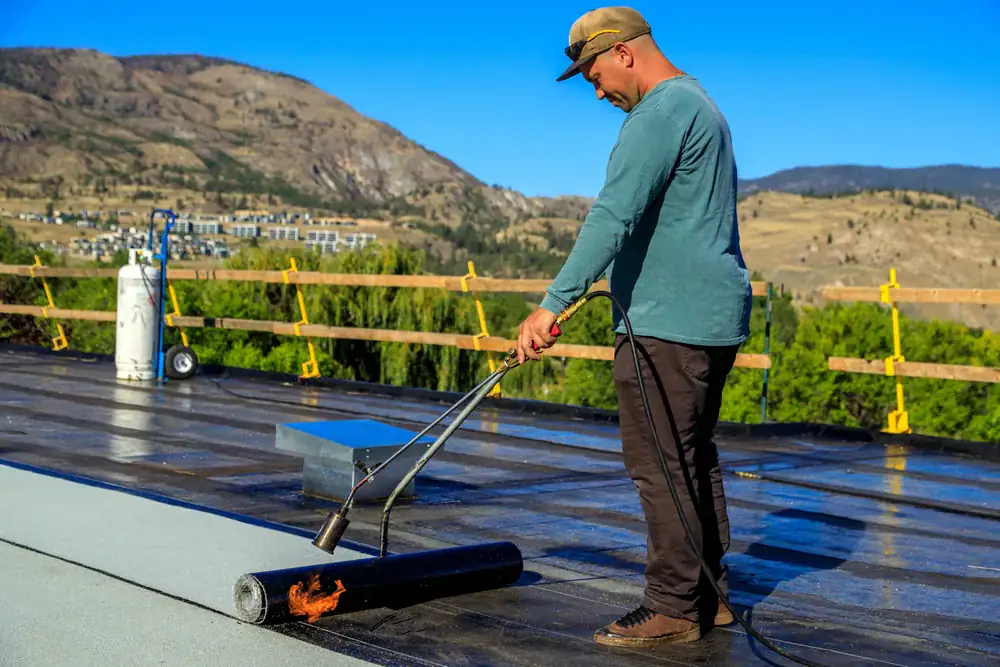
We install and repair flat roof systems, TPO roofing, PVC roofing, EPDM, and hot mop applications. For Glendale properties, Title 24 cool roof restoration is common—California’s energy code requires cool roofing on many commercial buildings, and we’re certified to handle those installations and restorations.
Commercial roof maintenance programs are available for property managers who’d rather prevent problems than react to them. Regular inspections catch small issues before they become expensive emergencies. We document everything, which helps when it’s time to file insurance claims or prove compliance during property transactions.
Industrial roofing solutions for larger buildings often involve more complex drainage, equipment penetrations, and access challenges. We’ve handled enough of these projects to know how to work around HVAC units, skylights, and rooftop equipment without creating new problems.
Glendale’s climate—hot summers, occasional heavy rain, and Santa Ana winds—puts specific demands on commercial roofs. Cool roof coatings reduce heat absorption and lower cooling costs. Proper drainage prevents ponding water. Wind-resistant installations prevent blow-offs during storms. These aren’t extras. They’re requirements for roofs that last.
Most commercial roof replacements in Glendale take between three days and two weeks, depending on building size, roof complexity, and weather. A small retail building with straightforward access might be done in three to five days. Larger office buildings or properties with multiple levels, equipment penetrations, or access challenges take longer.
We schedule around your business operations when possible. Some property managers prefer we work evenings or weekends to avoid disrupting tenants. Others are fine with daytime work as long as we’re not blocking access or creating noise issues during peak hours.
Weather delays happen. If rain is forecast, we don’t start tear-off work. An exposed roof is a liability. We’d rather delay a day than risk water damage to your building’s interior.
TPO and PVC are both single-ply membrane roofing systems common on flat or low-slope commercial roofs. They look similar but have different chemical compositions and performance characteristics.
TPO is typically less expensive and performs well in most applications. It’s heat-welded at the seams, energy-efficient, and meets Title 24 cool roof requirements. It’s a solid choice for standard commercial buildings without unusual chemical exposure or extreme conditions.
PVC costs more but offers better chemical resistance and longer proven durability. If your roof is exposed to grease, oils, or certain chemicals—common around restaurant exhaust vents or industrial facilities—PVC holds up better. It’s also more flexible in cold weather, though that’s less relevant in Glendale’s climate.
Both systems last 20+ years when installed correctly. The choice usually comes down to budget, building use, and specific exposure conditions. We’ll recommend what makes sense for your property, not what’s easier for us to install.
If you’re replacing more than 50% of your roof or doing a significant re-roofing project, California’s Title 24 energy code likely requires cool roof compliance. This applies to most commercial buildings, though there are some exceptions for steep-slope roofs and specific building types.
Cool roofs use reflective materials or coatings that reduce heat absorption. This lowers your building’s cooling costs and helps meet state energy efficiency standards. The requirement exists because California wants to reduce energy consumption across commercial properties.
During permitting, the building department will verify Title 24 compliance. If your roof doesn’t meet the reflectivity and emissivity standards, you’ll have issues during inspection. We handle Title 24 compliance regularly, so we know which materials meet the code and how to document everything for your permit approval.
Non-compliance isn’t just a permitting problem. If you ever sell the property or refinance, buyers and lenders often verify that major work was permitted and code-compliant. It’s easier to do it right the first time than to fix it later.
Most commercial roofs in Glendale benefit from inspections twice a year—once before winter rains and once after. These inspections catch small problems like clogged drains, loose flashing, or minor membrane damage before they turn into leaks.
Between inspections, check your roof after major storms or high winds. Santa Ana wind events can lift edges, blow debris onto the roof, or damage equipment. A quick visual check from the ground or a safe rooftop access point can identify obvious issues.
If you have a maintenance contract, we handle scheduled inspections and minor repairs as part of the agreement. This prevents emergency calls and extends your roof’s lifespan. It also creates documentation that helps with insurance claims and warranty issues.
Property managers with multiple buildings often prefer maintenance contracts because they’re predictable. You’re paying a set amount annually instead of reacting to emergency repairs at premium rates. For buildings with older roofs, regular maintenance is the difference between getting another five years or needing a full replacement sooner than expected.
First, contain the water inside your building. Move equipment, cover inventory, and set up temporary collection if possible. Document the damage with photos—you’ll need this for insurance claims.
Then call us immediately. Even small leaks cause significant damage if left unaddressed. Water travels along roof decking and structural members, so the leak inside your building might be far from the actual roof failure point.
We offer emergency roof repair services in Glendale. For active leaks, we’ll get someone out quickly to assess the situation and provide temporary protection if needed. Sometimes that means tarping until weather allows proper repairs. Other times we can make permanent repairs right away.
Don’t wait for a convenient time to address roof leaks. Water damage compounds quickly. What starts as a small stain on a ceiling tile can become mold growth, structural damage, and ruined inventory within days. Insurance companies also look more favorably on claims where you took immediate action to mitigate damage rather than letting it continue.
Commercial roofing costs in Glendale typically range from $4 to $12 per square foot, depending on the roofing system, building complexity, and current roof condition. A basic TPO installation on a simple rectangular building costs less than a complex multi-level property requiring extensive flashing work and equipment penetrations.
Roof size matters. Larger roofs cost less per square foot because fixed costs like mobilization and equipment get spread across more area. A 2,000 square foot roof might run $10 per square foot while a 20,000 square foot roof might be $6 per square foot for the same materials.
Material choice affects price. TPO is generally the most economical. PVC costs more. Hot mop systems and specialty applications have different pricing structures. Title 24 cool roof coatings add cost but often pay for themselves through energy savings over time.
Get multiple estimates, but don’t choose based solely on price. The cheapest bid often means shortcuts—thinner materials, less experienced crews, or missing details that cause problems later. A properly installed roof that lasts 25 years costs less annually than a cheap roof that needs repairs every few years.
Other Services we provide in Glendale