Appointments Available
Phone Support 24/7
Bell Gardens, CA 90201
*Serving most of Southern California*
Appointments Available
Phone Support 24/7
Bell Gardens, CA 90201
Your roof isn’t just overhead protection. It’s your biggest energy liability or your biggest cost saver.
TPO and PVC roofing systems reflect up to 87% of UV rays in Southern California’s climate. That means your HVAC isn’t fighting the sun all day. Your cooling costs drop. Your equipment lasts longer.
When membrane systems are installed correctly and maintained on schedule, you’re not dealing with emergency leaks during business hours. You’re not scrambling to move inventory or shut down operations because water’s coming through the ceiling. You’re running your business while your roof does its job quietly in the background.
Title 24 compliance isn’t optional anymore. Cool roof restoration brings older buildings up to code while cutting energy consumption. It’s not just about avoiding fines—it’s about making your property more efficient and more valuable.
We hold a C-39 specialty contractor license. That’s the California license specifically for commercial and industrial roofing—not a general contractor trying to figure it out as they go.
We’ve been working in Los Angeles County since the mid-90s. Same family ownership. Many of the same crew members for over a decade. When you hire us, you’re not getting a rotating cast of subcontractors. You’re getting people who’ve done this thousands of times and know how to handle the details that matter.
Rancho Mission Viejo’s newer commercial developments and older industrial buildings each come with specific challenges. We’ve worked on both. We know what Title 24 requires, how to navigate insurance claims with proper documentation, and what it takes to keep a flat roof system performing in this climate.
First, we come out and actually get on your roof. Not a drone flyover. Not a visual from the ground. We inspect the membrane, check seams and flashing, look for ponding water, and document everything with photos. You get a written report that explains what’s working, what’s not, and what needs attention now versus later.
If you’re dealing with an insurance claim, that documentation matters. Adjusters want proof. We provide it—timestamped photos, material specs, scope of work. No guesswork.
Once we agree on scope and timing, we coordinate around your business hours. For some jobs, we can work sections at a time so you’re never fully exposed. For others, we schedule during slow periods or weekends. The goal is to get it done right without shutting you down.
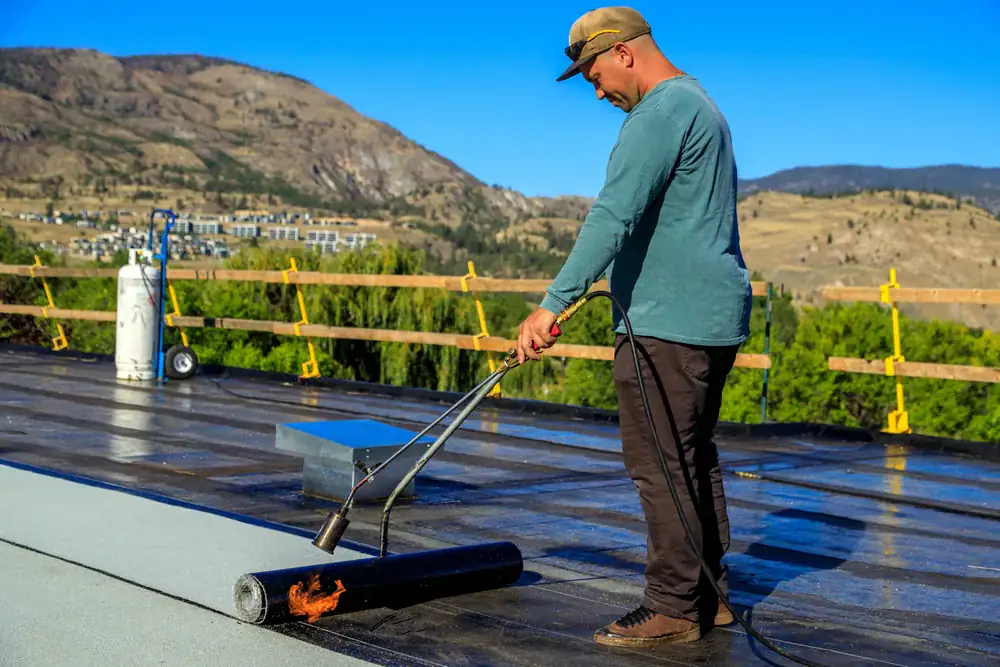
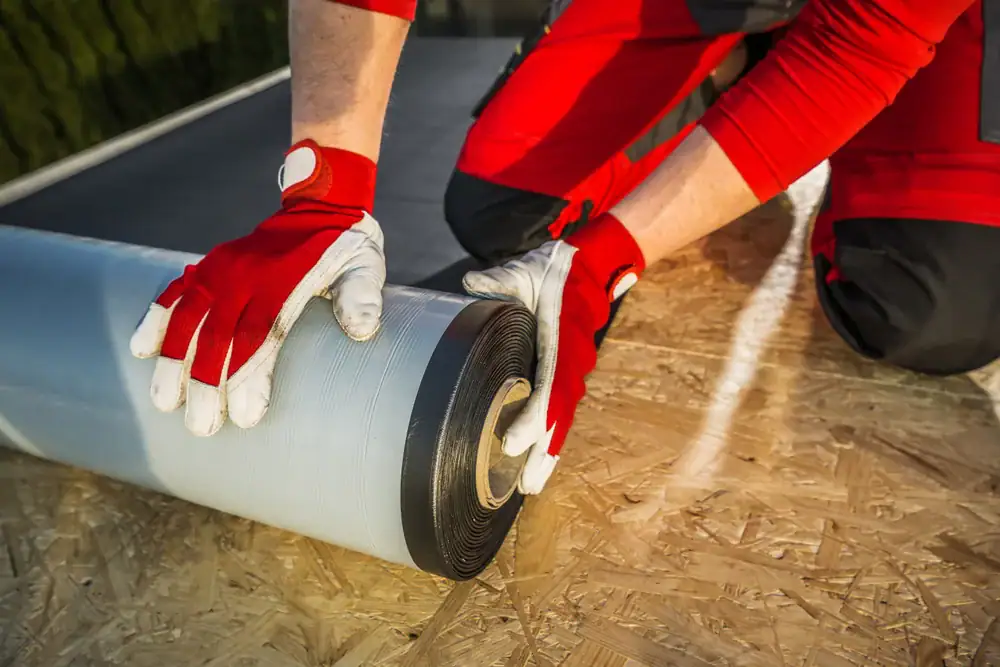
Installation depends on the system—TPO, PVC, modified bitumen, or EPDM. Each has specific requirements for seams, fastening, and flashing details. We’re factory-certified installers, which means we follow manufacturer specs exactly. That’s how you get the warranty protection you’re paying for.
After the install, we walk the roof with you, show you what was done, and set up a maintenance schedule if you want one. Most commercial roofs fail early because of small problems that nobody caught in time. Regular inspections fix that.
You’re getting a full system—not just a membrane slapped on top of the old one. That means proper substrate inspection, any necessary deck repairs, new insulation if the existing stuff is compromised, and a membrane installed to manufacturer standards with factory-backed warranties up to 50 years.
For Title 24 cool roof restoration, we’re bringing your building into compliance with California’s energy code. That involves surface preparation, coating application with high solar reflectance, and documentation for your building department. It’s a fraction of the cost of a full replacement and extends your roof’s life by 10 to 15 years in many cases.
Rancho Mission Viejo’s commercial properties—whether you’re managing a retail center, industrial warehouse, or office complex—face specific challenges with heat exposure and occasional wind events. Single-ply membrane systems handle both well when they’re installed with proper fastening and seam welding. We’re not relying on adhesive in high-wind zones. We’re mechanically fastening and heat-welding every seam.
Ongoing commercial roof maintenance means we’re back twice a year, clearing drains, checking flashing, resealing penetrations, and catching small issues before they become expensive ones. You’re not waiting for a leak to know something’s wrong.
In Rancho Mission Viejo’s climate, a properly installed TPO or PVC roof typically lasts 20 to 30 years. The key word is “properly installed.”
Single-ply membranes fail early when seams aren’t heat-welded correctly, when flashing details are rushed, or when the roof isn’t designed with adequate drainage. Ponding water is the biggest killer of flat roofs in Southern California. If water sits for more than 48 hours after rain, it’s breaking down your membrane and shortening its life.
UV exposure is the other factor. TPO and PVC are designed to reflect UV rays, but over time, any membrane will degrade. That’s why the color and thickness matter. White membranes reflect more heat than tan or gray. Thicker membranes (60 mil or 80 mil) hold up better than thinner ones.
Regular maintenance adds years to the system. We’re talking about simple stuff—keeping drains clear, resealing penetrations, inspecting seams annually. Most commercial roofs that fail at 10 or 15 years didn’t get that basic attention.
Title 24 is California’s energy code, and it sets minimum standards for solar reflectance and thermal emittance on commercial roofs. If you’re doing any roof replacement or recovering more than 50% of your roof area, you’re required to meet these standards.
For low-sloped roofs (which includes most commercial flat roofs), you need a minimum aged solar reflectance of 0.63 and thermal emittance of 0.75. In plain terms, your roof needs to reflect at least 63% of the sun’s energy after it’s been up there for three years.
Cool roof coatings and membranes are specifically designed to hit these numbers. TPO and PVC systems typically exceed Title 24 requirements right out of the gate. Coatings applied over existing roofs can bring older systems into compliance without a full tearoff.
Your building department will want documentation—product data sheets showing reflectance values and proof of installation. We handle that paperwork as part of the job. It’s not optional, and it’s not something you want to skip. Beyond code compliance, Title 24-compliant roofs genuinely reduce cooling costs. You’re not just checking a box—you’re making your building cheaper to operate.
It depends on how much of the roof is compromised and whether the substrate is still sound.
If you’ve got isolated leaks, a few bad seams, or damage in one area from a recent storm, repair makes sense. We can cut out the damaged section, patch it properly, and get you another several years out of the existing system. Cost is a fraction of replacement, and downtime is minimal.
If more than 30% of your roof is showing problems—widespread membrane cracking, multiple leak points, sagging areas, or visible deterioration across large sections—replacement is usually the smarter move. Patching a failing roof is like putting bandaids on a bigger problem. You’ll spend money now and again in two years when something else fails.
The substrate matters too. If water has been getting through the membrane and rotting the decking or insulation underneath, repair won’t fix that. You need to get down to solid structure and rebuild from there.
We’ll tell you honestly what makes sense after we inspect it. There’s no point in selling you a full replacement if a repair will hold for another five years. But there’s also no point in patching a roof that’s at the end of its life. You’ll just be calling us back sooner than you want to.
They’re all single-ply membranes, but they perform differently and cost differently.
TPO (thermoplastic polyolefin) is the most common commercial roofing membrane right now—it holds about 49% of the market. It’s heat-weldable, reflective, and reasonably priced. It handles UV exposure well and meets Title 24 requirements without additional coatings. TPO is a solid choice for most commercial buildings in Rancho Mission Viejo.
PVC (polyvinyl chloride) is more expensive than TPO but more resistant to chemicals, grease, and punctures. If you’re roofing a restaurant with exhaust vents or an industrial facility with chemical exposure, PVC makes sense. It’s also heat-weldable and highly reflective. The seams on PVC tend to be stronger and more durable long-term.
EPDM (rubber roofing) is black, which means it absorbs heat instead of reflecting it. That’s a drawback in Southern California’s climate. EPDM is cheaper upfront and very durable against weathering, but it doesn’t help with energy costs the way TPO or PVC does. Seams are typically glued or taped rather than heat-welded, which can be a weak point over time.
For most commercial applications in this area, TPO or PVC makes the most sense. EPDM works if energy efficiency isn’t a priority and you’re just looking for basic waterproofing on a budget.
Yes, and we do it regularly. Most commercial clients can’t afford to shut down for a week while we replace their roof.
The approach depends on the size and layout of your building. For larger roofs, we can section the work—complete one area, make it watertight, then move to the next section. You’re never fully exposed, and we’re not tearing off more than we can cover in a day.
For businesses that are quieter on weekends or during specific seasons, we schedule the heavy work during those windows. If you’re a retail operation that’s slow mid-week, we’ll plan around that. If you’re an office that clears out on Fridays, we can push harder on those days.
Noise and access are the two things we coordinate closely. Roofing involves equipment, materials being moved, and some noise from tear-off or fastening. We’re not going to pretend it’s silent. But we can control when the loudest work happens and where crews are accessing the roof so we’re not blocking your loading docks or customer entrances.
The key is communication up front. Tell us what your constraints are, and we’ll build the schedule around them. We’ve worked around operating hospitals, schools in session, and 24-hour facilities. A standard commercial building is straightforward by comparison.
Insurance claims for commercial roofs require documentation—and most contractors don’t provide nearly enough of it.
When storm damage or a leak happens, we come out and document everything with photos: the damaged areas, the cause of failure, the extent of water intrusion, and any interior damage. We measure the affected areas and write up a detailed scope of work with material specifications and labor requirements.
That documentation goes to your insurance adjuster. They’ll often send their own inspector, and we’ll meet them on-site to walk through the damage. Adjusters respect contractors who know what they’re talking about and can back up their claims with evidence. We’re not inflating numbers or trying to replace a whole roof when only part of it is damaged—but we’re also not letting them shortchange you on what actually needs to be fixed.
Once the claim is approved, we handle the work according to the agreed scope. If the adjuster initially low-balls the estimate and we find additional damage during tear-off (which happens often), we document that too and submit a supplement. It’s common. It’s expected. And it’s how you make sure the repair is done right, not just done cheap.
The timeline depends on your insurance company, but most commercial claims take two to four weeks from initial inspection to approval. We can often start temporary repairs immediately to prevent further damage while the claim processes. You’re not waiting with a tarp on your roof for a month while paperwork moves through the system.
Other Services we provide in Rancho Mission Viejo