Appointments Available
Phone Support 24/7
Bell Gardens, CA 90201
*Serving most of Southern California*
Appointments Available
Phone Support 24/7
Bell Gardens, CA 90201
You’ve probably already dealt with a roofing contractor who showed up, patched the leak, collected payment, and disappeared until the next storm. That approach costs you more in the long run because it never addresses why the problem happened in the first place.
When your commercial roof is installed correctly and maintained properly, you’re not calling for emergency repairs every season. You’re not dealing with water damage to inventory, equipment, or tenant spaces. You’re not scrambling to find coverage when your insurance company starts asking questions about deferred maintenance.
The difference is in how the work gets done from day one. TPO and PVC roofing systems installed to manufacturer specs, with proper drainage, flashing details that account for West Hollywood’s sun exposure, and documentation that satisfies both your insurance carrier and Title 24 requirements. That’s what keeps your building protected and your costs predictable.
We’ve been working on commercial buildings across Los Angeles County for decades, with the same crews who know how roofs perform in this climate. Not contractors who rotate through job sites. Actual experienced installers who understand how West Hollywood’s temperature swings, sun exposure, and building codes affect your roof’s lifespan.
We hold a C-39 specialty roofing license and factory certifications because those credentials matter when something goes wrong and you need your warranty honored. Our BBB accreditation isn’t just a badge—it reflects how we’ve handled hundreds of projects for property managers, business owners, and HOAs who needed the work done right.
West Hollywood’s commercial buildings range from older structures with modified bitumen systems to newer developments requiring cool roof compliance. We’ve worked on both, and everything in between.
You’re not getting a salesperson who measures your roof and disappears. You’re getting someone who’s been installing commercial roofing systems long enough to spot problems before they become expensive surprises.
The inspection covers your existing roof condition, drainage patterns, penetration details, and whether your current system meets Title 24 cool roof requirements. We document everything with photos because that’s what your insurance company will want if you’re filing a claim. Then you get a written estimate that breaks down materials, labor, and timeline so you can actually compare it to other bids.
If you move forward, we handle permits and coordinate with your property manager or tenants to minimize disruption. Our crews show up when scheduled, complete the installation to manufacturer specs, and provide documentation for your warranty registration. You’re not chasing us for paperwork six months later when you need it.
After installation, you’ll know exactly what maintenance your roof needs and when. Most commercial roofing problems are preventable if someone’s actually checking drainage, resealing penetrations, and catching small issues before they turn into leaks.
Most commercial buildings in West Hollywood have flat or low-slope roofs, which means you’re looking at TPO, PVC, modified bitumen, or built-up roofing systems. Each one has different performance characteristics, costs, and maintenance requirements.
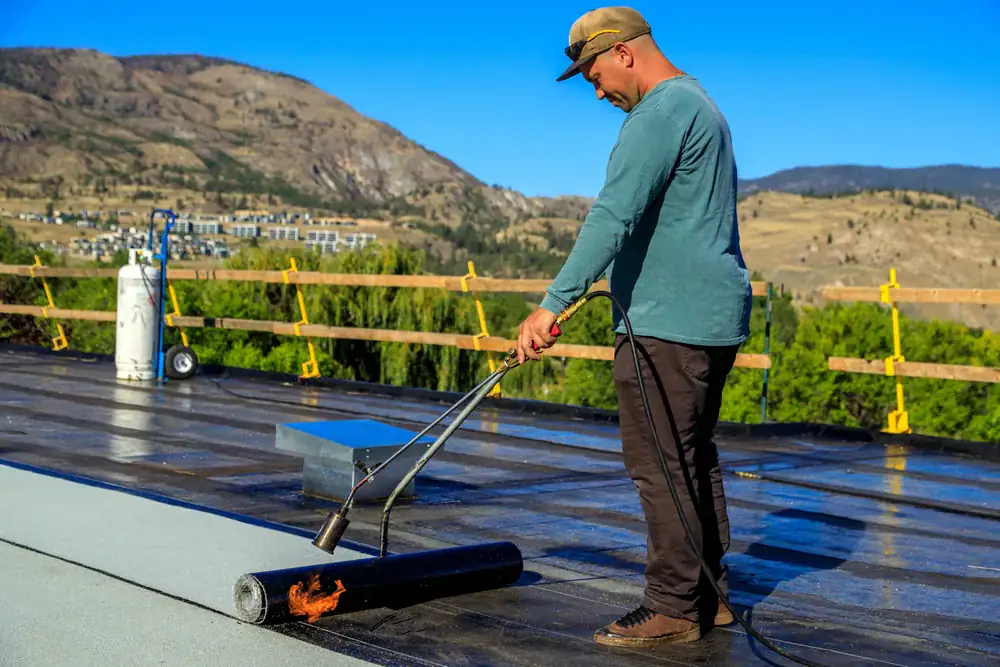
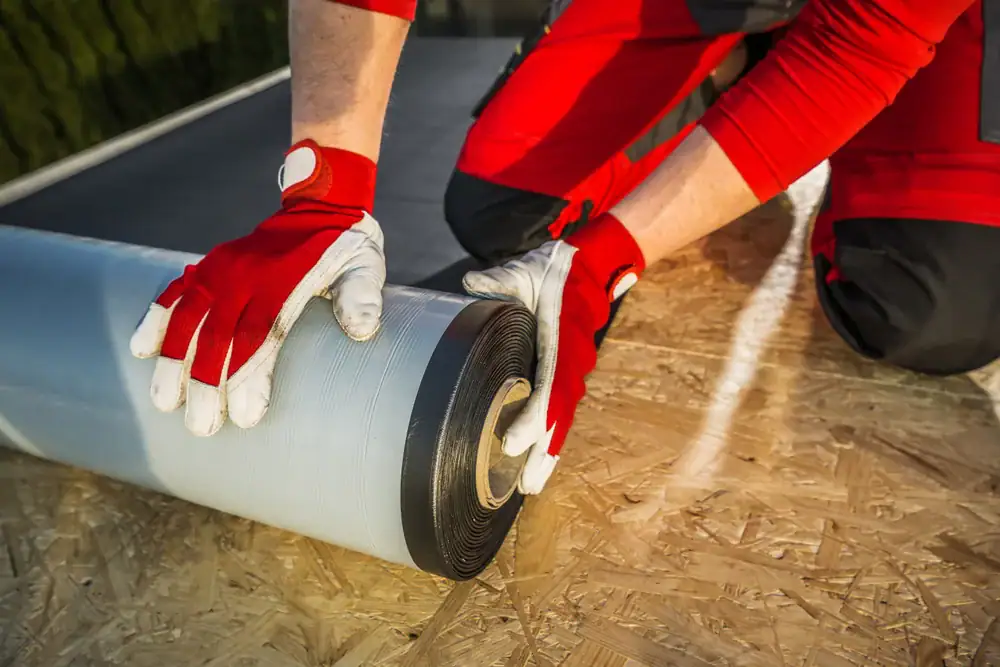
TPO roofing offers energy efficiency and heat-reflective properties that help with Title 24 cool roof compliance. It’s a single-ply membrane that’s heat-welded at the seams, creating a watertight barrier that holds up well in Southern California’s climate. PVC roofing costs more upfront but offers better chemical resistance and longer warranties, which matters if you’re managing an industrial facility or restaurant with rooftop equipment.
If your building has an older built-up roof or modified bitumen system, you might not need a full replacement yet. Cool roof restoration coatings can extend your roof’s life by 10-15 years while bringing you into Title 24 compliance and reducing cooling costs. That’s a real option if your budget doesn’t allow for a complete tear-off right now.
Commercial roof maintenance isn’t complicated, but it needs to happen consistently. Twice-yearly inspections catch drainage problems, failing sealants, and membrane damage before water gets into your building. For property managers overseeing multiple buildings, we can set up a maintenance schedule that keeps all your roofs in warranty-compliant condition.
You’re looking at anywhere from $4 to $12 per square foot for most commercial roofing projects, but that range is almost useless without context. A simple TPO installation on a clean, accessible roof costs less than a complex project requiring tear-off, deck repairs, and multiple penetrations.
The real cost drivers are your existing roof condition, how many layers need removal, whether your deck needs repairs, and what system you’re installing. A basic TPO system runs $4-7 per square foot installed. PVC roofing costs $6-10 per square foot. If you’re dealing with multiple layers of old roofing, damaged insulation, or deck problems, add another $2-4 per square foot for tear-off and repairs.
Title 24 compliance doesn’t necessarily cost more if you’re already installing a reflective membrane like TPO or PVC. Cool roof coatings over existing systems run $2-4 per square foot, which is your most economical option if the underlying roof is still in decent shape. The only way to get an accurate number is to have someone inspect your specific building.
Both are single-ply membranes that work well on flat commercial roofs, but they’re not interchangeable. TPO costs less and offers good energy efficiency, making it the default choice for most commercial buildings. It’s heat-reflective, meets Title 24 requirements, and holds up well in West Hollywood’s climate.
PVC roofing costs 20-30% more but offers better chemical resistance and typically comes with longer warranties. If your building has rooftop HVAC equipment, grease exhaust from restaurants, or industrial processes that could damage the membrane, PVC is worth the extra cost. It’s also more flexible in cold weather, though that’s less relevant in Southern California.
The seams are welded on both systems, creating watertight bonds that are stronger than the membrane itself. TPO typically comes with 15-20 year warranties, while PVC can get you 20-30 years depending on the manufacturer and installation quality. Your decision should be based on your building’s specific conditions and how long you plan to own the property.
If you’re asking this question, you’re probably dealing with leaks and trying to figure out whether you’re throwing money away on repairs. The answer depends on your roof’s age, how widespread the damage is, and whether the underlying structure is compromised.
A roof that’s less than halfway through its expected lifespan with localized damage—maybe a few membrane punctures or failed flashing around penetrations—can usually be repaired cost-effectively. You’re looking at a few hundred to a few thousand dollars depending on the scope. But if you’re patching leaks every season, dealing with multiple problem areas, or your roof is beyond 15-20 years old, repairs become a temporary band-aid.
Cool roof restoration coatings offer a middle option that extends your roof’s life without a full replacement. If your membrane is still structurally sound but showing age, a coating system adds 10-15 years and brings you into Title 24 compliance for $2-4 per square foot. That’s legitimate if your budget doesn’t allow for replacement right now, but it only works if the underlying roof is in decent shape. An inspection tells you which direction makes sense for your specific situation.
Most commercial roofing projects in West Hollywood take 3-10 days depending on your building’s size, existing roof condition, and weather. A straightforward TPO installation on a 10,000 square foot roof typically takes 4-6 days. Add time if we’re tearing off multiple layers, making deck repairs, or working around occupied tenant spaces.
The noise and activity will be noticeable, but you don’t have to shut down operations. We coordinate with property managers to schedule work around your tenants’ needs—starting later in the day for buildings with early-morning businesses, working in phases for occupied spaces, or completing the project over a weekend if that’s what your situation requires.
The biggest disruption is usually during tear-off if your existing roof needs removal. That’s loud and creates debris, though we contain and remove materials daily. Once we’re installing the new membrane, it’s quieter and less invasive. Rooftop equipment stays accessible, and we maintain safe walkways for any necessary roof access during the project. You’ll know the schedule before we start so you can communicate with tenants and plan accordingly.
Title 24 is California’s energy code, and it requires commercial buildings to meet specific solar reflectance and thermal emittance standards when you’re replacing or installing a new roof. The goal is reducing cooling costs and energy consumption, which matters in West Hollywood where summer temperatures drive up your utility bills.
Cool roofs reflect more sunlight and absorb less heat than traditional roofing materials. TPO and PVC membranes typically meet Title 24 requirements without additional steps because they’re manufactured with reflective properties. If you’re installing one of these systems, compliance is built in. For existing roofs, cool roof coatings can bring older systems into compliance without a full replacement.
You’ll need documentation proving your roof meets the standards, which matters during inspections and if you ever sell the property. Most commercial roofing contractors should handle this automatically, but it’s worth confirming because non-compliant work creates problems down the road. The energy savings are real—buildings with cool roofs typically see 7-15% reductions in cooling costs, which adds up over a 20-year roof lifespan.
Commercial roof maintenance is straightforward if you actually do it consistently. Most building owners skip it until they’re dealing with leaks, which is when minor issues have already become expensive problems.
You need inspections twice a year—once before winter rains and once after to catch any storm damage. Those inspections should cover drainage to make sure water isn’t ponding on your roof, all penetrations and flashing to verify sealants haven’t failed, and the membrane itself for punctures, tears, or UV damage. Clearing drains and removing debris takes 30 minutes and prevents 90% of drainage-related leaks.
Any repairs should happen immediately when problems are identified. A small membrane puncture costs $200 to fix today and $5,000 in water damage if you wait until it leaks into your building. Re-sealing penetrations costs a few hundred dollars and prevents the most common failure points on commercial roofs. Most manufacturers require documented maintenance to keep your warranty valid, so you’re not just preventing problems—you’re protecting your investment. A basic maintenance contract runs $500-1,500 annually depending on your roof size and typically pays for itself by catching one problem before it becomes an emergency.
Other Services we provide in West Hollywood