Appointments Available
Phone Support 24/7
Bell Gardens, CA 90201
*Serving most of Southern California*
Appointments Available
Phone Support 24/7
Bell Gardens, CA 90201
You’re not thinking about your roof when it’s doing its job. Your HVAC runs efficiently because the cool roof system is reflecting heat instead of absorbing it. Your insurance premiums stay reasonable because everything’s documented and compliant. Your tenants aren’t calling about leaks, and you’re not scrambling to find emergency repair contractors at 8 PM on a Friday.
That’s what a properly installed and maintained commercial roof does. It disappears into the background while protecting everything underneath.
The difference shows up in your operating costs. Energy-efficient TPO and PVC roofing systems can cut your cooling expenses significantly in Fountain Valley’s climate. Title 24 compliance isn’t just about meeting California’s energy codes—it’s about lower utility bills month after month. And when you need documentation for insurance claims or property assessments, having a contractor who photographs every stage of installation and maintains detailed records makes the process straightforward instead of stressful.
We’ve been handling commercial roofing projects in Fountain Valley since the early 1980s. We’re not a franchise or a national chain—we’re a family-run operation with crews who’ve been with us for decades, not months.
Our C-39 specialty roofing license and factory certifications from major manufacturers mean we’re qualified to handle complex commercial installations that other contractors can’t touch. We maintain an A+ rating with the Better Business Bureau because we show up when we say we will, document everything with photos, and handle insurance claim paperwork correctly the first time.
Fountain Valley’s mix of industrial facilities, business plazas, and commercial properties means roofing needs vary widely. We’ve worked on everything from small retail centers near Mile Square Park to larger industrial buildings along the 405 corridor. Different buildings need different approaches, and experience matters when you’re specifying the right system for your property.
We start with a thorough roof inspection—not a five-minute walk-around, but a documented assessment with photos of current conditions, measurements, and notes on any problem areas. You get a written report that explains what’s happening with your roof and why, in plain language.
If you’re moving forward, we pull the necessary permits and coordinate with your property schedule. Most commercial clients need work done outside business hours or in phases to avoid disrupting operations. We plan around your needs, not ours.
During installation, we photograph each stage of the work. This isn’t just for our records—it’s documentation you’ll need if insurance questions come up or if you’re selling the property down the line. For flat roof systems, TPO and PVC roofing, or Title 24 cool roof restoration projects, proper installation technique matters as much as material quality. Our crews know the difference between doing it fast and doing it right.
After completion, you get a full warranty package, maintenance recommendations, and a point of contact if questions come up later. We’re not disappearing after the final payment clears.
Fountain Valley’s commercial properties need roofing systems that handle California’s climate and meet current energy codes. TPO and PVC roofing systems work well for flat and low-slope commercial roofs because they’re durable, energy-efficient, and meet Title 24 requirements without extensive modifications.
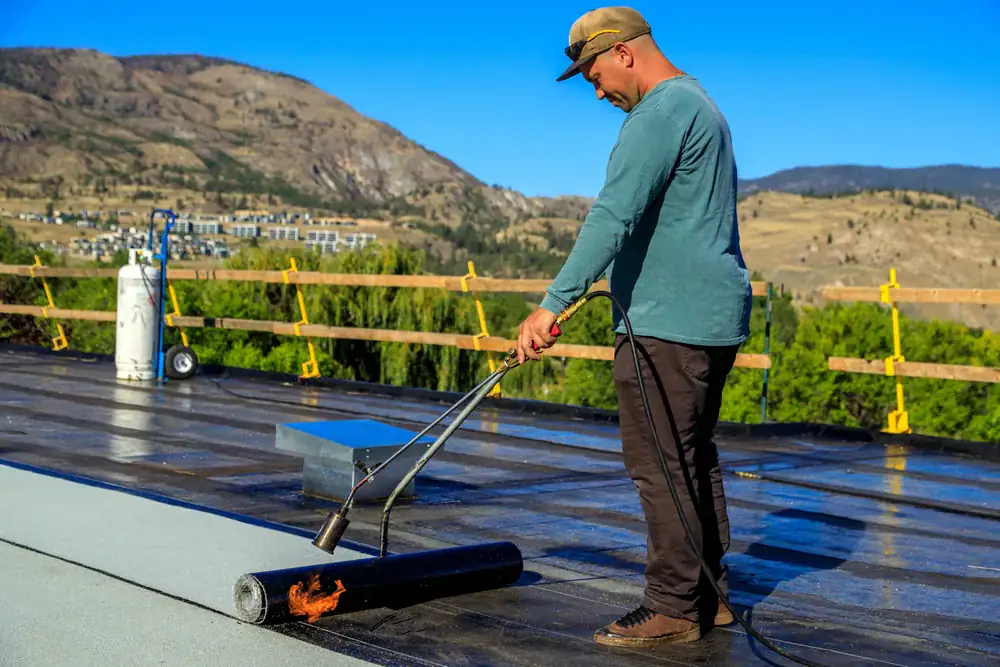
For industrial roofing solutions, we’re equipped to handle larger-scale projects with specialized requirements—whether that’s accommodating rooftop equipment, managing drainage across expansive square footage, or working around operational constraints. Hot mop systems remain one of our specialties for buildings where traditional built-up roofing makes sense.
Commercial roof maintenance programs keep small problems from becoming expensive emergencies. Regular inspections catch issues like ponding water, membrane deterioration, or flashing failures before they cause interior damage. Scheduled maintenance costs less than emergency repairs, and it extends your roof’s lifespan significantly.
Cool roof restoration is increasingly common in Fountain Valley as property owners look for ways to reduce energy costs and meet California’s stricter building codes. Reflective coatings can drop surface temperatures dramatically, which means less heat transfer into your building and lower air conditioning loads during summer months.
Timeline depends on your building’s size, the roofing system you’re installing, and weather conditions. A typical commercial roof replacement for a 10,000-square-foot building usually takes one to two weeks from start to finish, assuming no major structural issues come up during tear-off.
Larger projects or complex industrial roofing solutions take longer. If you’re doing a 50,000-square-foot warehouse with multiple roof levels and equipment to work around, you’re looking at several weeks. We phase the work to keep your operations running—completing sections at a time so you’re never fully exposed.
Weather plays a role too. We don’t install roofing materials in rain or high winds, and some systems like TPO and PVC roofing require specific temperature ranges for proper adhesion. We build buffer time into schedules because rushing a commercial roof installation to meet an arbitrary deadline is how problems happen. You want it done right, not done fast.
Both TPO and PVC roofing are single-ply membrane systems that work well for flat and low-slope commercial roofs, but they’re not identical. PVC has been around longer and handles chemical exposure better—if your building has restaurant exhaust, HVAC condensate, or other rooftop elements that could interact with the membrane, PVC is usually the better choice.
TPO costs less upfront and has improved significantly in quality over the past decade. It’s heat-welded like PVC, creating strong seams that resist leaks. For most commercial properties in Fountain Valley without special chemical exposure concerns, TPO delivers solid performance at a lower price point.
Both systems meet Title 24 cool roof requirements when you choose light-colored membranes. They reflect sunlight instead of absorbing it, which reduces cooling costs. The real decision comes down to your building’s specific conditions, your budget, and how long you plan to own the property. We walk through the pros and cons during the estimate so you’re making an informed choice, not just picking the cheaper option.
If you’re doing any roof work beyond minor repairs in California, Title 24 compliance isn’t optional—it’s state law. California’s energy code requires commercial buildings to meet specific standards for insulation, solar reflectance, and thermal emittance when you’re replacing or recovering a roof.
The good news is that compliance usually saves you money over time. Cool roof systems that meet Title 24 standards reflect more sunlight and absorb less heat, which means your air conditioning doesn’t work as hard during Fountain Valley’s warm months. Lower energy bills offset the initial cost difference pretty quickly.
Getting it wrong has consequences. If your roof doesn’t meet code and an inspector catches it, you’re looking at costly corrections and project delays. Worse, if you sell the property later and the buyer’s inspection reveals non-compliant work, that becomes a negotiation problem. We handle Title 24 compliance as standard practice on every commercial roof installation because it’s both legally required and financially smart.
Age is the first indicator. Most commercial roofing systems last 15 to 25 years depending on the material and maintenance history. If your roof is approaching or past that range and you’re dealing with recurring leaks, replacement usually makes more sense than continued patch work.
Multiple problem areas across the roof surface suggest systemic failure rather than isolated damage. One leak near a rooftop unit might just need flashing repair. Six leaks spread across different sections means the membrane is deteriorating and repairs are just buying time.
Energy costs tell you something too. If your utility bills have climbed without explanation, your roof might be failing to reflect heat or your insulation might be compromised by moisture. A proper inspection reveals what’s happening—we check for ponding water, membrane brittleness, fastener back-out, and insulation condition. You get a straight answer about whether repairs will actually solve the problem or if you’re throwing money at a roof that needs replacement.
Commercial roof maintenance programs typically run a few hundred to a few thousand dollars annually, depending on your building’s size and roof complexity. A basic program includes two inspections per year, minor repairs like resealing penetrations or replacing damaged flashing, debris removal, and drain cleaning.
That might sound like an unnecessary expense until you compare it to emergency repair costs. A small leak that gets ignored can cause tens of thousands in interior damage—ruined inventory, damaged equipment, disrupted business operations. Regular maintenance catches those issues when they’re still minor and inexpensive to fix.
The return shows up in roof lifespan too. A commercial roof that gets regular attention lasts years longer than one that’s ignored until problems become obvious. We’ve seen well-maintained TPO roofing systems hit 25 years while neglected roofs of the same material fail at 15. The math works heavily in favor of maintenance, especially for larger commercial properties where replacement costs run into six figures.
Some disruption is unavoidable—roofing involves noise, equipment, and workers moving materials. But the level of disruption depends entirely on how the project is planned and managed. We schedule commercial roofing work around your operational needs whenever possible, which often means working evenings, weekends, or in carefully phased sections.
For retail properties or businesses with customer traffic, we coordinate material deliveries and equipment placement to keep parking and entrances accessible. Noisy work like tear-off gets scheduled during off-hours if that’s important to your business. We’re not showing up at 7 AM to start jackhammering if you’ve got clients in the building.
Communication matters most. You’ll know exactly what’s happening each day, which areas are affected, and what to expect in terms of noise or access restrictions. Most of our commercial clients in Fountain Valley tell us the project was less disruptive than they anticipated because we planned it properly from the start. The contractors who cause major disruptions are usually the ones who didn’t bother asking about your schedule before they started working.
Other Services we provide in Fountain Valley