

Summary:
When Roof Repair Actually Makes Sense
Not every roof problem requires a complete overhaul. Sometimes a targeted roof repair is the smartest move you can make, especially in Southern California where our roofs face intense UV exposure and occasional heavy storms.
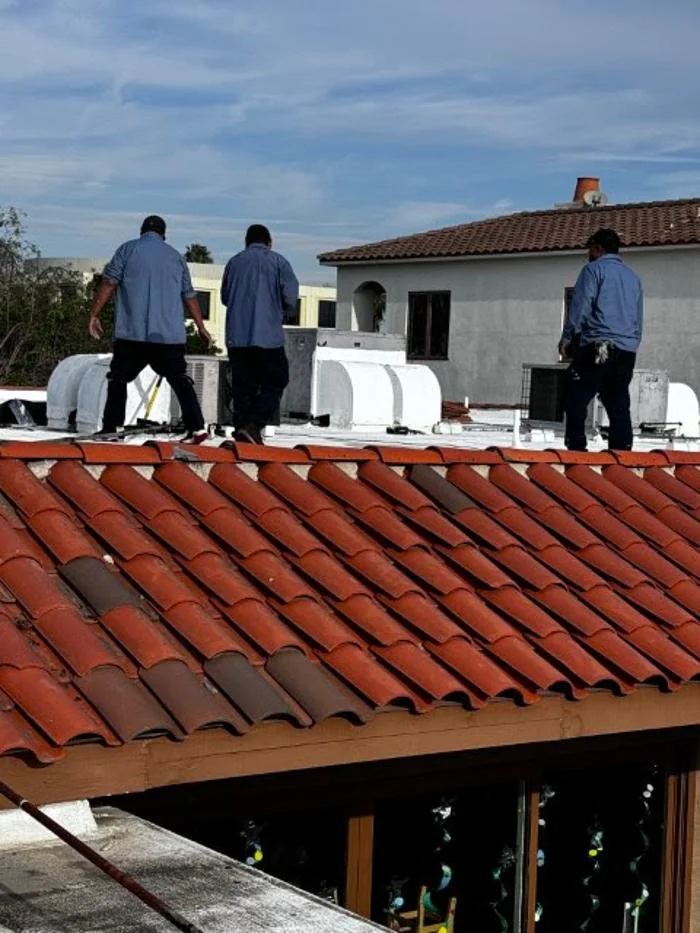
If your roof is relatively young—say, under 10 years old—and the damage is isolated to one area, a quality repair can extend its life without the cost of replacement. Think missing shingles from a recent storm, a cracked pipe boot, or localized flashing issues around a chimney. These are problems a skilled roofing contractor can fix in a day or two without tearing off your entire roof.
The key is that the rest of your roof needs to be in solid shape. If the damage is contained and your roofing materials still have years left in them, repair makes financial sense. You’re not throwing good money after bad. You’re maintaining an asset that still has plenty of life ahead. The roof installers you work with should be able to assess the overall condition and give you an honest answer about whether a repair will actually hold up or if you’re just delaying the inevitable.
How Much Does Roof Repair Cost in Orange County and Los Angeles
Let’s talk numbers, because cost matters when you’re trying to make a smart decision about your roof.
Minor repairs—like replacing a handful of shingles or sealing a small leak—typically run between $150 and $400 in the Orange County and LA area. That’s the kind of fix that stops a problem before it spreads. Moderate repairs, the ones involving flashing work or valley repairs, usually fall in the $400 to $1,000 range. These take more labor and materials, but they’re still a fraction of what a full roof replacement costs.
Major repairs are where things get tricky. If you’re looking at $2,000 to $8,000 in roof repair work, you’re approaching replacement territory. At that point, you need to ask yourself: am I fixing the problem, or am I just delaying the inevitable?
Here’s a rule that experienced roofing contractors use but don’t always share with homeowners. If the repair costs more than 30% of what a full replacement would run, you’re better off replacing. Why? Because you’re spending serious money on a roof that’s still aging. Six months or a year down the road, another section fails, and you’re back to square one—only now you’ve already spent thousands on repairs that didn’t solve the bigger issue.
In Orange County and LA, a quality roof replacement for a typical home runs anywhere from $10,000 to $25,000, depending on size, materials, and complexity. So if a repair estimate comes in around $3,000 to $7,500, it’s worth getting a replacement quote for comparison. You might find that spending a bit more upfront gives you decades of protection instead of a temporary patch.
The other thing to consider is your roof’s age. If it’s already 15 to 20 years old, even a “successful” repair is just buying time. Roofing materials have a lifespan, and once they hit that threshold, problems start popping up in multiple places. You fix one leak, and another appears three months later. That’s not bad luck. That’s an aging roof telling you it’s time for a roof replacement.
What Your Roof Age Means for Repair or Replacement
Age isn’t just a number when it comes to your roof. It’s one of the most important factors in deciding whether to repair or replace, especially here in Southern California where sun exposure accelerates aging.
Most asphalt shingle roofs—the most common type in Orange County and Los Angeles—last about 20 to 25 years. Tile roofs, which you’ll see throughout older neighborhoods in both counties, can go 50 years or more, but the underlayment beneath those tiles typically needs attention every 20 to 40 years. Flat roofs using membranes like TPO or EPDM usually need replacement or major restoration every 15 to 25 years, depending on maintenance and sun exposure.
If your roof is under 10 years old and you’re dealing with isolated damage, roof repair is almost always the right call. The materials are still in good shape, and a quality fix will hold up. Between 10 and 20 years, it depends. You need to look at the overall condition. Are you seeing widespread granule loss? Curling or cracked shingles across multiple sections? If yes, roof replacement is probably smarter. If the damage is truly isolated and the rest of the roof looks solid, repair can still make sense.
Once your roof crosses the 20-year mark, the math shifts. Even if it looks okay from the ground, the materials are nearing the end of their lifespan. Repairs become temporary. You’re not preventing future problems—you’re just postponing them. And here’s something most homeowners don’t realize: insurance companies know this too. Many carriers offer reduced coverage or no coverage at all for roofs older than 15 to 20 years. So even if you’re willing to keep patching, your insurance might not back you up when the next storm rolls through.
There’s also the issue of matching materials. Older roofs are harder to repair seamlessly. Shingles fade over time from our intense California sun, and manufacturers discontinue colors and styles. Even if you saved leftover shingles from the original roof installation, they’ve weathered differently than the ones on your roof. A repair might work functionally, but it’ll stand out visually—and that matters if you’re planning to sell in the next few years.
Bottom line: age isn’t everything, but it’s a huge piece of the puzzle. If your roof is getting close to or past its expected lifespan, repairs are just buying time. And sometimes, time isn’t what you need. You need a roof that’s going to last.
When Roof Replacement Is the Smarter Long-Term Investment
There comes a point when patching stops making sense. Not because roofing contractors want to upsell you, but because the roof itself is telling you it’s done.
Widespread damage is the clearest sign. If you’re seeing problems in multiple areas—leaks in different rooms, shingles missing across several sections, or sagging spots—that’s not bad luck. That’s systemic failure. Replacing one section won’t fix the fact that the entire roof is aging out. You’ll be back on the phone with a roofer in six months, and you’ll have spent money on a repair that didn’t really solve anything.
Then there’s the issue of repeated repairs. If you’ve already patched your roof two or three times in the past few years, you’re throwing money at a losing battle. Each repair costs a few hundred or a few thousand dollars, and it adds up fast. At some point, you’ve spent enough on repairs that you could’ve had a new roof—and you’d still be dealing with an old one. That’s when roof replacement becomes the financially smarter choice.
Hidden Costs of Delaying Roof Replacement
Delaying a necessary roof replacement doesn’t just mean more leaks. It means bigger problems that cost more to fix down the road.
Water damage is the obvious one. A small leak today can become a major issue tomorrow. Water doesn’t just sit where it enters—it travels along rafters, soaks into insulation, and damages ceilings and walls. By the time you see a stain on your ceiling, the damage behind the scenes is often much worse. You’re not just paying for a new roof at that point. You’re paying for structural repairs, mold remediation, and interior restoration. In Orange County and LA’s humid coastal areas, mold can develop quickly once water gets in.
Then there’s energy efficiency. An aging roof doesn’t insulate as well. Gaps, cracks, and worn materials let heat in during summer and out during winter. Your HVAC system works harder, and your energy bills creep up. A new roof installation with modern materials and proper ventilation can actually lower your cooling and heating costs—sometimes enough to offset part of the replacement cost over time. With California’s Title 24 energy codes, newer roofing materials are designed to reflect more heat and improve your home’s overall efficiency.
There’s also the insurance angle. If your roof is old and you file a claim after a storm, don’t be surprised if your carrier pushes back. They’ll argue the damage was due to age and deferred maintenance, not the storm itself. That means you’re on the hook for repairs that might’ve been covered if your roof had been in better shape. And if you do get coverage, expect your premiums to go up—or your policy to get dropped entirely.
Let’s not forget resale value. If you’re planning to sell in the next few years, an old roof is a red flag for buyers in competitive markets like Orange County and Los Angeles. Home inspectors will call it out, and buyers will either walk away or demand a price reduction to cover the cost of replacement. A new roof, on the other hand, is a strong selling point. It signals that the home has been well-maintained, and it’s one less thing a buyer has to worry about. In many cases, you’ll recoup a significant portion of the replacement cost in the sale price.
Finally, there’s peace of mind. Living under a roof that’s on borrowed time is stressful. You worry every time it rains. You wonder if that creak or drip means another leak. You calculate how much longer you can push it before something catastrophic happens. A new roof eliminates that stress. You know it’s solid. You know it’s warrantied. You know you’re protected.

How to Choose the Right Roofing Contractor in Orange County and LA
The roofing contractor you choose matters as much as the decision to repair or replace. A good contractor will be honest about what your roof needs. A bad one will push you toward whatever makes them the most money.
Start with licensing and insurance. In California, roofing contractors need a C-39 license. Don’t skip this step. An unlicensed contractor might offer a lower price, but you’re taking on massive risk. If something goes wrong—injury, property damage, shoddy work—you have no recourse. A licensed roofing contractor is accountable. They’ve passed exams, met experience requirements, and carry the insurance to protect you if things go sideways.
Speaking of insurance, verify that they carry both liability and workers’ compensation coverage. Liability protects your property. Workers’ comp protects you if someone gets hurt on your roof during the installation or repair. Ask to see certificates, and don’t just take their word for it. A reputable contractor will provide proof without hesitation.
Next, look at their track record. How long have they been in business? Do they have reviews you can read? Can they provide references from recent projects in Orange County or LA? A roofing contractor with decades of experience and a solid reputation isn’t perfect, but they’re a safer bet than someone who just started last year. In the roofing industry, longevity matters. Fly-by-night operators come and go. Established companies stick around because they do good work and stand behind it.
Ask about warranties. A quality contractor will offer a workmanship warranty on their labor—typically anywhere from one to ten years. They should also explain the manufacturer’s warranty on the materials. These warranties matter. If something goes wrong a few years down the road, you want to know you’re covered. And make sure everything is in writing. Verbal promises don’t hold up when you need them.
Get multiple quotes, but don’t just pick the cheapest one. If one bid is significantly lower than the others, that’s a red flag. Either they’re cutting corners on materials, rushing the job, or planning to upsell you once they’re halfway through. A fair price reflects quality materials, skilled labor, proper permits, and the time to do the job right. You’re not looking for the lowest number. You’re looking for the best value.
Finally, pay attention to how they communicate. Do they explain your options clearly? Do they pressure you to decide on the spot? Do they take the time to answer your questions, or do they just hand you a quote and walk away? The best roof installers and contractors treat you like a partner, not a transaction. They educate you, respect your timeline, and give you the information you need to make a confident decision. If a contractor makes you feel rushed or uncomfortable, keep looking.
Making the Right Roof Decision for Your Orange County or LA Home
At the end of the day, the choice between roof repair and replacement comes down to three things: the age of your roof, the extent of the damage, and how long you plan to stay in your home.
If your roof is young and the damage is isolated, repair makes sense. If it’s old, showing problems in multiple areas, or you’ve already spent thousands on patches, roof replacement is the smarter move. And if you’re not sure, get an honest assessment from a roofing contractor who’s willing to walk you through your options without pushing an agenda.
Your roof isn’t just shingles and nails. It’s the shield that protects everything underneath—your family, your belongings, your investment. Don’t wait until a small problem becomes a crisis. And don’t let fear or confusion keep you from making the right call.
We’ve been helping homeowners in Orange County and Los Angeles make these decisions since 1982. If you’re ready to get a straight answer about what your roof actually needs, reach out. No pressure. No gimmicks. Just honest guidance from people who’ve been doing this for nearly 50 years.