
Summary:
What Contractor Certifications and Licenses Actually Mean
Contractor certifications aren’t just wall decorations. They represent verified training, ongoing education, and accountability to manufacturers and industry organizations.
In California, any roofing project over $500 requires a valid C-39 license from the Contractors State License Board. That license proves the contractor passed exams, carries minimum insurance, and can be held accountable if something goes wrong. But licensing is just the starting point.
Factory certifications from manufacturers like GAF, Owens Corning, or Elevate take it further. These programs require contractors to prove proper installation techniques, maintain insurance levels often exceeding state minimums, and demonstrate a track record of quality work. Fewer than 3% of roofing contractors nationwide earn Master Elite status—the highest tier of factory certification.
Why Factory Certified Installers Matter for Your Roof Warranty

Here’s what most property owners don’t realize until it’s too late: your roof warranty might not be worth the paper it’s printed on if the installer wasn’t factory certified.
Manufacturers design roofing systems to work as complete assemblies. Every component—from the insulation to the fasteners to the membrane—gets tested together. When a factory certified installer handles the work, they’ve been trained on the exact specifications for that system. They know the installation sequence, the required fastener spacing, and the quality checks that keep the warranty valid.
Without that certification, you’re gambling. A contractor might install the same brand of materials, but if they deviate from the manufacturer’s guidelines, your warranty coverage can disappear. That matters when you’re looking at a 20 or 30-year investment.
Factory certified contractors also get access to extended warranty options that aren’t available otherwise. Some programs cover both materials and workmanship for decades, with third-party inspections to verify the installation meets standards. That level of protection only comes when the contractor has proven their expertise to the manufacturer.
The certification process isn’t easy. Contractors undergo training, pass exams, and submit to ongoing audits of their work. Manufacturers want to protect their reputation, so they only certify contractors who consistently deliver quality installations. When you hire a factory certified installer, you’re getting someone who’s accountable not just to you, but to a billion-dollar company that backs their products.
California Roofing Liability Insurance Requirements You Need to Know
Insurance isn’t just about protecting the contractor. It’s about protecting you from financial disaster if something goes wrong on your property.
California requires commercial roofing contractors to carry a minimum of $1 million per occurrence in general liability coverage, with a $2 million aggregate limit. That covers property damage, bodily injury to third parties, and completed operations—meaning issues that show up after the work is finished. Workers’ compensation is mandatory for any contractor with employees, covering medical bills and lost wages if someone gets injured on the job.
But here’s the problem: not every contractor maintains active coverage. Some let policies lapse between jobs. Others carry the bare minimum and hope nothing goes wrong. If an uninsured or underinsured contractor damages your property or injures someone on-site, you could be on the hook for the costs.
Before signing any contract, ask for a Certificate of Insurance. Verify it’s current, check the coverage limits, and make sure your property is listed as an additional insured. That last part matters—it means the contractor’s insurance covers claims related to work on your building. Without that designation, you might still face liability even though the contractor caused the problem.
Commercial umbrella policies add another layer of protection. These kick in when claims exceed the limits of primary insurance, covering catastrophic scenarios that would otherwise bankrupt a contractor and leave you fighting for compensation. Reputable contractors carry umbrella coverage because they understand the risks inherent in roofing work.
Don’t assume insurance is in place just because a contractor is licensed. The Contractors State License Board requires proof of insurance for licensing, but policies can expire or be canceled. Always verify coverage directly with the insurance company before work begins. It takes five minutes and could save you from years of legal headaches.
How Preventative Maintenance Programs Extend Your Roof's Life
Most commercial roofs fail prematurely not because of poor materials or installation, but because of neglected maintenance. Regular inspections and minor repairs can double the lifespan of a roofing system.
Preventative maintenance programs schedule inspections at least twice a year, typically in spring and fall. Technicians check drainage systems, inspect flashings and penetrations, look for membrane damage, and address small issues before they escalate. The cost is predictable, and the return on investment is substantial—studies show that for every dollar spent on preventative maintenance, property owners save four dollars in avoided repairs.
Without a structured program, problems go unnoticed until they cause visible damage inside the building. By that point, you’re not just fixing the roof—you’re dealing with water damage to inventory, equipment, or tenant spaces. Emergency repairs cost three to four times more than planned maintenance, and they always seem to happen at the worst possible time.
What Happens During a Professional Roof Inspection
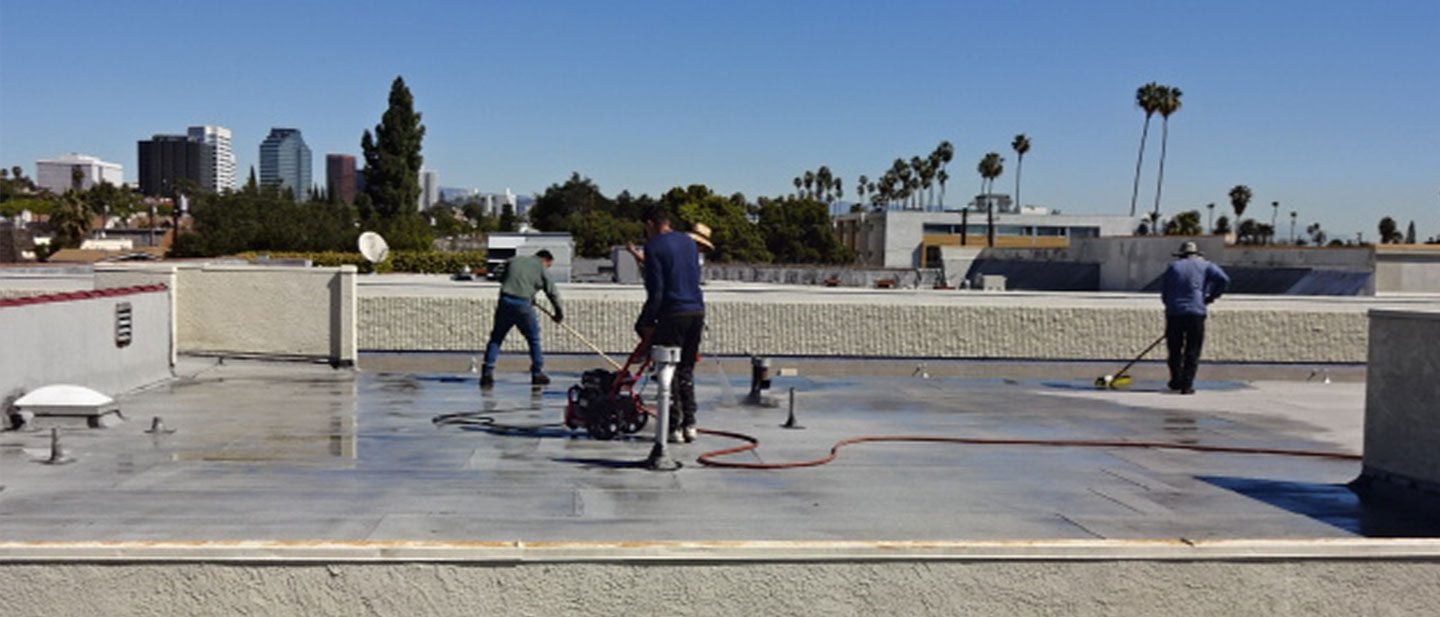
A thorough commercial roof inspection covers more than just walking the surface and looking for obvious damage. Professional contractors follow a systematic process that documents the condition of every component.
The inspection starts with drainage. Clogged drains and scuppers are one of the most common causes of roof failure, allowing water to pond and degrade the membrane. Technicians clear debris, check for proper flow, and verify that water isn’t accumulating anywhere on the surface. Even minor ponding can cut years off a roof’s lifespan.
Next comes the membrane. Inspectors look for cracks, blisters, punctures, and seam separation. They pay special attention to areas with heavy foot traffic, around HVAC equipment, and near roof penetrations where leaks often start. Any damage gets photographed and documented for your records.
Flashings and edge metal receive close scrutiny. These components seal the vulnerable transitions where the roof meets walls, parapets, or equipment. When flashings fail, water finds its way into the building envelope, causing damage that’s expensive to repair. Proper inspection catches deterioration before it leads to leaks.
The inspection report should include photos, condition ratings for each roof section, and prioritized recommendations for repairs. Some issues need immediate attention. Others can wait but should be monitored. A good contractor explains what’s urgent, what can be deferred, and what the cost implications are for each option. That transparency helps you budget effectively and make informed decisions about your roof.

Infrared Roof Moisture Surveys Find Hidden Problems Before They Escalate
You can’t see moisture trapped inside your roof, but it’s causing damage right now. Infrared moisture surveys use thermal imaging to detect wet insulation and membrane issues that won’t show up during a visual inspection.
Here’s how it works: During the day, the sun heats your roof and the materials underneath. As evening arrives and temperatures drop, wet areas retain heat longer than dry sections because water has higher thermal mass. An infrared camera captures these temperature differences, creating a thermal map that shows exactly where moisture has infiltrated the roofing system.
The timing matters. Surveys need to happen in the evening after sunset when the thermal contrast is most pronounced. Conditions also need to be right—clear skies, no recent rain, and enough of a temperature differential between day and night. Professional thermographers know how to read the images and distinguish between actual moisture problems and false readings caused by roof design or equipment.
The value of infrared surveys shows up in the cost savings. Instead of replacing an entire roof because of visible leaks, you can target repairs to only the wet sections. Property owners often discover that damage is limited to 10 or 20 percent of the roof surface, saving tens of thousands of dollars compared to a full replacement. The survey itself costs a fraction of what you’d spend on unnecessary tear-off and reinstallation.
Infrared surveys also provide documentation for insurance claims and warranty compliance. Some manufacturers require moisture surveys before honoring warranties on older roofs. Having that documentation proves you’ve maintained the roof properly and helps support claims when damage occurs. The survey becomes part of your roof’s permanent record, showing the condition at specific points in time and tracking how problems develop or get resolved.
Choosing a Contractor Who Meets Professional Standards
The standards covered here—licensing, insurance, certifications, maintenance programs, and safety protocols—aren’t optional extras. They’re the baseline for professional commercial roofing contractors in 2026.
When you’re evaluating contractors for your Orange County or Los Angeles County property, verify these credentials before you sign anything. Ask about their C-39 license status, request current insurance certificates, and find out which factory certifications they hold. If they offer preventative maintenance programs, ask how often they inspect, what the reports include, and how they handle emergency repairs between scheduled visits.
Your commercial roof protects everything inside your building. The contractor you choose determines whether that roof performs for decades or becomes a recurring problem. We’ve built our reputation at Royal Roofing Company on meeting and exceeding these standards, with factory certifications, comprehensive insurance coverage, and a hands-on approach to maintenance and customer education. When your business investment needs protection, the standards matter.