

Summary:
Why Seasonal Roof Maintenance Matters in California
Most people assume their roof is fine until something goes wrong. That’s the problem. Roofs don’t fail all at once—they deteriorate gradually, and by the time you notice a leak, the damage has already spread into your attic, insulation, or even your walls.
In California, your roof is under constant stress. The sun bakes your shingles day after day, causing them to crack and lose protective granules. Heat makes roofing materials expand, which leads to gaps and vulnerabilities. Then the Santa Ana winds roll through, lifting shingles and blowing debris into places it shouldn’t be. When the rain finally does come, it finds every crack, every loose seal, every clogged gutter—and it gets inside.
Regular maintenance isn’t about being paranoid. It’s about catching the small stuff before it turns into the expensive stuff. A missing shingle costs you nothing to replace today. A rotted roof deck because that shingle’s been missing for six months? That’s a different conversation. Seasonal roof maintenance gives you a fighting chance to stay ahead of the damage, extend your roof’s lifespan, and avoid the kind of surprises that drain your savings account.
What Happens When You Skip Roof Maintenance

Skipping maintenance doesn’t just mean your roof ages faster—it means you’re setting yourself up for problems that compound. One loose shingle lets water seep underneath. That water soaks into the underlayment, then the roof deck, then the insulation. Before long, you’ve got mold growing in your attic and water stains spreading across your ceiling.
Gutters are even worse. When they’re clogged, water backs up and sits on your roof. It finds its way under the shingles, into the fascia boards, and down into your foundation. In Southern California, where we don’t get constant rain, people think gutters aren’t a big deal. But when a storm does hit, clogged gutters turn into waterfalls that dump straight onto your landscaping, erode your soil, and pool around your foundation. That’s how you end up with cracks, settling, and moisture problems inside your home.
Then there’s the fire risk. During dry, windy conditions, leaves and debris in your gutters become kindling. One ember from a nearby brush fire, and that debris can ignite. It’s not common, but it’s preventable—and it’s one more reason why gutter cleaning service isn’t optional in this climate.
The cost of neglect adds up fast. A roof that should last 25 years starts failing at 15. A gutter system that could have been cleaned for a couple hundred bucks now needs fascia repairs, downspout replacements, and maybe even foundation work. Maintenance isn’t an expense—it’s insurance against the bigger bills that come from waiting too long.
And here’s the kicker: if you ever need to file an insurance claim for storm damage, they’re going to ask for proof of maintenance. If you can’t show that you’ve been taking care of your roof, they can deny your claim. That’s not a scare tactic—it’s how the industry works. Documentation matters, and regular inspections give you that paper trail.
How California Weather Stresses Your Roof Year-Round
California weather isn’t kind to roofs, even if it feels mild compared to other parts of the country. The UV exposure here is relentless. Day after day, the sun beats down on your shingles, breaking down the protective granules that shield the asphalt underneath. Once those granules are gone, the shingles dry out, crack, and curl. You’ll see them in your gutters—little black specks that look like gravel. That’s your roof aging faster than it should.
Heat is another issue. When temperatures spike, roofing materials expand. When they cool at night, they contract. This constant expansion and contraction creates stress, and over time, it leads to cracks in the shingles, gaps in the flashing, and loosened seals around vents and chimneys. It’s not dramatic, but it’s cumulative. Every season, the damage adds up.
Then there are the Santa Ana winds. They don’t just blow—they rip. Loose shingles get torn off. Branches fall onto your roof. Debris piles up in valleys and around chimneys, trapping moisture and creating the perfect conditions for mold and rot. Even if your roof looks fine from the ground, the wind has a way of finding weak spots and making them worse.
Rain, when it does come, is the final test. California doesn’t get steady drizzles—we get downpours that overwhelm gutters, flood valleys, and expose every vulnerability. If your gutters are clogged, the water has nowhere to go. It backs up under the shingles, soaks into the roof deck, and finds its way inside. If your flashing is compromised, water sneaks in around chimneys and vents. If your shingles are cracked or curled, water seeps through and spreads into the attic.
The point is, your roof is never getting a break. Every season brings a different kind of stress, and if you’re not staying on top of it, those stresses add up to real damage. Seasonal maintenance isn’t about being obsessive—it’s about recognizing that your roof is working hard, and it needs attention to keep doing its job.
Gutter Cleaning Service: Why It's Non-Negotiable
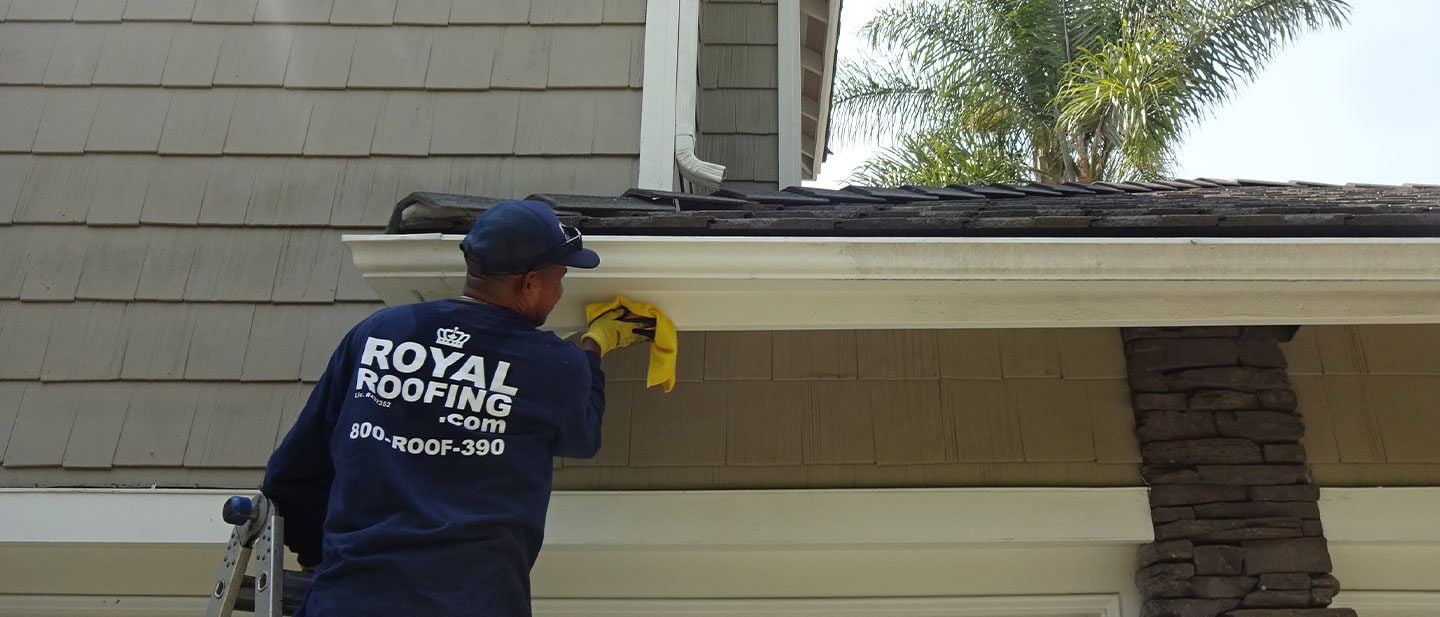
Gutters don’t get much respect, but they’re one of the most important parts of your roofing system. Their job is simple: move water away from your roof and foundation. When they’re clogged, that water has nowhere to go, and it causes problems fast.
In Orange County and Los Angeles County, gutters fill up with leaves, dirt, and debris—especially if you’ve got trees nearby. Even if you don’t see obvious blockages, the buildup happens gradually. A little bit of debris turns into a lot, and before you know it, your gutters are overflowing during the next storm. That overflow doesn’t just make a mess—it damages your roof, your siding, and your foundation.
Gutter cleaning should happen at least twice a year, typically in the spring and fall. If you’ve got overhanging trees, you might need to do it more often. The goal is to keep water flowing freely through the downspouts so it’s directed away from your home, not pooling on your roof or soaking into your foundation.
What Clogged Gutters Actually Do to Your Home
When gutters clog, the first thing that happens is water backs up onto your roof. It sits there, soaking into the shingles and working its way under the edges. That water doesn’t just evaporate—it finds cracks, seeps into the underlayment, and eventually makes its way into your attic. Once water gets inside, you’re dealing with stains, mold, and potential structural damage.
The fascia boards—the wooden trim that runs along the edge of your roof—are especially vulnerable. When gutters overflow, water runs down the back of the gutter and soaks into the fascia. Over time, that wood rots. Once the fascia is compromised, the gutters start pulling away from the house, and the whole system becomes unstable. Fixing rotted fascia isn’t cheap, and it’s completely preventable with regular gutter cleaning.
Then there’s the foundation. When gutters dump water right next to your house instead of directing it away through downspouts, that water pools around the foundation. In California, where the soil can shift and settle, this is a recipe for cracks and moisture intrusion. Foundation repairs are some of the most expensive fixes a homeowner can face, and they often start with something as simple as clogged gutters.
Your landscaping takes a hit too. Overflowing gutters create waterfalls that erode soil, wash away mulch, and damage plants. If you’ve invested in your yard, clogged gutters can undo that work in a single storm. And if you’re in an area prone to wildfires, the debris sitting in your gutters becomes a fire hazard. Dry leaves and twigs are fuel, and during Santa Ana wind conditions, one ember can ignite that debris and spread to your roof.
The fix is straightforward: clean your gutters regularly, check that downspouts are clear, and make sure water is being directed away from your foundation. It’s not glamorous work, but it’s one of the most effective ways to protect your home from water damage.
DIY Roof Inspection: What to Look for Without Climbing Up
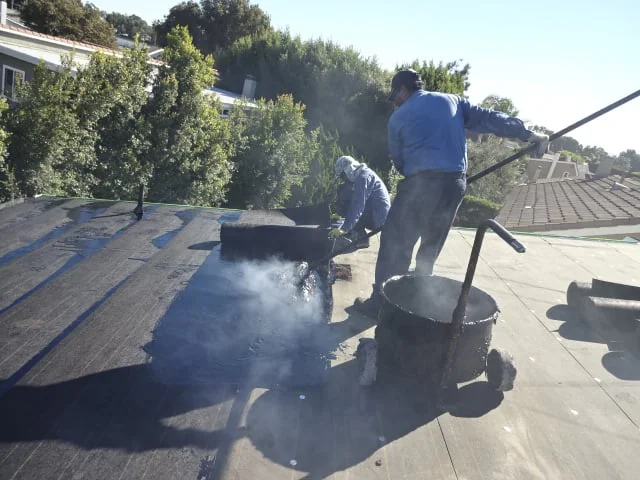
You don’t need to be a roofer to spot warning signs. A lot of roof problems are visible from the ground if you know what to look for. Start by walking around your house and looking up at the roof from different angles. You’re checking for obvious issues: missing shingles, sagging areas, dark streaks, or piles of debris.
Missing or damaged shingles are a red flag. If you see bare spots or shingles that are curled, cracked, or hanging loose, that’s a problem. Those gaps let water in, and once water gets under the shingles, it spreads quickly. If you’ve got binoculars, use them to get a closer look without climbing a ladder. Look for shingles that are darker in color—that usually means they’re holding moisture.
Check your gutters next. If you see a lot of granules—those little black or gray specks that look like sand—it means your shingles are losing their protective coating. Some granule loss is normal as shingles age, but if you’re seeing a lot of it, your roof is nearing the end of its lifespan. Also look for moss or algae growth, especially in shaded areas. Moss holds moisture against the shingles, which accelerates deterioration.
While you’re outside, inspect the flashing around chimneys, vents, and skylights. Flashing is the metal or rubberized material that seals the joints where your roof meets other structures. If the flashing is cracked, rusted, or pulling away, water can get in. These are some of the most common leak points, and they’re often easy to spot if you’re paying attention.
Inside your home, head up to the attic with a flashlight. Look for water stains on the underside of the roof deck, dark spots that indicate moisture, or any signs of mold. Check the insulation—if it’s damp or compressed, that’s a sign water is getting in. Also look for daylight peeking through the roof. If you can see light, water can get in too.
A DIY roof inspection won’t catch everything, but it gives you a baseline. If you spot any of these warning signs, it’s time to call a professional for a more detailed assessment. Catching problems early is the whole point of seasonal maintenance, and you don’t need to be an expert to know when something’s off.
Protect Your Roof with Consistent, Year-Round Attention
Your roof is working hard every single day, and it’s not going to tell you when it’s struggling. By the time you notice a leak or see visible damage, the problem has usually been building for months. That’s why seasonal roof maintenance isn’t optional—it’s the difference between a roof that lasts 25 years and one that fails at 15.
Gutter cleaning, shingle inspections, flashing checks, and debris removal aren’t complicated, but they’re critical. These simple tasks catch the small issues before they turn into expensive repairs. And in California, where the sun, heat, wind, and occasional storms put constant stress on your roof, staying ahead of the damage is the only way to protect your investment.
If you’re in Orange County or Los Angeles County and want a roofing contractor who treats your home like it matters, we’ve been doing this since 1982 at Royal Roofing Company. We don’t just fix roofs—we help you understand what’s happening and why, so you can make informed decisions without the pressure. Reach out when you’re ready for an honest assessment and a plan that actually works.