
Summary:
What Makes a Roofing Contractor Legally Qualified in California
California doesn’t let just anyone climb on your roof and call it a business. If someone’s charging you more than $500 for roofing work—which covers basically any job beyond minor repairs—they need a C-39 roofing contractor license issued by the California Contractors State License Board. Not a general contractor license. Not a business license. A C-39.
That license means they’ve proven at least four years of hands-on roofing experience and passed a state exam testing their knowledge of materials, installation methods, and building codes. It’s not a rubber stamp. And it’s not transferable from another state. California’s requirements exist because roofing isn’t forgiving—mistakes cost homeowners thousands in water damage, voided warranties, and structural problems that don’t show up until years later.
Unlicensed contractors can’t pull permits. They can’t offer manufacturer warranties. And if something goes wrong, you’re stuck with the bill and no recourse. Checking a license takes two minutes on the CSLB website. Skipping that step can cost you everything.
How to Verify a C-39 License and Why It Protects You

Every licensed roofing contractor in California has a seven-digit license number. Ask for it. Then go to the CSLB website and look it up. You’ll see whether the license is active, if there are any complaints or disciplinary actions, and whether their bond and workers’ compensation insurance are current.
Here’s what you’re really checking: that the person you’re hiring is who they say they are, that they’re allowed to work in your area, and that they’ve met the baseline requirements California sets for roofing work. A valid license doesn’t guarantee great work, but an invalid one guarantees problems.
Some contractors will hand you a laminated card or show you a certificate. That’s not verification. Anyone can print those. The CSLB database is the only source that matters. If a contractor hesitates when you ask for their license number or gives you vague answers about “being in the process” of renewing, walk away. Licensed contractors know their number by heart and have zero issue sharing it.
California’s licensing system exists to protect you from fly-by-night operators who show up after storms, collect deposits, and disappear. In Orange County and Los Angeles County, where roofing demand stays high year-round, unlicensed contractors mix in with legitimate businesses. They rely on homeowners not knowing the difference. Now you do.
The license also connects to a bond. If a licensed contractor violates the law or breaches a contract, you can file a claim against that bond to recover damages. Unlicensed contractors don’t carry bonds. They don’t carry accountability either.
One more thing: a C-39 license is specific to roofing. A general B license allows someone to handle roofing as part of a larger construction project, but if roofing is the only work being done, California law requires a C-39. Don’t let a contractor tell you their general license is “good enough.” It’s not.
What Happens When You Hire an Unlicensed Roofing Contractor
Hiring an unlicensed roofing contractor in California isn’t just risky—it’s illegal for them, and it leaves you completely exposed. No permits. No warranties. No insurance protection. And if they damage your property or someone gets hurt on the job, you’re liable.
Let’s say you hire someone without a license because their bid came in lower than everyone else’s. They start the work, and halfway through, they stop showing up. You call. No answer. You drive by their “office.” It’s a PO box. You’re now stuck with a half-finished roof, no way to recover your deposit, and no legal recourse because the contract you signed was never enforceable in the first place.
Or maybe they finish the job. It looks fine. Then six months later, your ceiling starts leaking. You call a licensed contractor to inspect it. They find missing flashing, improper ventilation, and shingles installed backwards. The repair costs more than the original job. Your homeowner’s insurance won’t cover it because the work wasn’t permitted. And the manufacturer’s warranty on your shingles? Void, because they weren’t installed by a certified contractor.
Unlicensed contractors also can’t obtain building permits. Most cities in Orange County and Los Angeles County require permits for roof replacements and major repairs. If you proceed without one, you could face fines from your local building department. Worse, when you sell your home, unpermitted work shows up in inspections and kills deals.
Then there’s the workers’ compensation issue. If an unlicensed contractor’s crew member gets injured on your property and the contractor doesn’t carry workers’ comp insurance, that injured worker can sue you directly. Your homeowner’s insurance won’t cover it. You’re personally liable for medical bills, lost wages, and potentially long-term disability costs.
California employs over 21,000 roofers, and the industry is growing faster here than almost anywhere else in the country. That growth attracts both skilled professionals and opportunistic scammers. The license is the line that separates them. Cross it, and you’re gambling with your home and your financial security.
Insurance Requirements That Actually Protect Homeowners
A roofing contractor’s license tells you they’re qualified. Their insurance tells you they’re responsible. Both matter, but insurance is what protects you when something goes wrong. And in roofing, things go wrong more often than most homeowners realize.
California roofing contractors need two types of insurance: general liability and workers’ compensation. General liability covers property damage and injuries to third parties—meaning you, your neighbors, or anyone else affected by the work. Workers’ compensation covers injuries to the contractor’s employees. These aren’t interchangeable. You need both.
General liability insurance should carry at least $1 million in coverage. That’s the industry standard, and it’s what protects your home if a contractor’s crew accidentally damages your siding, breaks a window, or causes a fire. It also covers legal defense costs if you end up in a dispute over the quality of work. Without it, you’re absorbing those risks yourself.
Why Workers' Compensation Insurance Is Non-Negotiable
Workers’ compensation insurance isn’t about the contractor—it’s about you. If someone working on your roof falls, gets injured by equipment, or suffers heat exhaustion during a summer project, workers’ comp covers their medical bills and lost wages. Without it, they can sue you.
California law is clear: if a roofing contractor has employees, they must carry workers’ compensation insurance. But here’s the catch—some contractors operate as sole proprietors or use subcontractors to avoid that requirement. They’ll tell you they don’t need it because they “don’t have employees.” That’s technically true in some cases, but it doesn’t protect you.
Ask for a certificate of insurance directly from their insurance provider. Don’t accept a photocopy of a certificate. Call the insurance company listed on the document and verify the policy is active and covers the dates of your project. Scammers know homeowners rarely take this step, so they’ll hand you expired or fake certificates hoping you won’t check.
Roofing consistently ranks among the most dangerous occupations in the United States. Workers face fall hazards, extreme weather exposure, and equipment-related injuries every day. In Orange County and Los Angeles County, where summer temperatures regularly push into the 90s and beyond, heat-related incidents spike. Workers’ comp exists because these risks are real and frequent.
If a contractor tells you they’ll give you a discount for paying cash or working “off the books,” that’s a red flag. It usually means they’re cutting corners on insurance, permits, or both. The short-term savings aren’t worth the long-term liability.
One more thing: workers’ compensation insurance includes employer’s liability coverage. That protects you if an injured worker sues the contractor and the contractor, in turn, tries to shift blame to you as the property owner. It’s a layer of protection most homeowners don’t think about until they’re sitting in a lawyer’s office.
Bottom line: before anyone sets foot on your roof, you should have copies of both their general liability certificate and their workers’ compensation certificate. If they can’t provide them, they’re not ready to work on your home.
How to Verify Insurance Coverage Before Work Starts
Getting a certificate of insurance is step one. Verifying it is step two. Contractors know most homeowners stop at step one, so that’s where the gaps show up.
Call the insurance company directly. Use the phone number from their website, not the one printed on the certificate. Ask if the policy is active, confirm the coverage amounts, and verify that your project address is listed. Some contractors carry insurance but let it lapse between jobs. Others carry bare-minimum policies that won’t cover significant claims.
Ask when the policy expires. If it’s set to expire during your project, get written confirmation that it will be renewed. A lapsed policy mid-project leaves you exposed if something happens in that gap.
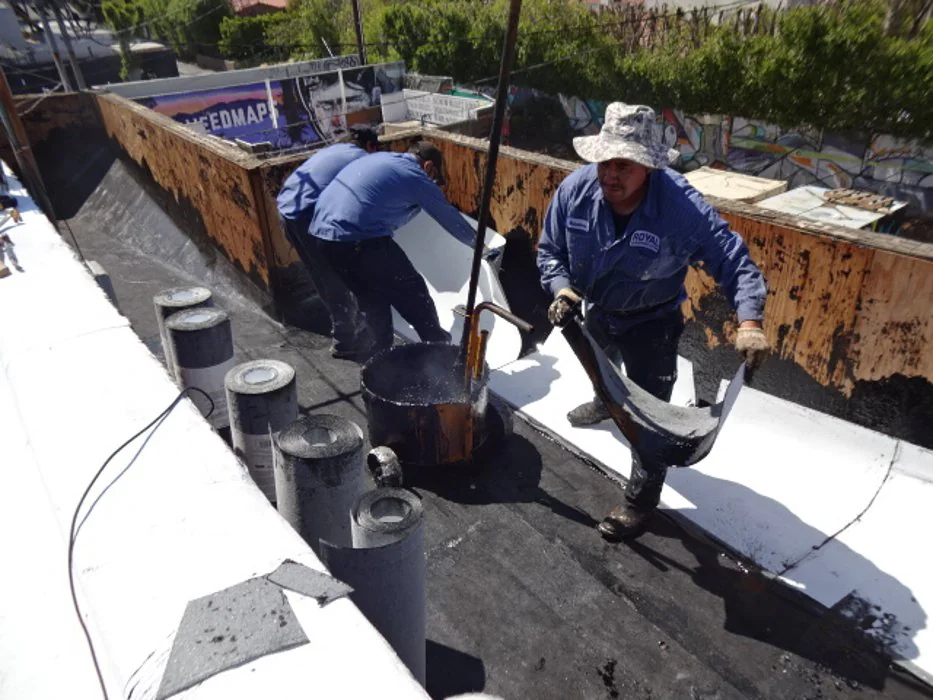
Also ask about exclusions. Some policies exclude certain types of work—like hot mop systems, which are common in Orange County and Los Angeles County for flat and low-slope roofs. If your project involves specialized systems, make sure the contractor’s insurance actually covers that work.
General liability and workers’ comp aren’t the only insurance that matters. If the contractor will be driving company vehicles to your property, they should carry commercial auto insurance. If a work truck damages your driveway or a delivery driver causes an accident on your street, commercial auto coverage handles it.
Professional roofing contractors expect these questions. They have their insurance information organized and readily available. If a contractor acts defensive or annoyed when you ask for proof of insurance, that’s a signal they’re either underinsured or uninsured.
In California’s litigious environment, insurance isn’t optional. It’s the baseline for doing business responsibly. Homeowners in Orange County and Los Angeles County face enough risks from wildfires, earthquakes, and severe weather. The last thing you need is a roofing contractor who adds to that risk by skipping coverage.
What Your Roofing Contract Must Include to Protect You
A handshake and a verbal agreement mean nothing when your roof starts leaking three months after the job. Everything needs to be in writing. Everything. The contract is your protection against misunderstandings, cost overruns, and contractors who disappear mid-project.
Your roofing contract should spell out exactly what work will be done, what materials will be used, how much it costs, and when it will be completed. It should include the contractor’s license number, insurance information, and payment schedule. And it should be signed by both parties before any work begins.
California law requires home improvement contracts to include specific disclosures. The contractor must provide an itemized estimate of repair costs. They must include a statement that claimed losses aren’t guaranteed to be covered by insurance. And they must give you a notice of your right to cancel within three business days if the contract was signed as a result of a door-to-door solicitation.
If a contractor hands you a one-page “agreement” with vague language like “roof repair as needed” or “quality materials,” don’t sign it. That’s not a contract—it’s a recipe for disputes. You need specifics: brand names for shingles, underlayment, and flashing; the number of layers being removed; whether new ventilation will be installed; and what the cleanup process includes.
Payment terms matter too. A reasonable deposit is 10 to 20 percent of the total cost. If a contractor demands 50 percent or more upfront, that’s a red flag. Legitimate contractors don’t need half the project cost before they start. They have relationships with suppliers and can purchase materials on credit. Large upfront payments are a hallmark of scammers who plan to take your money and run.
The contract should also outline what happens if there are delays, change orders, or disputes. Who’s responsible if the project takes longer than expected? What’s the process for approving additional work? How are disagreements resolved? These details feel tedious when you’re eager to get started, but they’re critical if things go sideways.
In Orange County and Los Angeles County, where roofing costs run higher than most of the country due to labor shortages and material expenses, a clear contract protects your budget. Without it, you’re vulnerable to surprise charges, scope creep, and contractors who stretch timelines indefinitely.
We understand that transparency starts with the contract. When you’re making a decision this important, you deserve documentation that protects your investment and holds everyone accountable.