
Summary:
Are You Licensed and Insured in California?
This isn’t small talk. In California, any roofing job over $500 requires a C-39 Roofing Contractor License from the state licensing board. Not a handyman license. Not a general contractor doing a little roofing on the side. A C-39 specialty license that proves the contractor has at least four years of hands-on experience, passed comprehensive exams, and maintains a $25,000 bond.
But a license number means nothing if you don’t verify it. Go to the CSLB website and look it up yourself. Check that it’s active, that there are no disciplinary actions, and that the name matches exactly who you’re hiring. If a contractor hesitates to give you their license number or tells you it’s “in process,” that’s your cue to move on.
Insurance matters just as much. You need proof of general liability coverage and workers’ compensation. If someone gets hurt on your property and the contractor doesn’t carry workers’ comp, you could be on the hook for medical bills. If they accidentally damage your home and don’t have liability insurance, you’re paying for repairs. Ask for certificates, and call the insurance company to confirm they’re current.
What Does a C-39 License Actually Mean for Your Project?
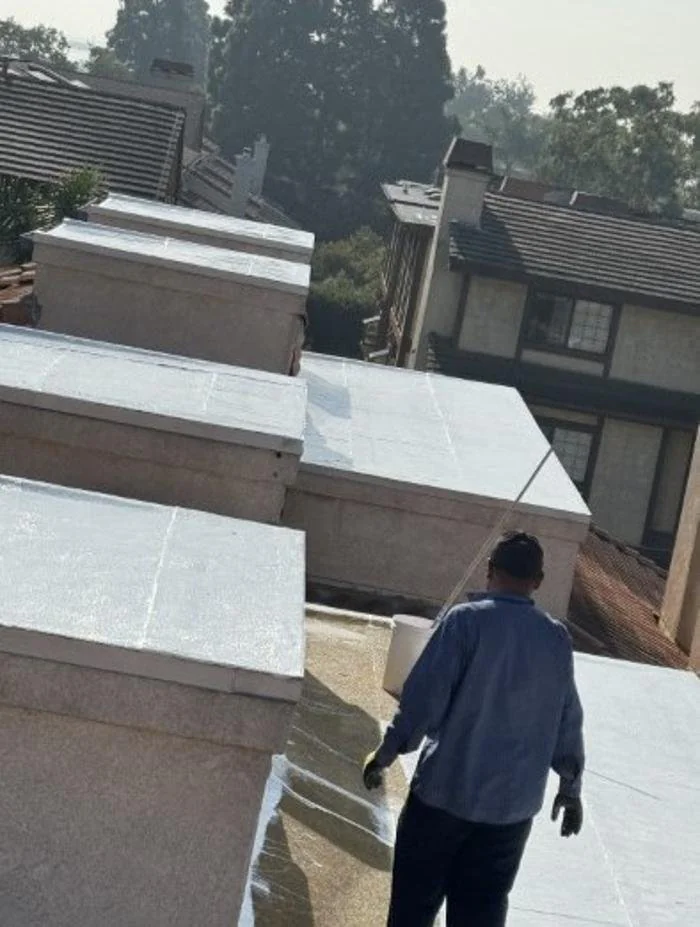
A C-39 license isn’t just paperwork. It’s proof that someone has been vetted by the state and knows how to install, repair, and waterproof roofing systems correctly. The exam covers everything from estimating and job prep to steep-slope and low-slope roofing techniques, safety standards, and California building codes. Contractors have to document years of real experience before they’re even allowed to sit for the test.
That matters in Orange County and Los Angeles County, where roofs face intense UV exposure, heat cycles, and occasional heavy rains that most of the country doesn’t deal with. A licensed contractor understands which materials hold up here, how to handle permits with local building departments, and what Title 24 energy codes require for reflective roofing. We know the climate, and we know the rules.
Unlicensed contractors don’t. They might be cheaper upfront, but they’re also the ones who cut corners, skip permits, and leave you with a roof that fails inspection or doesn’t meet manufacturer installation requirements. When that happens, your warranty is void, your insurance claim gets denied, and you’re stuck paying for the whole thing again.
Here’s what else a C-39 license gives you: legal recourse. If something goes wrong and the contractor won’t make it right, you can file a complaint with the state licensing board. You might even be eligible for reimbursement from the Contractors State License Board recovery fund. Try doing that with an unlicensed handyman who’s already moved on to the next job.
And if a contractor tells you they’re working under someone else’s license? Walk away. That’s a red flag. Every contractor doing the work should have their own active license, and they should be able to show you proof without hesitation. If they’re legitimate, they’re proud of it.
How to Verify Insurance Coverage the Right Way
Asking if a roofer has insurance is one thing. Actually confirming it is another. Too many homeowners take a contractor’s word for it, only to find out after an accident that the policy lapsed months ago or that it has exclusions that leave them exposed.
Start by asking for a certificate of insurance. A real one, not a photocopy that could be doctored. The certificate should list general liability coverage of at least $1 million and workers’ compensation if the contractor has employees. It should also show the policy is current, with dates that cover the timeline of your project.
But don’t stop there. Call the insurance company directly using the phone number on the certificate, not one the contractor gives you. Verify that the policy is active, that the coverage amounts match what you were told, and that there are no exclusions. Some contractors add exclusions to cut costs, like excluding work on HOAs, townhomes, or torch-down roofing. If your project falls into one of those categories and there’s an exclusion, you’re not covered.
Workers’ comp is non-negotiable in California, even for sole proprietors in the roofing trade. If a crew member falls off your roof and the contractor doesn’t have coverage, your homeowner’s insurance could be liable. That’s not a risk worth taking, no matter how good the price is.
And here’s a detail most people miss: check that the contractor has commercial auto insurance too. If their truck backs into your driveway or a worker’s vehicle causes damage on your property, personal auto insurance won’t cover it. Commercial policies do.
The bottom line is this: legitimate contractors have no problem providing proof of insurance. We expect you to ask, and we’ll hand over certificates without hesitation. If someone gets defensive or vague when you bring it up, that tells you everything you need to know.
What Certifications and Training Do You Have?
A license gets you in the door. Certifications show you who’s actually invested in doing the work right. Manufacturer certifications from companies like GAF, Owens Corning, or CertainTeed mean a contractor has gone through advanced training on how to install specific products correctly. It’s not a weekend seminar. It’s months or years of hands-on education, regular updates, and oversight to make sure the contractor is following installation standards to the letter.
Why does that matter? Because most manufacturer warranties only cover defects in materials, not labor. If your roof fails because of poor installation, you’re paying for the fix unless your contractor has a workmanship warranty. And the best workmanship warranties come from certified contractors who’ve proven they know what they’re doing.
Certifications also give you access to extended warranties that regular contractors can’t offer. These system warranties cover both materials and labor for longer periods, sometimes up to 50 years. But you only get them if you hire a contractor who’s certified at the right level and uses all the approved components from that manufacturer.
Why Factory Certifications Matter More Than You Think
Manufacturer certifications aren’t just marketing. They’re proof that a contractor has been vetted by the companies that make the products going on your roof. These manufacturers have a vested interest in making sure their materials are installed correctly, because if a roof fails due to poor workmanship, it reflects badly on their brand. That’s why they only certify contractors who meet strict standards for experience, insurance, customer service, and financial stability.
Take GAF’s Master Elite certification as an example. Only the top 3% of roofing contractors in North America earn that designation. To get it, a contractor has to carry at least $1 million in general liability insurance, maintain a proven track record of customer satisfaction, and commit to ongoing training. The same goes for Owens Corning’s Platinum Preferred contractors and CertainTeed’s ShingleMaster program.
What does that mean for you? It means you’re working with someone who’s been screened, who’s accountable to a major manufacturer, and who has access to better warranty options. If something goes wrong, the manufacturer has a stake in making sure it gets resolved, because their reputation is on the line too.
But here’s where it gets tricky: not all certifications are created equal. Some manufacturers have multiple tiers, and the level of certification determines what kind of warranty you can get. A contractor might be certified, but only at the basic level that doesn’t unlock the extended system warranties. You need to ask which tier they’re certified at and what that means for your coverage.
And don’t just take their word for it. Most manufacturers have online directories where you can verify a contractor’s certification status. Look them up. Make sure the certification is current and that it matches the level they’re claiming. If a contractor says they’re certified but you can’t find them in the directory, that’s a problem.
The other thing certifications tell you is that a contractor is committed to staying current. Roofing products and techniques evolve. New materials come out, building codes change, and installation standards get updated. Certified contractors are required to keep up with those changes through ongoing training. That means we’re not installing your roof the way we did 20 years ago. We’re using the latest best practices, and that makes a difference in how long your roof lasts.

What Kind of Warranty Protection Will I Actually Have?
Warranties are where a lot of homeowners get burned, because they assume “lifetime” means what it sounds like. It doesn’t. Most asphalt shingle warranties are labeled “lifetime,” but that typically means as long as you own the home, and even then, coverage is often prorated after 10 or 15 years. So if your roof fails in year 20, you might only get a fraction of the replacement cost covered.
And here’s the kicker: most manufacturer warranties only cover defects in the materials themselves. If your roof leaks because of poor installation, that’s not covered. You need a separate workmanship warranty from your contractor to protect against installation errors. A good workmanship warranty should last at least 10 years, and it should cover both labor and materials needed to fix any problems that arise from how the roof was installed.
Then there are system warranties, which combine material and workmanship coverage into one package. These are only available through certified contractors, and they’re the gold standard for protection. A system warranty means that if anything goes wrong, whether it’s a defective shingle or a flashing that was installed incorrectly, you’re covered. No finger-pointing between the manufacturer and the contractor about whose fault it is.
But even the best warranty is worthless if the company goes out of business. That’s why you want to work with a local contractor who’s been around for years and has a track record of honoring their commitments. Storm chasers and fly-by-night operations might offer impressive-sounding warranties, but they’re not going to be around in five years when you need them.
Ask for the warranty terms in writing before you sign anything. Read through it carefully and look for exclusions. Most warranties don’t cover damage from storms, poor ventilation, or lack of maintenance. They also often require regular inspections to stay valid. If you skip those inspections and a problem develops, the warranty could be voided.
And if you’re planning to sell your home, find out if the warranty is transferable. Some warranties can be transferred to a new owner, which can be a selling point. Others can’t, or they require a fee and reduce the coverage period for the new owner. Knowing that upfront helps you understand the real value of what you’re getting.
How to Choose a Roofer You Can Trust
Finding the best local roofer comes down to doing your homework and asking questions that matter. Verify the C-39 license. Confirm insurance coverage. Check for manufacturer certifications. Understand what your warranty actually covers. And don’t skip the step of reading reviews, checking references, and making sure the contractor has a real, established presence in Orange County or Los Angeles County.
The contractors who get defensive or vague when you ask these questions are showing you who they are. The ones who answer clearly, provide documentation without hesitation, and take the time to educate you? Those are the ones worth hiring.
Your roof is one of the biggest investments you’ll make in your home. It deserves more than a handshake and a low bid. It deserves a contractor who’s licensed, insured, certified, and committed to doing the work right. When you’re ready to move forward with a roofing project, reach out to us at Royal Roofing Company. We’ve built our reputation on transparency, quality craftsmanship, and standing behind every job we do.