
Summary:
What Is Eco-Friendly Roof Restoration?
Roof restoration isn’t a band-aid fix. It’s a complete system designed to extend the life of your existing roof without removing it.
The process involves cleaning, repairing any damaged areas, and applying advanced protective coatings—typically silicone roof coatings or other liquid applied membranes—that form a seamless, waterproof barrier over your entire roof surface. These coatings cure into a flexible, UV-resistant membrane that protects against the elements while reflecting heat and reducing energy costs. The result is a roof that performs like new, often with warranties comparable to full replacement, but at a fraction of the cost and environmental impact.
This approach works particularly well on commercial flat roofs, low-slope systems, and even some residential applications where the underlying structure is still sound. If your roof has good bones but a tired surface, restoration can add 15 to 20+ years of life.
How Silicone Roof Coatings Create Seamless Roof Protection
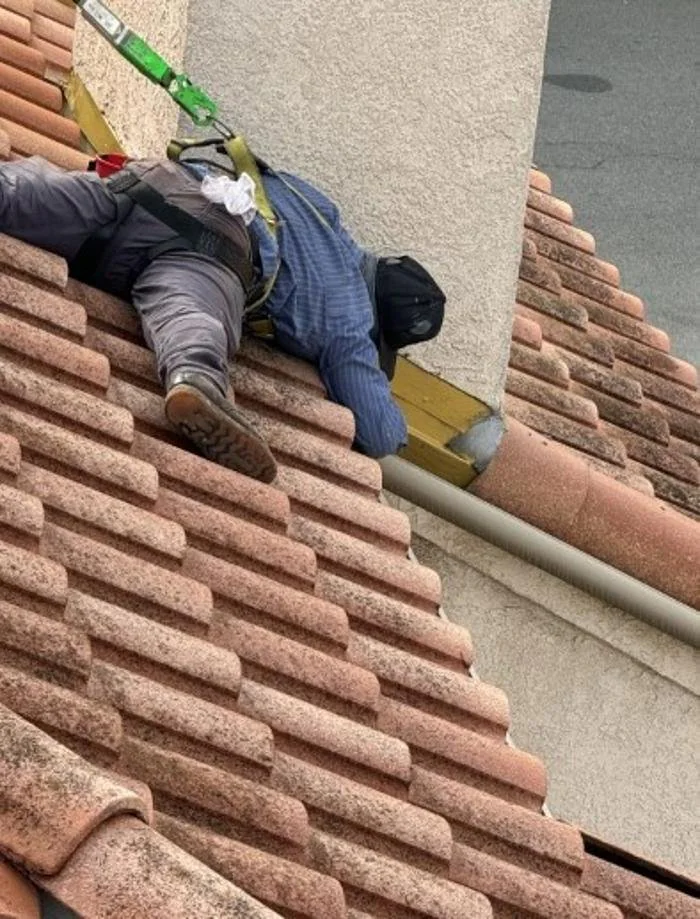
One of the biggest advantages of silicone roof coatings is their ability to create a truly seamless roof protection system. Traditional roofing materials—shingles, membranes, tiles—all have seams, joints, and overlaps. Those are the spots where leaks start.
Silicone coatings eliminate that problem entirely. When applied correctly, they flow over the entire roof surface, penetrating into cracks and gaps, then cure into a single, monolithic layer with no weak points. There are no seams to fail, no fasteners to work loose, no edges to peel up in high winds.
Silicone also brings serious performance benefits to the table. It reflects 80 to 90% of the sun’s UV rays, which means your roof stays cooler and your building uses less energy for air conditioning. That’s a big deal in Southern California, where roofs bake under intense sun nearly year-round. Silicone is also moisture-cure, meaning it resists ponding water better than almost any other coating chemistry. If you have a flat or low-slope roof that tends to hold water after rain, silicone won’t break down the way acrylic or other coatings might. It stays flexible, stays bonded, and keeps protecting.
And because silicone doesn’t chalk or degrade under UV exposure, it maintains its reflectivity and waterproofing properties for the entire lifespan of the coating—often 15 to 20 years or more with proper maintenance. You’re not just buying a stopgap. You’re investing in a long-term solution that performs.
Why Liquid Applied Membranes Outperform Traditional Materials
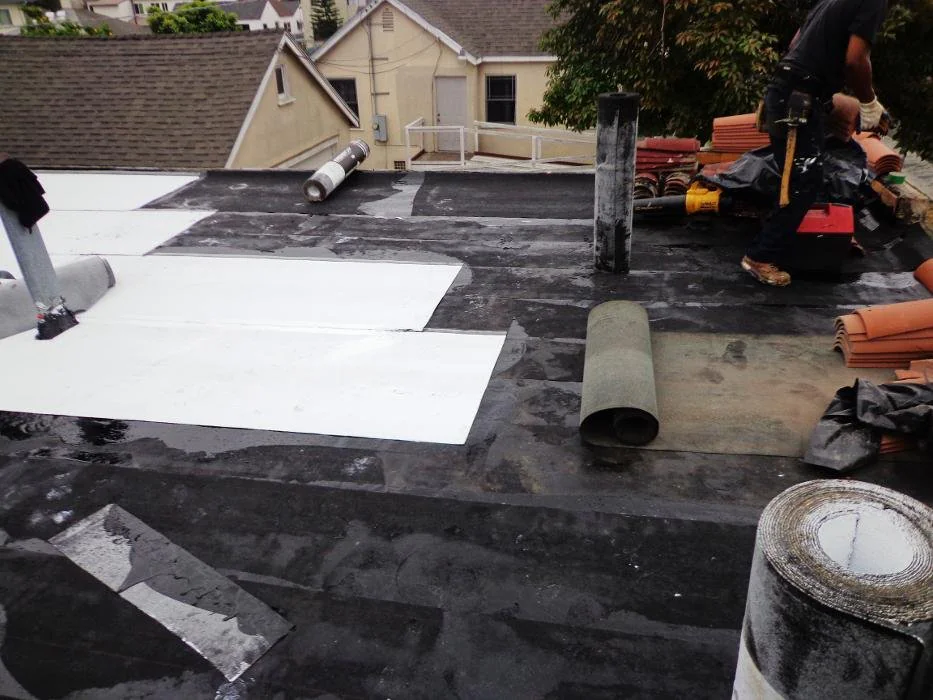
Liquid applied membranes take roof restoration to another level. Unlike pre-formed sheets or rolls that have to be cut, fitted, and seamed together, liquid membranes are applied directly to the roof surface in liquid form. They conform to every detail, every penetration, every odd angle.
Once cured, they create a fully adhered, seamless waterproofing layer that moves with the roof as it expands and contracts with temperature changes. That flexibility is critical in California, where rooftops can swing from scorching midday heat to cool overnight temperatures. Rigid systems crack. Liquid membranes flex.
These systems also simplify complex details. Flashing around vents, HVAC units, skylights, and roof edges—all the spots that are typically vulnerable—get the same seamless coverage as the rest of the roof. There’s no need for metal sleeves, pitch pans, or other workarounds that tend to fail over time. The membrane flows around the obstacle, bonds to it, and cures into a continuous protective layer.
Liquid applied membranes are available in several chemistries—silicone, polyurethane, acrylic, and PMMA—each with its own strengths. Silicone excels in UV resistance and ponding water tolerance. Polyurethane offers excellent abrasion resistance and can be walked on more easily. Acrylic is cost-effective and breathable, though it doesn’t handle standing water as well. The right choice depends on your roof type, climate, and performance goals, but all of them share one thing in common: they eliminate the seams and weak points that plague traditional roofing systems.
Installation is faster and less disruptive than traditional re-roofing too. Crews can apply liquid membranes by spray, roller, or squeegee, often completing projects in days rather than weeks. There’s no heavy equipment tearing through your parking lot, no debris falling near entrances, and no need to shut down operations. For commercial properties, that alone can justify the investment.
Landfill Waste Reduction: The Environmental Case for Restoration
Here’s a number that should make you pause: more than 11 million tons of asphalt shingles end up in American landfills every year. Add in metal, tile, membranes, and other roofing materials, and construction waste from roofing alone becomes staggering.
Most of that waste is avoidable. When you tear off a roof that’s structurally sound but surface-worn, you’re throwing away materials that could have been restored and protected for another 15 to 20 years. Restoration keeps that material in place, extends its useful life, and eliminates the need for disposal. You’re not just saving money on dump fees and hauling—you’re making a real dent in the waste stream.
This matters more in California than almost anywhere else. The state has some of the strictest environmental regulations in the country, and building codes increasingly favor sustainable practices. Choosing restoration over replacement aligns with those values and helps you meet green building standards without sacrificing performance.
How Much Waste Does a Typical Roof Replacement Generate?
A typical residential roof teardown produces 2 to 4 tons of waste. That’s shingles, underlayment, flashing, fasteners, and all the debris that comes off during demolition. For commercial buildings, the numbers can be much higher—tens of thousands of square feet of membrane, insulation, and substrate material heading straight to the landfill.
Even when materials are technically recyclable, the reality is that most roofing waste doesn’t get recycled. Asphalt shingles can be ground up and used in road paving, but only about 10% of tear-off shingles actually make it to recycling facilities. The rest get buried. Metal roofing has better recycling rates, but it still requires energy-intensive processing and transportation.
Restoration eliminates that entire waste stream. Nothing gets torn off. Nothing gets hauled away. The existing roof stays in place, and the coating system goes on top, creating a brand-new protective layer without generating a single pound of landfill waste. For property owners who care about their environmental footprint, that’s a meaningful difference.
And it’s not just about what you’re avoiding. Restoration also reduces the demand for new raw materials. Manufacturing roofing products—whether shingles, membranes, or metal panels—requires mining, refining, and processing natural resources. It’s energy-intensive and generates emissions. When you restore instead of replace, you’re reducing that upstream environmental impact as well. You’re keeping what’s already there in service longer, which is one of the most effective forms of sustainability.
Sustainable Building Materials and California's Title 24 Compliance
California’s Title 24 energy standards are some of the toughest in the nation, and they’re only getting stricter. Part of those standards involves cool roof requirements—roofs that reflect solar heat rather than absorbing it, reducing the building’s cooling load and helping combat the urban heat island effect.
Silicone roof coatings and other reflective liquid applied membranes are specifically designed to meet those requirements. They have high solar reflectance and thermal emittance, meaning they bounce sunlight back into the atmosphere instead of letting it soak into your building. That keeps your roof surface cooler, reduces the strain on your HVAC system, and lowers your energy bills.
For commercial property managers and building owners, Title 24 compliance isn’t optional. If you’re doing any significant roof work, you need to meet the code. Restoration with a cool roof coating system is one of the most cost-effective ways to do that, especially compared to a full teardown and replacement. You get compliance, energy savings, and extended roof life all in one project.
Sustainable building materials go beyond just meeting code, though. They’re about making choices that reduce environmental impact without sacrificing performance. Silicone coatings, for example, have low VOC content, cure without releasing harmful solvents, and can be recoated multiple times over the roof’s life. That means you can maintain and extend the system again in the future without starting from scratch. It’s a truly circular approach to roofing—one that keeps materials in service as long as possible and minimizes waste at every stage.
For property owners in Orange County, CA and Los Angeles County, CA, where environmental consciousness is high and regulations are strict, choosing sustainable building materials isn’t just smart—it’s expected. Restoration lets you meet those expectations while also protecting your investment and saving money.
Is Eco-Friendly Roof Restoration Right for Your Property?
Not every roof is a candidate for restoration. If the structure is compromised, if there’s extensive water damage to the decking, or if the roof has already been restored multiple times, replacement might be the only option. But if your roof is structurally sound and just showing surface wear, restoration offers a smarter, more sustainable path forward.
You’ll save money—often 50 to 75% compared to full replacement. You’ll keep tons of waste out of landfills. You’ll get a seamless, high-performance roof that meets California’s environmental standards and comes with a long-term warranty. And you’ll do it all with minimal disruption to your daily operations or home life.
The key is working with a contractor who understands the science behind these systems and has the experience to apply them correctly. We’ve been serving Orange County, CA and Los Angeles County, CA for over 40 years, with deep expertise in complex roofing solutions, factory certifications, and a commitment to quality that shows in every project. If you’re ready to explore whether restoration makes sense for your property, reach out to us and get a professional assessment.