Appointments Available
Phone Support 24/7
Bell Gardens, CA 90201
*Serving most of Southern California*
Appointments Available
Phone Support 24/7
Bell Gardens, CA 90201
You need a roof that doesn’t leak during the next storm. One that meets California’s Title 24 requirements without you having to become a code expert. A system that lowers your energy bills instead of adding to them.
That’s what happens when you work with a commercial roofing contractor who’s been doing this since 1980. Your building stays protected. Your tenants or employees stay dry. Your insurance stays valid because everything’s documented and up to code.
We handle flat roof systems, TPO and PVC roofing, modified bitumen, hot tar cap sheet—whatever your building needs. The install gets done without dragging on for weeks. The materials come from GAF, CertainTeed, and Owens Corning, not some bargain supplier who’ll be gone in two years. And when we say the roof will perform, we mean it—because our crews have been with us long enough to know what actually works in Southern California’s climate.
We’ve been handling commercial roofing projects across Los Angeles County since 1980. We’ve held GAF Master Elite status since 2002, which puts us in the top 2% of roofing contractors nationwide. That’s not marketing talk—it’s a certification you earn and keep by doing the work correctly.
Acton’s commercial properties face intense sun exposure, temperature swings, and the occasional heavy rain that tests every seam and flashing. We’ve roofed industrial facilities, apartment complexes, and commercial buildings throughout the area. Our crews know what holds up here and what fails in three years.
We’re a C-39 licensed specialty roofing contractor. Our teams are factory-trained and certified. We don’t subcontract your job to whoever’s available that week—these are our people, and they’ve been with us for years.
First, we come out and actually look at your roof. Not a quick glance from the ground—we get up there, document what’s happening, and figure out what you’re dealing with. If it’s a leak, we find the source. If it’s an aging system, we tell you what’s failing and why.
Then we walk you through your options. Maybe it’s a full replacement with a TPO or PVC system that’ll meet Title 24 cool roof requirements and cut your cooling costs. Maybe it’s a restoration using Energy Star-qualified coatings. Maybe it’s a repair that buys you a few more years. We explain what each option costs, how long it takes, and what kind of lifespan you’re looking at.
Once you decide, we schedule the work around your business operations. Our project managers coordinate everything—materials, crews, inspections, the whole process. We document the install with photos because that matters when you file insurance claims or sell the property. And we don’t leave until the job’s complete and you’ve got the warranty paperwork in hand.
If something comes up during the project, you’ll know about it. If we find additional damage once we open things up, we show you exactly what we’re seeing before we proceed. No surprises on the final invoice.
Acton’s climate demands roofing systems that can handle extreme heat and UV exposure without breaking down. TPO and PVC single-ply membranes are popular here for good reason—they reflect sunlight, meet California’s Title 24 cool roof mandates, and hold up under thermal stress. We install both, and we’re factory-certified to do it correctly.
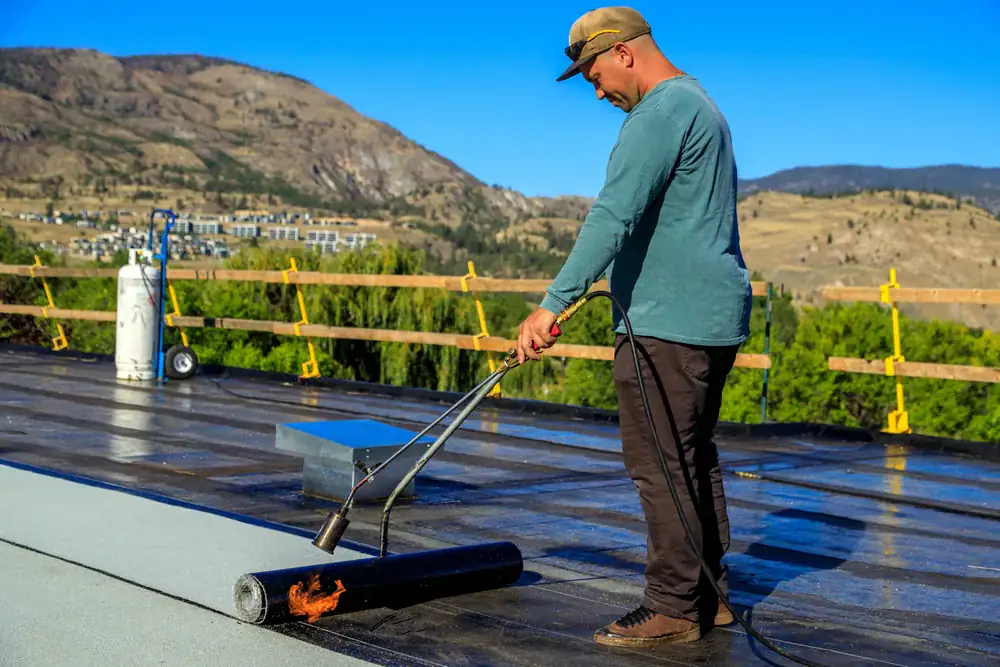
For flat roof systems on industrial buildings and older commercial properties, we work with modified bitumen, hot tar cap sheet, and EPDM rubber roofing. These systems have decades of proven performance when they’re installed by crews who know what they’re doing. Our teams have been installing commercial roof systems across LA County long enough to know which details matter and which shortcuts come back to haunt you.
Commercial roof maintenance is the other half of the equation. A good system still needs regular inspections, drain clearing, and minor repairs before small problems become expensive ones. We offer maintenance programs that keep your roof performing and your warranty valid. Most commercial roofs fail early because they’re ignored, not because the materials were bad.
If you’re managing a property in Acton and your roof is over 15 years old, you’re likely looking at either a restoration or a replacement soon. Title 24 cool roof restoration can extend your roof’s life while bringing you into compliance with current energy codes—often for a fraction of replacement cost.
Most commercial roof replacements take one to three weeks depending on the building size, roof complexity, and which system you’re installing. A straightforward TPO or PVC install on a 10,000 square foot flat roof typically takes five to seven business days in good weather.
Larger projects or buildings with multiple levels, extensive HVAC equipment, or structural repairs take longer. We schedule the work to minimize disruption to your operations—sometimes that means working evenings or weekends, sometimes it means phasing the project so parts of your building stay operational.
Weather delays happen. We don’t install roofing in the rain, and we don’t rush through a project just to meet an arbitrary deadline. You’ll get a realistic timeline upfront, and we’ll keep you updated if anything changes. The goal is a roof that’s installed correctly, not just installed quickly.
California’s Title 24 energy code requires most commercial buildings to install cool roofs—roofing systems with high solar reflectance and thermal emittance. The idea is to reduce heat absorption, lower cooling costs, and decrease energy demand across the state.
If you’re replacing or restoring more than 50% of your roof, you likely need to meet these requirements. The specific standards depend on your climate zone, building type, and roof slope. Acton falls under climate zone requirements that mandate certain Solar Reflectance Index ratings for new and replacement roofs.
TPO and PVC roofing systems typically meet Title 24 requirements right out of the box because they’re designed with reflective surfaces. Some coating systems can also bring an existing roof into compliance during a restoration. We handle the compliance documentation and make sure your roof meets code—you shouldn’t have to become an expert in state energy regulations just to replace your roof. That’s our job.
If your roof is under 10 years old and the damage is localized—a few leaks, some membrane damage from equipment work, storm damage in one area—a repair usually makes sense. You’re fixing the problem without replacing a system that still has useful life left.
If your roof is over 15 years old, you’re patching leaks every year, or you’re seeing widespread membrane deterioration, replacement is probably the smarter move. At that point you’re throwing money at a failing system, and you’re one bad storm away from serious interior damage.
There’s a middle option: roof restoration using coatings and reinforcement. This works when the underlying structure is sound but the surface is worn. You can extend the roof’s life by another 10 to 15 years for significantly less than a full replacement. We’ll assess your specific situation and give you honest input on which option makes financial sense. Sometimes the right answer is to repair it now and budget for replacement in two years. We’re not here to sell you a new roof if that’s not what you need yet.
Commercial roofing costs in Acton typically range from $4 to $12 per square foot depending on the system, building complexity, and current roof condition. A basic TPO or PVC single-ply system on a straightforward flat roof runs $5 to $8 per square foot installed. Modified bitumen and built-up systems cost slightly less. Premium systems with enhanced warranties or additional insulation cost more.
That’s just material and labor. If we find structural damage, need to remove multiple old roof layers, or have to work around extensive rooftop equipment, costs go up. If your building needs improved drainage, new flashing, or parapet repairs, that’s additional.
We provide detailed estimates that break down exactly what you’re paying for—materials, labor, permits, disposal, warranty coverage. We also offer financing options including low monthly payments and no-interest plans for qualified customers. The goal is to give you enough information to make a smart decision, not to hit you with the lowest number possible and then add costs later. Material prices have been volatile the last few years, so we lock in pricing once you approve the estimate.
Yes. If your roof is leaking and causing interior damage, that’s an emergency—we’ll get someone out there to stop the immediate problem. That usually means tarping, temporary patching, or sealing the leak source so you can operate while we schedule the permanent repair.
Emergency repairs aren’t cheap because they require dropping other work and mobilizing a crew quickly. But they’re a lot cheaper than water damage to your inventory, equipment, or tenant spaces. If you call us with an active leak during business hours, we’ll have someone there the same day in most cases.
Once we’ve stopped the immediate damage, we’ll assess what caused the failure and what it’ll take to fix it correctly. Sometimes an emergency leak is a one-time failure—a punctured membrane, a blown-off section, a clogged drain that caused ponding. Sometimes it’s a symptom of a larger problem. We’ll tell you which situation you’re dealing with and what your options are. The emergency repair buys you time to make a smart decision about the permanent fix instead of making a panicked decision while water’s pouring into your building.
TPO and PVC are both single-ply membrane systems that work well on flat and low-slope commercial roofs. They’re heat-welded at the seams, reflective, and Title 24 compliant. But they’re not identical.
PVC has been around longer and has a proven track record—some PVC roofs installed in the 1960s are still performing. It’s more resistant to chemicals, grease, and certain types of damage, which makes it a good choice for restaurant roofs or buildings with HVAC equipment that might leak. PVC is also more flexible in cold weather, though that’s less relevant in Acton’s climate. It typically costs 10% to 20% more than TPO.
TPO is newer but has become the most popular commercial roofing membrane in the country. It’s lighter, slightly easier to install, and costs less than PVC while still delivering good performance and energy efficiency. The early TPO formulations had some issues, but modern TPO from major manufacturers like GAF holds up well.
For most commercial buildings in Acton, either system works. We’ll recommend one over the other based on your specific building, budget, and how long you plan to own the property. Both systems typically last 20 to 30 years when installed correctly and maintained. The installation quality matters more than the material choice in most cases.
Other Services we provide in Acton