When your building needs more than a thin membrane and crossed fingers, multi-ply roofing systems deliver layered protection that actually holds up under Southern California’s relentless sun, ponding water, and rooftop traffic.
State-certified expertise in commercial roofing systems means you're working with contractors who actually know how to build roofs that last decades.
Factory Certified Installers
Authorized by major manufacturers to install their systems correctly, backed by training and quality standards that protect your investment long-term.
Photo Documentation Every Job
Detailed installation records give you proof for insurance claims and peace of mind knowing exactly what's protecting your building.
Decades of Local Experience
Family-owned with deep Orange County and LA roots means we understand exactly what Southern California weather does to commercial roofs.
Built-Up Roofing Systems Southern California
Why Smart Property Owners Choose Multi-Ply Over Quick Fixes
Multi-ply roofing systems—also called built-up roofing or BUR—use multiple layers of asphalt and reinforcing felts to create a thick, seamless waterproof membrane. Unlike single-ply systems that rely on one thin sheet, multi-ply construction gives you redundant protection. If one layer gets damaged, the others keep working.
This matters in Orange County and Los Angeles where intense UV exposure, thermal cycling, and occasional heavy rains put constant stress on commercial roofs. The multi-layered approach has protected flat and low-slope buildings for over a century because it’s fundamentally robust. When installed by contractors who actually know what they’re doing, these systems routinely last 30 to 50 years with minimal maintenance.
You’re not paying for the newest trend. You’re investing in proven performance that handles the real-world conditions your building faces every single day.
These aren’t marketing claims—they’re the real advantages that show up year after year when your roof keeps performing while others need constant repairs.
You stop worrying about one puncture or tear causing catastrophic leaks because multiple waterproof layers provide backup protection.
Your roof handles HVAC techs, solar installers, and maintenance crews without tearing like thin membranes do under foot traffic.
Ponding water becomes less of a crisis because the robust construction resists the membrane deterioration that standing water causes.
You're not calling for emergency repairs every few years because properly installed multi-ply systems routinely deliver 30-plus years of service.
Insurance claims get approved faster when you have photo documentation and manufacturer certifications proving code-compliant installation.
Your energy costs drop when reflective cap sheets or gravel surfacing deflect Southern California's intense solar heat instead of absorbing it.
Call us or get a free online quote to help us identify your project needs.
We'll follow up
If you requested an online quote, you can expect a callback within 24-48 hours of your request.
The floor is yours
Connect with an expert and share all project specifics.
Plan your project
Like what you hear? We'll provide next steps and expert guidance.
Hot Mop Roofing Installation LA
Why Multi-Ply Outperforms Single-Ply in Real Conditions
Single-ply membranes like TPO and EPDM work fine when conditions are perfect. But perfect doesn’t exist on a commercial roof in Orange County. You’ve got HVAC units dropping tools. Solar installers walking back and forth. Debris from nearby construction. Standing water that won’t drain because the original slope wasn’t quite right.
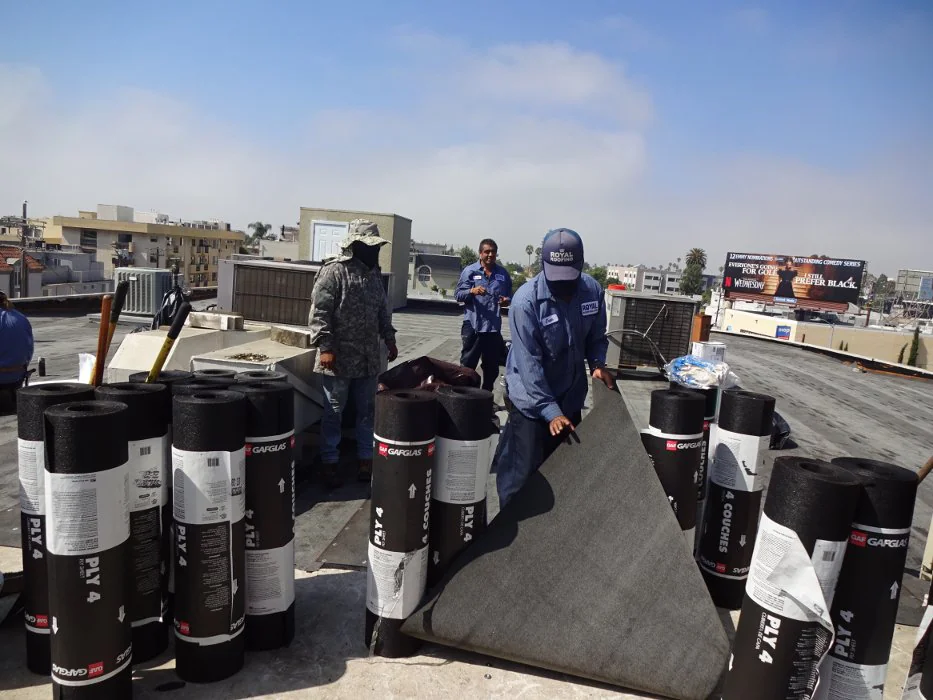
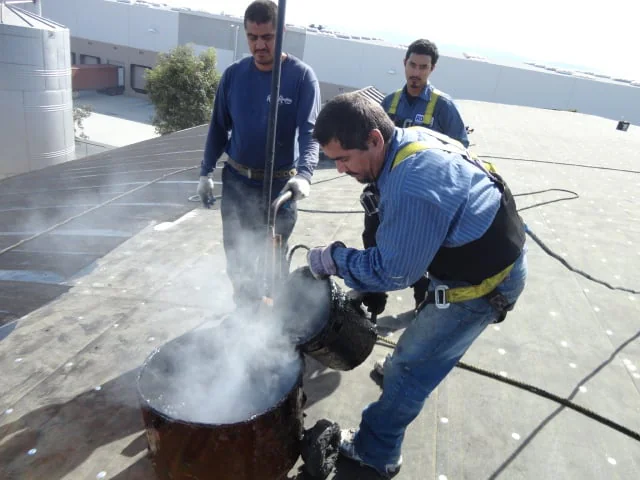
Multi-ply systems handle this reality better because they’re built with redundancy. The multiple layers of reinforced felt and asphalt create a thick barrier that resists punctures, UV degradation, and thermal stress. When hot asphalt saturates each layer during installation, it fuses everything into one continuous membrane—no seams to fail, no adhesive to break down.
The gravel or cap sheet surfacing adds another layer of protection against UV rays and physical damage. This is why you see multi-ply roofs on warehouses, industrial buildings, and high-traffic commercial properties where durability actually matters. It costs more upfront because it takes skilled labor and quality materials. But you’re not replacing it in 15 years like many cheaper alternatives.
What's Actually Included in Professional Multi-Ply Installation
A real multi-ply installation starts with honest assessment of your existing roof deck and insulation. If there’s moisture damage or structural issues, they get addressed before any new roofing goes down—not covered up and ignored like some contractors do.
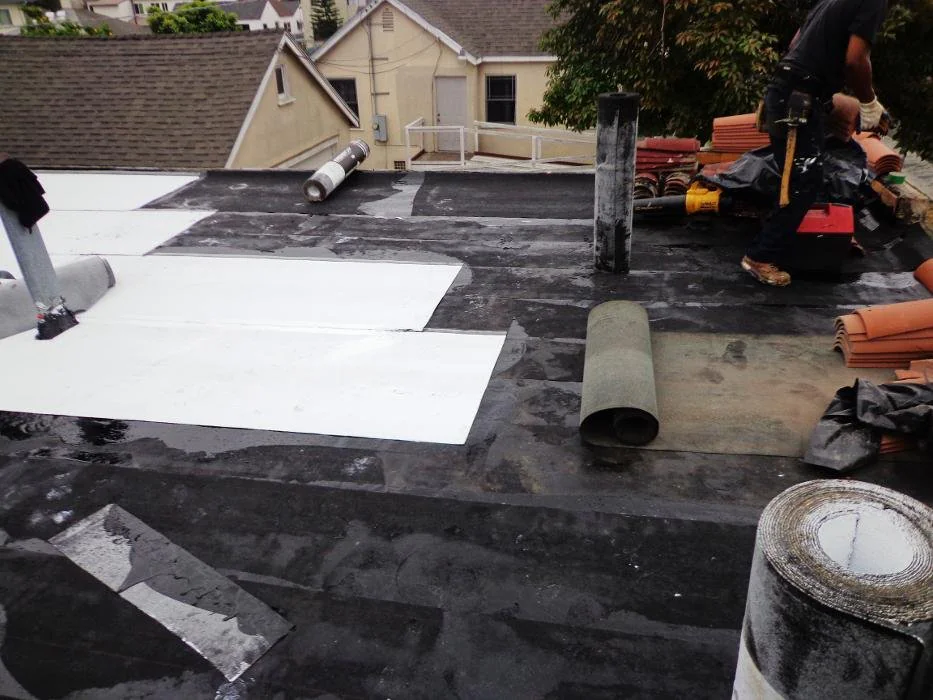
The base layer goes over proper insulation that meets California Title 24 energy codes. Then comes the alternating layers of hot asphalt and reinforcing felts, each one carefully mopped and embedded while the asphalt is still hot enough to create proper fusion. The number of plies depends on your building’s needs and warranty requirements, typically ranging from three to six layers.
Surfacing comes last—either a flood coat of asphalt with gravel for maximum UV protection and fire rating, or a mineral-surfaced cap sheet for a cleaner look. All penetrations get properly flashed. Drainage gets verified to prevent ponding. And you get photo documentation of every stage so you have proof of what’s actually under that finished surface. This level of detail matters when you’re counting on this roof to protect your building for the next three decades.