Appointments Available
Phone Support 24/7
Bell Gardens, CA 90201
*Serving most of Southern California*
Appointments Available
Phone Support 24/7
Bell Gardens, CA 90201
You’re not thinking about your roof. That’s the point.
Your building stays dry during winter storms. Your HVAC costs drop because your roof reflects heat instead of absorbing it. Your insurance company has zero questions because everything was documented correctly from day one.
When you need maintenance, it happens on your schedule—not during an emergency at 2 a.m. when water’s pouring into your warehouse. Your roof lasts its full lifespan, sometimes longer, because someone’s actually checking on it twice a year.
You’re not calling contractors every few months to patch the same problem. You’re not explaining to your boss why the roof failed again. You’re not dealing with mold remediation or ruined inventory.
The roof just works. Quietly. Consistently. For decades.
We hold California’s C-39 specialty contractor license—the only license that covers complex commercial roofing systems. That’s not just paperwork. It means we’ve met higher technical standards than general contractors who occasionally do roofs.
Our crews have been with us for decades, not months. The guy running your project has probably installed more flat roof systems in Brea than most contractors have seen in their careers.
We’re factory-certified by the manufacturers whose materials we install. We carry an A+ rating with the Better Business Bureau. We document every phase of every job with photos, because you should know exactly what you’re paying for.
Brea’s commercial buildings face specific challenges—temperature swings, Title 24 energy requirements, and the occasional heavy rain that tests every seal and seam. We’ve handled all of it, hundreds of times over.
We start with an inspection—not a sales pitch. You get photos of what’s wrong, what’s going to fail soon, and what can wait. We explain your options in plain language: TPO versus PVC, restoration versus replacement, what your insurance will cover.
Once you decide to move forward, we handle the permitting and compliance paperwork. Title 24 cool roof requirements, fire ratings, structural load calculations—you don’t need to become a roofing expert to get this done right.
During installation, we document everything. You’ll see photos of the substrate, the insulation layers, the membrane seams, the flashing details. If your insurance company or building inspector wants proof, you’ll have it.
We don’t disappear after the final invoice. Your roof comes with a maintenance plan that actually prevents problems instead of just reacting to them. Twice a year, we’re up there clearing drains, checking seams, and catching small issues before they become expensive emergencies.
If something does go wrong—a sudden leak, storm damage, equipment failure—we’re available 24/7. Not a voicemail system. Actual people who can get a crew to your building.
Most commercial buildings in Brea have flat or low-slope roofs. That means water doesn’t run off quickly—it sits there, testing every seam and penetration until it finds a way in.
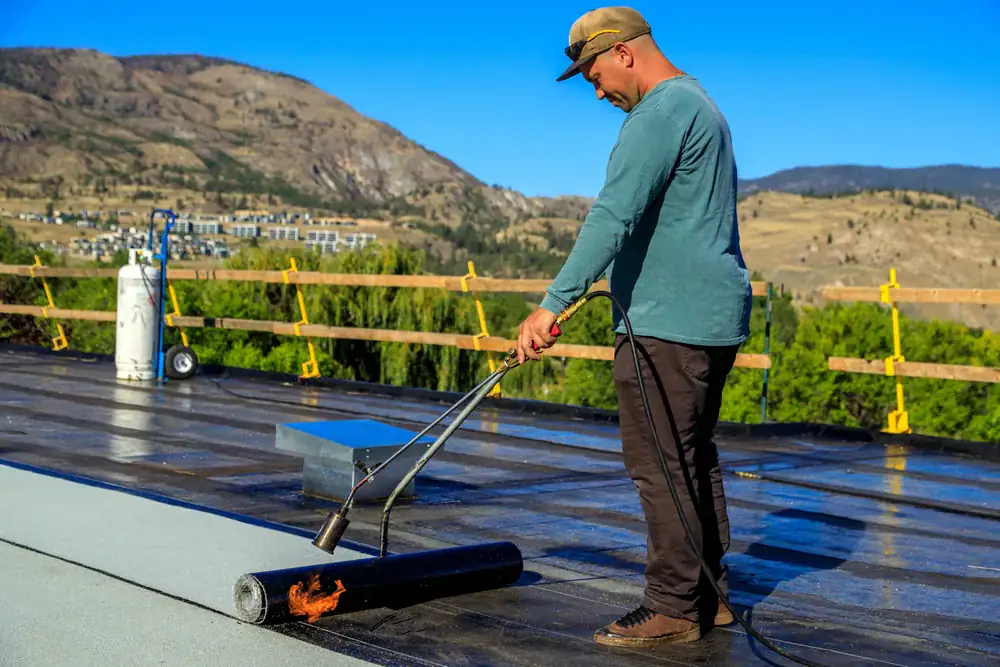
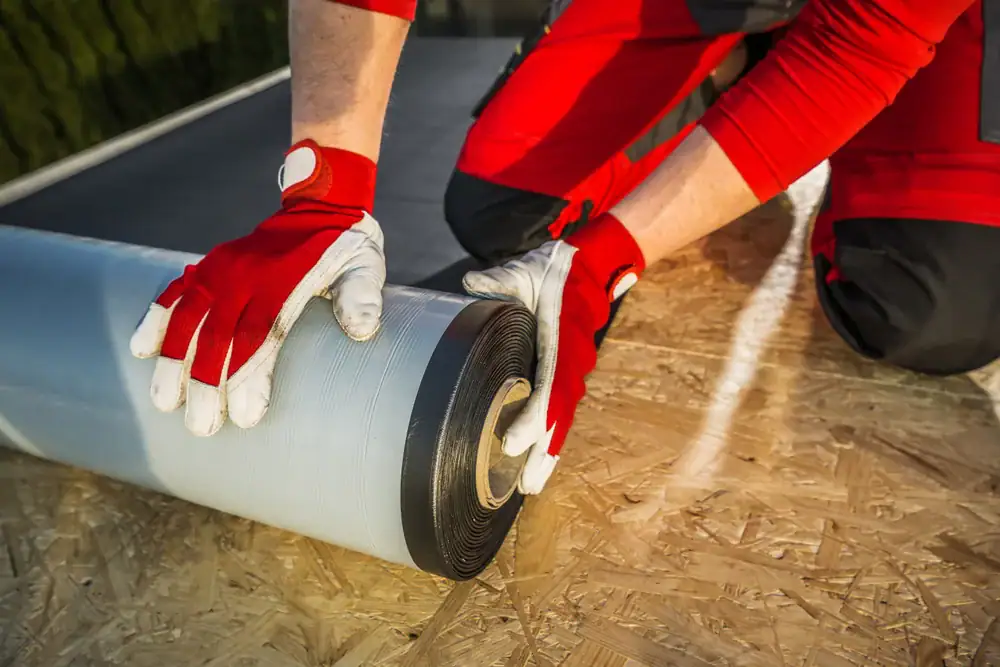
TPO and PVC roofing systems work well here because they’re heat-welded, not glued. The seams are actually stronger than the membrane itself. They meet Title 24 cool roof requirements, which cuts your cooling costs and keeps you compliant with California energy codes.
If your roof is still structurally sound but the surface is deteriorating, cool roof restoration can add 10-15 years of life for a fraction of replacement cost. We apply a reflective coating system that seals small cracks, reflects UV rays, and brings your building back into energy compliance.
Industrial roofing solutions for warehouses and manufacturing facilities need to handle rooftop equipment, foot traffic, and sometimes chemical exposure. We design systems that protect your operations without disrupting them—most installations happen outside business hours.
Commercial roof maintenance isn’t optional if you want your roof to last. Drains clog. Seams separate. Flashing pulls away. Catching these problems during a scheduled inspection costs a few hundred dollars. Ignoring them until your ceiling caves in costs tens of thousands.
Most commercial roof replacements take one to three weeks, depending on building size, roof complexity, and weather. A straightforward 10,000 square foot flat roof with minimal equipment might be done in five business days. A 40,000 square foot building with multiple HVAC units, skylights, and parapet walls could take three weeks.
Weather delays happen. We don’t install roofing systems in the rain, no matter how far behind schedule we are. A membrane installed on a wet substrate will fail, and we’re not putting our name on work that won’t last.
We coordinate with your operations team to minimize disruption. If you can’t have crews working during business hours, we’ll work nights and weekends. If certain areas need to stay accessible, we phase the project so you’re never completely shut down.
You’ll know the timeline before we start. If something changes, you’ll hear about it immediately—not three days after the problem started.
Both are single-ply membranes that work well on flat commercial roofs. Both are heat-welded at the seams. Both meet Title 24 cool roof requirements. The differences matter depending on your building.
TPO costs less and performs well in most applications. It’s flexible, resists UV damage, and holds up to normal roof traffic. If you’re looking for a cost-effective system that’ll last 20-25 years with proper maintenance, TPO makes sense.
PVC costs more but handles chemical exposure better. If your building has restaurant exhaust, industrial ventilation, or rooftop equipment that might leak oils or solvents, PVC won’t break down like TPO might. It’s also more flexible in cold weather, which matters less in Brea but still affects long-term performance.
We’ll recommend the system that fits your building and budget. Sometimes that’s TPO. Sometimes it’s PVC. Sometimes it’s neither—maybe your roof just needs restoration or a different membrane type entirely. The right answer depends on what’s actually happening on your roof, not what we have the best margin on.
If you’re replacing or restoring your roof in California, yes. Title 24 requires cool roofs on most commercial buildings—roofs that reflect solar heat instead of absorbing it. This reduces your cooling costs and helps California meet energy efficiency goals.
Cool roofs use light-colored or reflective materials that meet specific standards for solar reflectance and thermal emittance. TPO, PVC, and cool roof coatings all qualify if they’re the right products installed correctly.
You can’t skip this. Building inspectors check. Your permit won’t close if your roof doesn’t meet code. If you’re filing an insurance claim, your carrier will want proof of compliance.
The good news: cool roofs actually save you money. Lower surface temperatures mean your HVAC system works less. Your roof membrane lasts longer because it’s not constantly expanding and contracting from heat. Your building stays more comfortable.
We handle the compliance paperwork. You’ll get documentation proving your roof meets Title 24 standards. If an inspector or insurance adjuster asks questions, you’ll have answers.
If your roof is leaking in multiple areas, if the membrane is brittle and cracking, or if the insulation underneath is soaked, you’re probably looking at replacement. If you’re patching the same spots every year, you’re throwing money away.
If the leaks are isolated, if the membrane still has flexibility, if the substrate is dry and sound, repair or restoration might make sense. A roof that’s 70% good doesn’t need to be 100% replaced.
We’ll tell you the truth after we inspect it. You’ll get photos of the problem areas, an explanation of what’s failing and why, and a realistic assessment of how much life is left. Sometimes that means repair. Sometimes it means replacement. Sometimes it means “you’ve got two years, start budgeting now.”
The worst decision is doing nothing. Small leaks become big leaks. Water damage spreads. Mold grows. Structural components rot. A $3,000 repair turns into a $50,000 emergency replacement because someone waited too long.
Get it looked at. Know what you’re dealing with. Make the decision based on facts, not hope.
Commercial roof replacement typically runs $4 to $12 per square foot in Brea, depending on the system, building complexity, and current roof condition. A basic TPO installation on a simple flat roof sits at the lower end. A PVC system with extensive flashing work, multiple penetrations, and structural repairs hits the higher end.
Roof restoration costs $2 to $5 per square foot if your roof qualifies. Repairs range from a few hundred dollars for minor fixes to several thousand for significant damage.
Those are ranges, not quotes. Your actual cost depends on your specific building. Roof size, access, existing damage, code requirements, and material choices all affect the final number.
We don’t give ballpark estimates over the phone. We inspect your roof, measure it, document the issues, and provide a detailed proposal that breaks down exactly what you’re paying for. No surprises. No hidden costs. No “we found more problems after we started” unless we actually found something that wasn’t visible during inspection.
If you’re filing an insurance claim, we’ll work with your adjuster to document everything properly. We’ve handled hundreds of insurance-driven roofing projects. We know what carriers require and how to get claims approved.
Yes. 24/7. If your roof is leaking and causing damage, call us. You’ll reach a person, not a voicemail system. We’ll have someone at your building to assess the damage and stop the water intrusion.
Emergency repairs aren’t permanent fixes—they’re temporary solutions to prevent further damage until we can do the job properly. We’ll tarp the area, seal the leak, or do whatever’s necessary to protect your building and contents.
Once the emergency is handled, we’ll schedule a thorough inspection to determine what caused the failure and what it’ll take to fix it permanently. You’ll get photos, a written assessment, and a proposal for the actual repair work.
Most emergency calls happen during storms or after equipment failure. Drains back up. Seams separate. Flashing pulls away. Something heavy falls on the roof. These things don’t wait for business hours.
We’ve been doing this since 1960. We’ve seen every type of commercial roofing emergency Brea buildings face. We know how to stop the damage quickly and fix the problem correctly.
Other Services we provide in Brea