Appointments Available
Phone Support 24/7
Bell Gardens, CA 90201
*Serving most of Southern California*
Appointments Available
Phone Support 24/7
Bell Gardens, CA 90201
Most commercial roof replacements could be avoided. That’s not a sales pitch—it’s what happens when you catch problems early and maintain what you have.
A small leak doesn’t stay small. It spreads into insulation, rots decking, creates mold, and eventually forces you into an emergency replacement that costs three times what regular maintenance would have. You lose business hours, deal with insurance claims, and scramble to find a contractor who can start immediately.
We handle commercial roof maintenance, flat roof systems, TPO and PVC roofing, and Title 24 cool roof restoration across Claremont. We inspect, document, repair, and maintain commercial roofs so you’re not dealing with water damage during your busiest season. Our crews are factory-certified, our work is photo-documented for insurance purposes, and we’ve been doing this since 1982.
You get a roof that lasts longer, costs less to cool, and doesn’t interrupt your operations. That’s the outcome that matters.
We’ve been operating in Claremont and throughout Los Angeles County since 1982. We’re a family-owned business with a C-39 specialty contractor license, factory certifications, and $2 million in liability coverage.
Most of our business—86%—comes from repeat clients and referrals. That doesn’t happen by accident. It happens because we show up when we say we will, explain what’s wrong in plain language, and fix it right the first time.
Claremont’s Mediterranean climate means your roof faces intense sun exposure, thermal expansion, and occasional storm damage. We understand how those conditions affect TPO membranes, PVC systems, modified bitumen, and hot mop applications. Our crews have been with us for decades, not months, so the people who inspect your roof actually know what they’re looking at.
You schedule an inspection. We send someone who’s been doing this for years—not a salesperson reading from a script. They get on your roof, check for leaks, look at flashing, examine seams, inspect drainage, and document everything with photos.
You get a written assessment that explains what’s wrong, what caused it, and what needs to happen next. If it’s a simple repair, we tell you. If you need a replacement, we explain why and what your options are. We don’t upsell. We don’t create urgency where none exists.
Once you approve the work, we coordinate scheduling around your business operations. Our project manager, foreman, and in-house crew work together to complete the job with minimal disruption. We pull permits, meet Title 24 energy requirements, handle inspections, and provide extensive warranties on materials and labor.
After the work is done, you get documentation for your records and insurance files. And if something comes up later, you call the same number and talk to the same people.
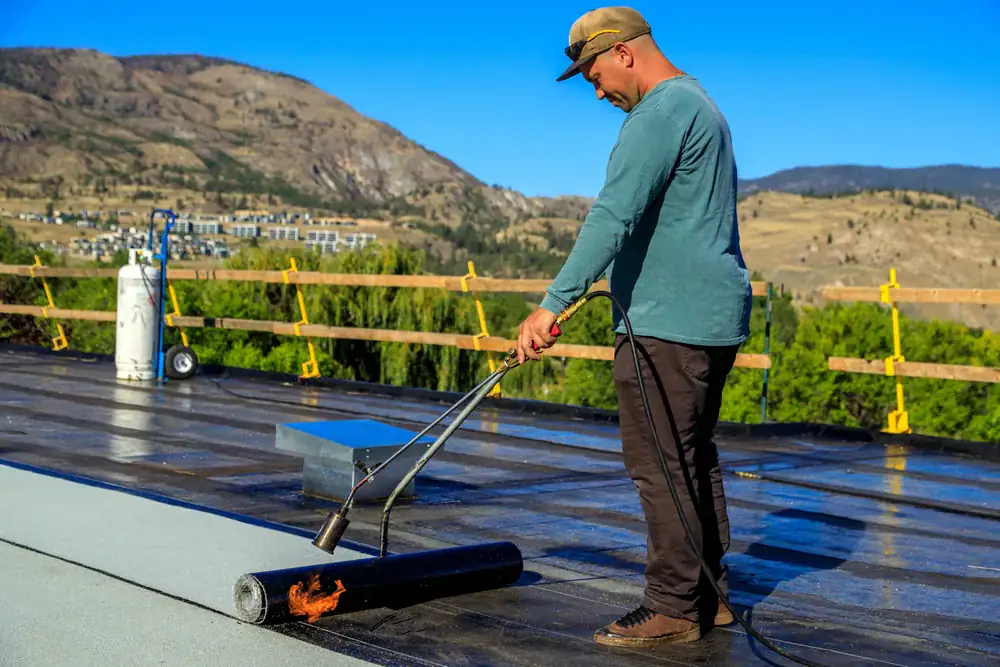
We handle every type of commercial roofing system used in Claremont: single-ply membranes like TPO, PVC, and EPDM; modified bitumen; built-up roofing; metal systems; and hot mop applications. We install, repair, restore, and maintain all of them.
California’s Title 24 energy standards require cool roofs for most commercial applications starting January 2026. That means your roof needs to meet specific reflectivity and insulation requirements. We handle those upgrades, including insulation improvements that reduce cooling costs by 10-30% in Los Angeles commercial buildings. Lower energy bills aren’t theoretical—they show up every month after installation.
We also specialize in commercial roof maintenance programs. Regular inspections catch clogged drains, damaged flashing, punctured membranes, and failing seams before they become expensive problems. You get scheduled service, documented reports, and priority response if something urgent comes up.
Claremont’s commercial properties—from industrial facilities to multi-family housing to retail centers—face unique challenges. Seismic activity, temperature swings, and constant sun exposure all affect roof performance. We’ve worked on these buildings for decades and know what holds up and what doesn’t.
Most commercial roof replacements take one to three weeks depending on building size, roof type, and weather conditions. A small flat roof on a retail building might be done in a few days. A large industrial facility with multiple roof levels could take longer.
The timeline also depends on permitting and inspections. Most commercial roof replacements in California require building permits and must demonstrate compliance with Title 24 energy standards. We handle that process, but it adds time before work starts.
We schedule around your business operations. If you can’t shut down during the day, we work nights or weekends. If certain areas need to stay operational, we phase the project so you’re never fully exposed. The goal is protecting your building without stopping your business.
TPO and PVC are both single-ply membrane systems, but they perform differently. TPO is more affordable and handles temperature fluctuations well, which is why it’s popular in Claremont’s climate. It’s durable against hail and storms, and it meets Title 24 cool roof requirements.
PVC costs more but lasts longer—often 20-30 years with proper maintenance. It’s more resistant to chemicals, grease, and ponding water, so it works well for restaurants or industrial facilities. PVC seams are heat-welded, creating a watertight bond that’s stronger than TPO.
Both systems are energy-efficient and reflective, which lowers cooling costs. The right choice depends on your building type, budget, and what’s already on your roof. We walk you through the pros and cons based on your specific situation, not what’s easiest for us to install.
That depends on how much of the roof is damaged and what’s causing the problem. If you have isolated leaks from damaged flashing or a punctured membrane, repairs usually work. If the entire roof is failing—widespread cracking, multiple leaks, rotted decking—replacement makes more sense.
Age matters too. A 10-year-old TPO roof with a small leak is worth repairing. A 25-year-old built-up roof with chronic problems is not. We look at the whole picture: how much life is left, what repairs will actually fix, and whether you’re throwing money at a roof that’s going to fail anyway.
Sometimes roof restoration is the middle option. We can apply a reflective coating system that seals the existing roof, meets Title 24 requirements, and extends its life by 10-15 years. It costs less than replacement and can be done faster with less disruption. We’ll tell you honestly which option makes sense for your building and budget.
Title 24 is California’s building energy efficiency standard. Starting January 2026, most commercial roof replacements and major repairs must meet cool roof requirements. That means your roof needs to reflect sunlight and meet minimum insulation levels based on your climate zone and building type.
In Claremont, that typically means using a reflective membrane like TPO or PVC, or applying a cool roof coating to your existing system. You may also need to upgrade insulation to meet current R-value requirements. These changes reduce heat transfer into your building, which lowers cooling costs.
Compliance isn’t optional—it’s checked during permit inspections. If your roof doesn’t meet Title 24 standards, you won’t pass inspection and you can’t get final approval. We handle Title 24 compliance on every commercial project. We know the requirements, we use approved materials, and we document everything for inspectors. You don’t have to figure it out yourself.
Commercial roof maintenance typically costs a few hundred to a few thousand dollars per year depending on building size and roof complexity. A simple inspection and minor repairs on a small building might run $500-$1,000 annually. A large facility with multiple roof sections and ongoing maintenance needs could be $3,000-$5,000.
That sounds like a lot until you compare it to emergency repairs or premature replacement. A small leak that gets ignored can cause $10,000-$50,000 in damage to insulation, decking, and interior finishes. A roof that should last 20 years but fails at 12 because of neglect costs you eight years of service life.
Maintenance programs include scheduled inspections, cleaning drains and gutters, resealing penetrations, replacing damaged flashing, and documenting everything with photos. You get a report after each visit showing what we found and what we fixed. It’s predictable, budgetable, and it keeps small problems from becoming expensive emergencies.
Yes. We schedule around your business hours and coordinate access so you’re not shutting down. If you operate during the day, we work evenings or weekends. If certain areas need to stay open, we phase the project so you’re never fully exposed.
Noise and access are the two biggest concerns. Roofing work is loud—tear-offs, power tools, and equipment all create disruption. We communicate the schedule in advance so you can plan around it. If you have customers on-site, we stage materials and equipment away from entrances and keep the work area contained.
For multi-tenant buildings, we notify tenants ahead of time and coordinate with property managers to minimize complaints. We’ve been doing commercial work in Claremont for over 40 years, so we know how to work around businesses, not through them. The goal is fixing your roof without costing you revenue or customer goodwill.
Other Services we provide in Claremont