Appointments Available
Phone Support 24/7
Bell Gardens, CA 90201
*Serving most of Southern California*
Appointments Available
Phone Support 24/7
Bell Gardens, CA 90201
You’re managing a property, running a business, or overseeing multiple buildings. The last thing you need is water coming through the ceiling during business hours.
A properly installed commercial roof doesn’t just keep water out. It cuts your cooling costs, meets California’s Title 24 requirements without the compliance headache, and gives you documentation that insurance adjusters actually accept when you need it.
Most commercial roofs fail because they weren’t installed right in the first place. TPO and PVC roofing systems work when the seams are welded correctly and the drainage is designed for California’s weather patterns. Miss those details and you’re looking at ponding water, membrane failure, and interior damage that costs more than the roof itself.
We hold a C-39 specialty contractor license and factory certifications from the manufacturers whose systems we install. That’s not marketing language—it means we’re trained on the specific products going on your building and our work maintains your warranty coverage.
We’ve served La Mirada and Los Angeles County for over two decades. Most of our crew has been with us for years, which matters when you’re trusting someone with a six-figure roof replacement. You’re not getting different workers every week who’ve never seen your building before.
Our BBB A+ rating comes from property managers and business owners who needed their roof done right the first time. We document every project with photos because insurance claims require proof, and because you should know exactly what you’re paying for.
You schedule an inspection and we show up when we say we will. We’re looking at your existing roof system, drainage patterns, and any areas where water is pooling or seams are failing. You get photos of what we find and a written assessment that explains what needs to happen.
If you’re dealing with an insurance claim, we document everything the adjuster needs to see. If you’re planning a replacement, we walk through your options for flat roof systems—TPO, PVC, EPDM, modified bitumen—and explain what each one actually does for your specific building and budget.
Once you approve the scope, we pull permits and schedule the work around your business operations. Our crews arrive with the materials, complete the installation using manufacturer-certified methods, and provide you with warranty documentation and a full photo record of the finished roof. You’re not guessing whether it was done right.
La Mirada’s commercial buildings face specific challenges. Summer heat requires Title 24 cool roof compliance—reflective surfaces that reduce heat absorption and cut cooling costs by 7-15%. That’s not optional in California. It’s code.
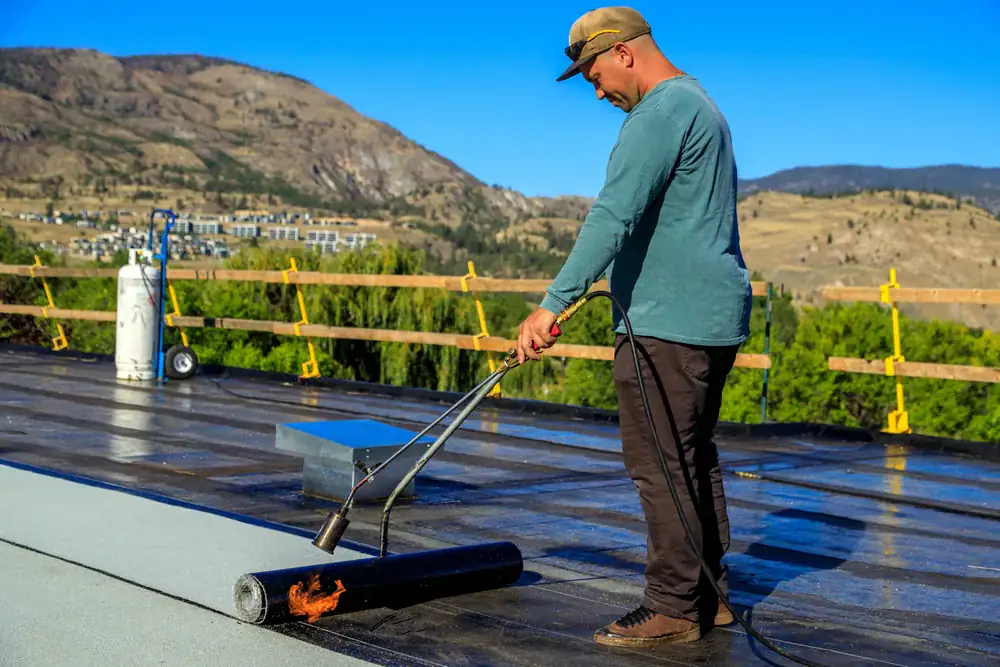
Flat roof systems need proper drainage design because ponding water destroys membranes faster than anything else. We install TPO and PVC roofing with welded seams that don’t leak, and we slope the deck correctly so water moves off your roof instead of sitting there.
If you manage warehouses, industrial facilities, or multi-family properties, you need a roof that handles foot traffic for HVAC maintenance without tearing. You need a system that works with your existing structure and doesn’t require a complete tear-off if the deck is still solid. We assess what you have and recommend what makes sense financially and structurally.
Emergency repairs happen, but they shouldn’t be your maintenance plan. We install moisture sensors and monitoring systems that catch problems before they become leaks. You get predictive maintenance instead of crisis management.
Most commercial roof replacements take one to three weeks depending on building size, roof complexity, and weather conditions. A straightforward 10,000 square foot flat roof with good access typically takes 5-7 business days from tear-off to final inspection.
Weather delays happen. We don’t install TPO or PVC roofing in rain because the adhesives and welding equipment require dry conditions. If we’re mid-project and weather moves in, we secure your building with temporary weatherproofing until conditions improve.
Your business operations matter. We schedule around your needs—working weekends for retail properties, night shifts for facilities that can’t shut down, or phased installations for multi-building complexes. You tell us what works and we build the schedule accordingly.
Both are single-ply membranes that meet Title 24 cool roof requirements, but they handle chemicals and durability differently. PVC costs more upfront but resists grease, oils, and animal fats better—critical for restaurant properties or industrial facilities with chemical exposure.
TPO is less expensive and works well for standard commercial applications without chemical exposure. It’s heat-welded like PVC, creating watertight seams that outlast glued or taped systems. Most property managers choose TPO for office buildings, retail centers, and warehouses where chemical resistance isn’t a factor.
Both systems last 20-30 years when installed correctly. The key is proper seam welding and membrane thickness. We install 60-mil or 80-mil membranes depending on your roof traffic and puncture risk. Thicker costs more but makes sense if you have regular HVAC maintenance or rooftop equipment access.
Yes, if you’re doing any roof replacement or recovering more than 2,000 square feet in California. Title 24 requires cool roof surfaces with specific solar reflectance and thermal emittance ratings. This isn’t optional—it’s enforced at permit inspection.
Cool roofs reflect sunlight instead of absorbing it, which reduces your building’s cooling load. Property owners typically see 7-15% reductions in cooling costs, and metal roofs in hot climates can save up to 40%. The California Energy Commission mandates this because it reduces statewide energy consumption.
We handle Title 24 compliance documentation as part of every commercial roof installation. You get the required reflectance ratings, manufacturer certifications, and permit approvals without having to figure out the requirements yourself. The inspector signs off because we know what they’re looking for.
If your roof is leaking in multiple locations, has widespread membrane deterioration, or is over 20 years old with failing seams, you’re likely looking at replacement. Isolated leaks, small punctures, or localized damage usually qualify for repair.
We use moisture sensors and infrared scanning to map exactly where water has penetrated your roof deck. Sometimes you have one bad area and the rest of the roof is solid—that’s a repair. If moisture is widespread under the membrane, patching won’t fix the underlying problem and you’re throwing money at temporary solutions.
Insurance claims complicate this decision. Adjusters often approve repairs when replacement makes more sense long-term, or they underestimate damage scope. We document everything with photos and moisture mapping so you have evidence for claim negotiations. You need the full picture before deciding whether to repair or replace.
Call us immediately and we’ll get emergency tarping or temporary weatherproofing in place to stop active leaks. Water damage spreads fast—what starts as a ceiling stain becomes mold growth and structural damage within 48 hours if not contained.
Document everything with photos before we arrive. You’ll need this for insurance claims. Take pictures of the interior damage, any inventory or equipment that got wet, and the ceiling where water is entering. Time-stamp everything if possible.
Emergency repairs buy you time but aren’t permanent fixes. Once we’ve stopped the immediate water intrusion, we schedule a full roof inspection to identify why the failure happened and what’s required for a lasting solution. Most emergency calls result from deferred maintenance, improper installation, or drainage problems that have been building for months.
Commercial roof replacement typically runs $4-$8 per square foot for TPO or PVC systems, depending on membrane thickness, insulation requirements, and roof complexity. A 10,000 square foot roof generally costs $40,000-$80,000 including tear-off, disposal, and installation.
That range exists because every building is different. Roof height affects labor costs—three-story buildings cost more than single-story warehouses. Existing roof layers impact disposal fees. Structural repairs, drainage improvements, or parapet work add to base costs.
Financing matters for most property owners. We provide detailed estimates that break down material costs, labor, permits, and disposal fees separately so you know exactly what you’re paying for. Insurance claims cover qualifying damage, but you need proper documentation and adjuster negotiations to maximize coverage.
Other Services we provide in La Mirada