Appointments Available
Phone Support 24/7
Bell Gardens, CA 90201
*Serving most of Southern California*
Appointments Available
Phone Support 24/7
Bell Gardens, CA 90201
A roof that works means your operations don’t stop when it rains. Your inventory stays dry. Your equipment doesn’t get damaged. Your insurance premiums don’t spike because of preventable claims.
You’re not dealing with emergency calls at 2 AM or scrambling to move product away from a spreading water stain. You’re running your business without thinking about what’s happening 20 feet above your head.
That’s what matters when you’re managing a warehouse in Santa Fe Springs or operating a retail center off the 5. The roof does its job so you can do yours. Our commercial roofing systems—whether flat roof membranes, TPO and PVC roofing, or Title 24 cool roof restoration—are built to handle Southern California heat and the occasional storm without becoming your problem.
We hold a C-39 specialty contractor license and factory certifications that most roofers don’t bother getting. We’ve built our reputation in Los Angeles County by showing up when we say we will and documenting every step with photos—not because it’s required, but because you deserve to see what you’re paying for.
Our crew has been with us for decades, not months. That matters when you’re trusting someone with a five or six-figure roof replacement. Santa Fe Springs has plenty of industrial facilities and commercial properties that can’t afford a roof failure during peak season, and we’ve handled enough of them to know what actually works in this climate.
We’re BBB accredited, we specialize in insurance claim work, and we don’t disappear after the job is done. You’ll find us in the same place next year when you need maintenance or have a question.
You call us or fill out a form. We schedule a time to come out and actually look at your roof—not give you a quote over the phone based on square footage alone.
During the inspection, we document everything with photos. We’re looking for obvious damage, but also for the stuff that’ll become a problem in six months if you don’t address it now. We’ll walk you through what we found, explain your options in plain language, and give you a written estimate that breaks down materials and labor.
If you’re dealing with an insurance claim, we handle that documentation too. We know what adjusters need to see and how to present it so you’re not stuck in approval limbo for weeks.
Once you approve the work, we schedule it around your operations. If you need us there at night or on weekends to avoid disrupting business hours, we make it happen. During the job, you get progress updates and more photos. When we’re done, you get a final walkthrough, warranty documentation, and a roof that’s actually going to last.
You’re getting a licensed C-39 contractor with factory training on the specific systems we install. That means TPO and PVC roofing done to manufacturer specs, Title 24 cool roof restoration that actually meets California energy codes, and flat roof systems designed for the kind of thermal stress that Santa Fe Springs gets in July and August.
We handle commercial roof maintenance agreements if you want someone checking on things twice a year instead of waiting for a leak to tell you something’s wrong. For industrial roofing solutions, we’re talking about warehouses, manufacturing facilities, and distribution centers where downtime costs you real money—so we plan around your schedule, not ours.
Every project includes photo documentation from start to finish. You’ll see the substrate condition before we cover it, the installation process, and the final result. If there’s an issue down the line, you’re not guessing what’s under there—you have a visual record.
Santa Fe Springs sits in a climate zone where heat reflectivity matters for your energy bills. Title 24 compliance isn’t just a code requirement—it’s a way to cut cooling costs in buildings with large roof surfaces. We’ll walk you through whether a restoration makes sense for your existing roof or if replacement is the smarter financial move.
It depends on your building size and the roofing system you’re installing, but most commercial roof replacements take between three days and two weeks. A small office building with a straightforward flat roof system might be done in a week. A large warehouse or industrial facility with multiple roof levels, HVAC equipment, and skylights will take longer.
Weather matters too. We’re not installing TPO or PVC roofing in the rain, and adhesives need specific temperature ranges to cure properly. Southern California gives us more workable days than most places, but we’re not rushing a job just to hit a deadline if conditions aren’t right.
If you need us to work around your business hours—nights, weekends, or in phases so you can keep operating—that extends the timeline but keeps your operations running. We’ll give you a realistic schedule during the estimate so you can plan accordingly.
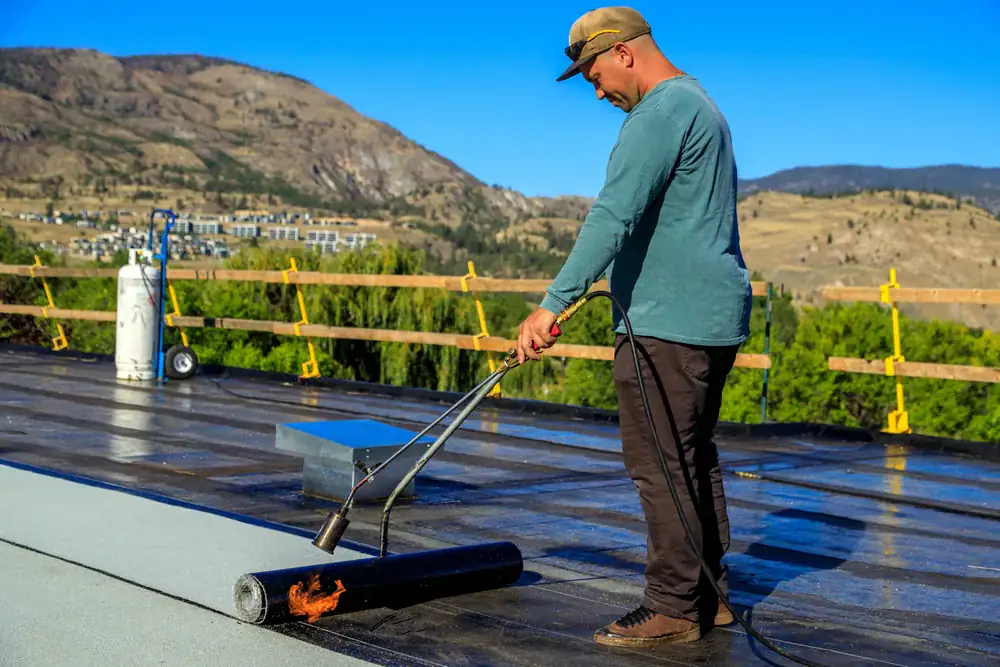
Both are single-ply membranes that work well for flat or low-slope commercial roofs, but they’re not identical. TPO is typically less expensive and performs well in Santa Fe Springs’ heat. It’s heat-welded at the seams, which creates a watertight bond, and it meets Title 24 cool roof requirements because of its reflective surface.
PVC costs more upfront but has better chemical resistance. If your building deals with grease, oils, or industrial exhaust—like a restaurant or manufacturing facility—PVC holds up better over time. It’s also heat-welded and highly reflective, so you get the same energy efficiency benefits.
The choice usually comes down to your building’s use, your budget, and how long you plan to own the property. TPO makes sense for most standard commercial applications. PVC is worth the extra cost if you’re in an environment that’s hard on roofing materials. We’ll walk you through both options during the estimate so you’re making the decision with actual information, not a sales pitch.
If your roof membrane is still structurally sound but showing age—minor cracking, surface wear, or reduced reflectivity—restoration might buy you another 10 to 15 years at a fraction of replacement cost. Title 24 cool roof restoration involves applying a reflective coating system over your existing roof, which improves energy efficiency and extends the roof’s lifespan.
But if you’ve got widespread leaks, saturated insulation, or structural damage to the decking, restoration is just putting a band-aid on a bigger problem. You’ll spend money now and still need a full replacement in a few years.
We’ll tell you honestly which route makes sense after we inspect your roof. If restoration works, we’ll explain the process and what kind of warranty you can expect. If replacement is the smarter move, we’ll explain why so you’re not surprised by a bigger bill two years from now. The goal is to give you the most cost-effective solution for your specific situation, not to upsell you on work you don’t need.
Insurance typically covers commercial roof damage from storms, hail, wind, or sudden events—not from wear and tear or deferred maintenance. If you had a recent storm and now you’re seeing leaks or missing membrane sections, there’s a good chance your policy will cover at least part of the repair or replacement.
The key is documentation. Insurance adjusters want photos, proof of damage, and evidence that the roof was properly maintained before the event. We handle that process regularly, so we know what they’re looking for and how to present it. We’ll document the damage, provide a detailed estimate, and work with your adjuster to get the claim approved.
If your roof is just old and failing because it’s past its lifespan, insurance won’t cover it. But if there’s storm damage on top of an aging roof, we can often make the case for a full replacement instead of a patch job. We’ve done enough insurance-driven roofing projects in Santa Fe Springs to know how to navigate the process without dragging it out for months.
Flat roofs need regular inspections—at least twice a year and after any major storm. You’re looking for standing water, cracks in the membrane, loose seams, and debris buildup around drains. Those small issues turn into expensive problems if you ignore them for a year or two.
Drains and gutters need to be cleared so water doesn’t pool on the roof surface. Ponding water breaks down roofing materials faster and adds weight your structure wasn’t designed to carry long-term. HVAC equipment and anything else mounted on the roof should be checked for vibration damage or loose flashing.
We offer commercial roof maintenance agreements that handle all of this on a schedule. We come out, inspect everything, clear drains, make minor repairs before they become major leaks, and document the roof’s condition. It’s a lot cheaper than emergency repairs, and it keeps your warranty valid. Most commercial roofing warranties require proof of regular maintenance, so skipping it can void your coverage right when you need it most.
Title 24 is California’s energy code, and it sets requirements for how much heat your roof can reflect. The goal is to reduce cooling costs and energy consumption, which matters when you’re running a large commercial building in Santa Fe Springs where summer temperatures regularly hit the 90s.
A Title 24 compliant cool roof reflects more sunlight and absorbs less heat than a standard dark roof. That means your HVAC system doesn’t work as hard, your energy bills drop, and your building stays more comfortable. For warehouses and industrial facilities with minimal insulation, the difference is significant.
If you’re replacing or restoring your commercial roof, Title 24 compliance isn’t optional—it’s required for permitting. But even if you’re not legally required to upgrade, a cool roof system pays for itself over time through lower energy costs. We’ll make sure whatever system we install meets current Title 24 standards so you’re not dealing with permitting issues or failed inspections after the work is done.
Other Services we provide in Santa Fe Springs