Appointments Available
Phone Support 24/7
Bell Gardens, CA 90201
*Serving most of Southern California*
Appointments Available
Phone Support 24/7
Bell Gardens, CA 90201
You stop worrying about the next rainstorm. Your insurance premiums stay manageable because you’ve got documented maintenance records. Tenants aren’t calling about leaks, and you’re not scrambling to find emergency contractors at 2 a.m.
A properly installed commercial roofing system does more than keep water out. TPO and PVC roofing membranes reflect up to 87 percent of solar radiation, which means your HVAC isn’t fighting the sun all summer. That’s real money back in your operating budget every month.
The bigger win? You’re compliant with California’s Title 24 standards without the headache of figuring out what that even means. Our crews handle the technical requirements—solar reflectance indexes, cool roof restoration, energy documentation—so you can focus on running your property, not studying building codes.
We’ve been handling commercial roofing projects across Orange County since 1980. We’re not new to Trabuco Canyon or the surrounding areas—we’ve worked on everything from industrial warehouses near the 241 corridor to multi-family complexes in Rancho Santa Margarita.
Our GAF Master Elite status puts us in the top 2 percent of roofing contractors nationally. That’s not marketing talk—it’s a factory certification that requires proven workmanship, ongoing training, and a track record that most companies can’t match. Our crews are factory-trained on the systems they install, which means fewer callbacks and longer-lasting results.
Eighty-six percent of our work comes from repeat clients and referrals. Property managers don’t keep coming back because we’re cheap—they come back because we do what we say, when we say it, and we document everything for their records.
First, we inspect your existing roof—not just from the ground, but up close. We’re looking at membrane condition, drainage issues, fastener integrity, and any equipment penetrations that might be compromising your system. You get a detailed report with photos, not a vague estimate.
If you’re moving forward, we schedule around your operations. That means coordinating with tenants, planning for equipment shutdowns, and staging materials so your parking lot isn’t a construction zone for weeks. Our project managers communicate daily, not when they feel like it.
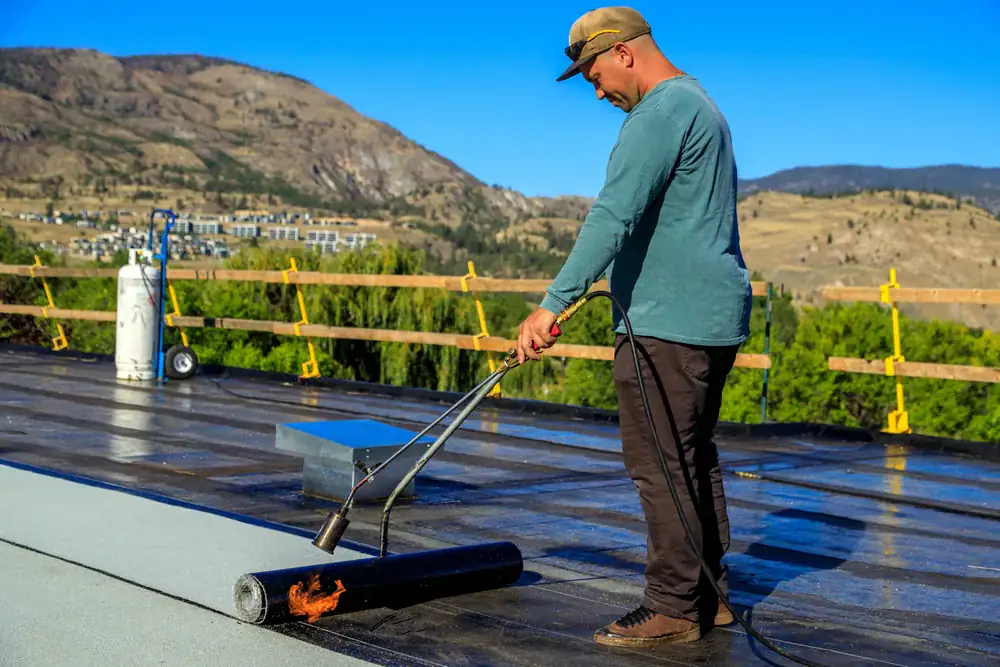
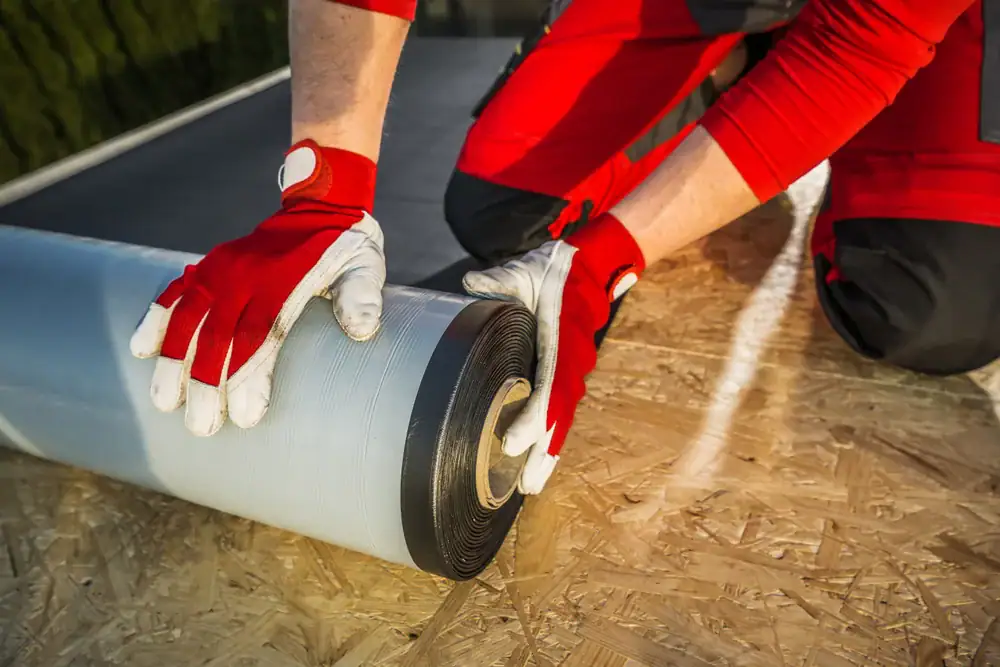
During installation, our factory-certified crews handle everything from tear-off to final inspection. We’re installing flat roof systems, TPO, PVC, modified bitumen—whatever your building needs and your budget allows. Every penetration gets properly flashed, every seam gets inspected, and every detail gets documented for your warranty file.
After completion, you get a full warranty package, maintenance recommendations, and a contact who actually answers when you call. If something needs attention during the warranty period, we’re back out to handle it—no runaround, no excuses.
You’re getting a complete roofing system, not just materials slapped on top of your building. That includes proper insulation, code-compliant drainage, and Title 24 cool roof restoration when required. If your project needs Title 24 compliance—and most reroofing jobs in California do as of 2026—we handle the documentation and material specifications without charging you for a separate energy consultant.
Our commercial roof maintenance programs keep small problems from becoming expensive emergencies. Regular inspections catch ponding water, loose fasteners, and membrane deterioration before they turn into interior damage. You get photo documentation after every visit, which satisfies most commercial insurance requirements and proves you’re managing the property responsibly.
For property managers in Trabuco Canyon dealing with Santa Ana wind exposure, we pay extra attention to edge details and rooftop equipment securement. Wind uplift is real here, and improperly fastened membranes don’t just leak—they detach entirely. Our installations meet wind rating requirements for your specific zone, and we can show you the engineering specs if your insurance carrier asks.
We also offer flexible financing for larger projects. Low monthly payment plans and no-interest options are available, because we know capital improvement budgets don’t always align with when your roof decides to fail.
Most commercial roof replacements take one to three weeks depending on building size, weather, and system complexity. A straightforward TPO installation on a 10,000-square-foot building typically takes five to seven working days from tear-off to final inspection.
Weather delays happen, especially during winter months when morning moisture can prevent membrane adhesion. We don’t rush installations to meet arbitrary deadlines—your roof needs proper conditions to perform correctly. That said, we schedule aggressively and communicate any delays immediately so you’re never guessing when crews will show up.
If your building needs to stay operational during the project, we phase the work in sections. That means coordinating with your tenants, protecting HVAC equipment, and ensuring one part of your roof is always weather-tight. It takes slightly longer, but it’s worth it when you’re not shutting down business operations for two weeks.
Both are single-ply membranes that perform well on flat and low-slope commercial roofs. TPO costs less upfront and has become the most common commercial roofing material in California—about 49 percent of installations use it. PVC costs more but offers better chemical resistance and longer proven performance in harsh environments.
If your building has rooftop grease exhaust, HVAC condensate, or other chemical exposure, PVC handles it better. Restaurants, industrial facilities, and buildings with significant rooftop equipment often benefit from the extra durability. TPO works great for standard office buildings, retail centers, and warehouses without unusual chemical exposure.
Both materials meet Title 24 cool roof requirements when installed in white or light colors. Both can achieve high solar reflectance indexes—TPO reflects up to 87 percent of solar radiation, which translates to real cooling cost savings during Trabuco Canyon’s hot summer months. Your choice usually comes down to budget, building use, and how long you plan to own the property.
If you’re doing a complete roof replacement or recovering more than 50 percent of your roof area, and your project was permitted after January 1, 2026, then yes—you need Title 24 compliance. The new standards require specific solar reflectance indexes and energy documentation that most property managers haven’t dealt with before.
For flat commercial roofs in Southern California, you typically need an SRI of 75 to 85 to remain compliant. That means using reflective membrane systems like white TPO or PVC, or applying cool roof coatings to existing surfaces. Some projects also trigger solar photovoltaic requirements, depending on building type and square footage.
Here’s what matters: you don’t need to become an energy code expert. We handle the material specifications, testing documentation, and compliance paperwork as part of your project. You get a roof that meets current standards without the headache of interpreting building code yourself. And when your building sells or refinances, you’ve got the documentation to prove everything was done correctly.
Commercial roof maintenance typically costs $0.15 to $0.30 per square foot annually for scheduled inspections and minor repairs. On a 15,000-square-foot building, that’s roughly $2,250 to $4,500 per year. Compare that to emergency roof replacement at $8 to $16 per square foot—potentially $120,000 to $240,000—and the math becomes pretty clear.
Maintenance programs catch small problems before they become expensive disasters. A loose seam that costs $200 to repair during a scheduled visit turns into $15,000 in interior damage if water gets into your insulation and ceiling systems. Ponding water that’s addressed early prevents membrane deterioration that shortens your roof life by years.
Most commercial insurance carriers require documented roof inspections to maintain coverage. Our maintenance programs include detailed reports and photos after each visit, which satisfies those requirements and proves you’re managing the property responsibly. You’re not just preventing problems—you’re protecting your insurance coverage and property value at the same time.
If your roof fails due to installation defects or material failure during the warranty period, we come back and fix it at no cost to you. That’s what a warranty means, and we’ve been honoring them since 1980. Our GAF Master Elite status allows us to offer extended manufacturer warranties that cover both materials and workmanship—not just one or the other.
Most warranty claims come from improper maintenance, not installation failure. If tree branches puncture your membrane or someone drives a forklift across your roof, that’s not a warranty issue—that’s damage. But if seams separate, fasteners back out, or membranes deteriorate prematurely due to installation error, we’re responsible for making it right.
The key is documentation. We photograph every phase of your installation and keep detailed records of materials used, weather conditions during install, and any substrate issues we encountered. If a problem develops later, we have the information to determine cause and resolve it quickly. You’re not fighting with us about what happened—we already know because we documented everything from day one.
Yes. Storm damage and roof failures don’t wait for business hours, and neither do we. Our emergency response team is available 24/7 to secure your property and prevent further damage when disaster strikes Orange County. That means tarping, temporary patches, and immediate leak mitigation—whatever it takes to protect your building until permanent repairs can be scheduled.
Emergency repairs cost more than scheduled maintenance because they require immediate mobilization and after-hours labor. But they cost far less than letting water damage spread through your building for days while you wait for a contractor to call you back. We prioritize emergency calls and typically have someone on-site within hours, not days.
After we’ve secured your property, we document everything for your insurance claim. Photos, moisture readings, damage assessment—all the information your carrier needs to process the claim quickly. We work directly with insurance adjusters regularly, which speeds up the approval process and gets your permanent repairs scheduled faster. You’re not navigating the claims process alone or trying to translate contractor language to your insurance rep.
Other Services we provide in Trabuco Canyon