Appointments Available
Phone Support 24/7
Bell Gardens, CA 90201
*Serving most of Southern California*
Appointments Available
Phone Support 24/7
Bell Gardens, CA 90201
You stop worrying about the next rainstorm. Your HVAC costs drop because your roof isn’t absorbing heat like a sponge. Your tenants aren’t calling about water stains, and you’re not scrambling to move equipment away from leaks.
A properly installed commercial roof in West Covina does more than keep water out. TPO and PVC roofing systems reflect Southern California’s intense sun, cutting cooling costs by 7-15% on average. That’s real money back in your operating budget every month.
When your roof is maintained proactively instead of reactively, you’re looking at 21 years of service life instead of 13. That’s the difference between planning replacements on your terms and dealing with emergency repairs when your budget’s already stretched thin. You get predictable expenses, fewer disruptions, and a building that holds its value.
We’ve been installing and maintaining commercial roofs across Los Angeles County since 1985. We hold a C-39 specialty contractor license—the state certification specifically for complex roofing systems—and factory certifications from major manufacturers.
Our crews aren’t subcontractors cycling through jobs. Many have been with us for decades, which means the quality you see on day one is what you’ll get on day 300. We’re based locally, we understand West Covina’s building codes and climate challenges, and we’ve built our reputation on showing up when we say we will.
You’ll find us with an A+ BBB rating because we document everything, communicate clearly, and stand behind our work. No runaround, no surprises.
First, we come out and actually look at your roof. Not a quick glance from the ground—we’re talking a thorough inspection with photos, measurements, and a clear assessment of what’s working and what isn’t. You’ll get a written report that explains the condition in plain language, not roofing jargon.
If you need repairs or replacement, we walk you through your options. For flat roof systems, that usually means TPO, PVC, EPDM, or modified bitumen depending on your building’s needs and budget. We’ll explain what each system does, how long it lasts, and what it costs. If you need Title 24 cool roof compliance for energy code requirements, we’ll make sure you’re covered there too.
Once you approve the scope, we schedule around your operations—not the other way around. Our crews show up on time, protect your property, and keep you updated on progress. We handle permits, coordinate inspections, and document the installation for your warranty and insurance records. When we’re done, you get a roof that’s installed to manufacturer specs, backed by our workmanship guarantee, and ready to protect your investment for decades.
Commercial roof maintenance in West Covina isn’t optional—it’s the difference between a 13-year roof and a 21-year roof. Our maintenance programs include scheduled inspections, drain clearing, minor repairs, and documentation that keeps your warranty valid and your insurance company happy.
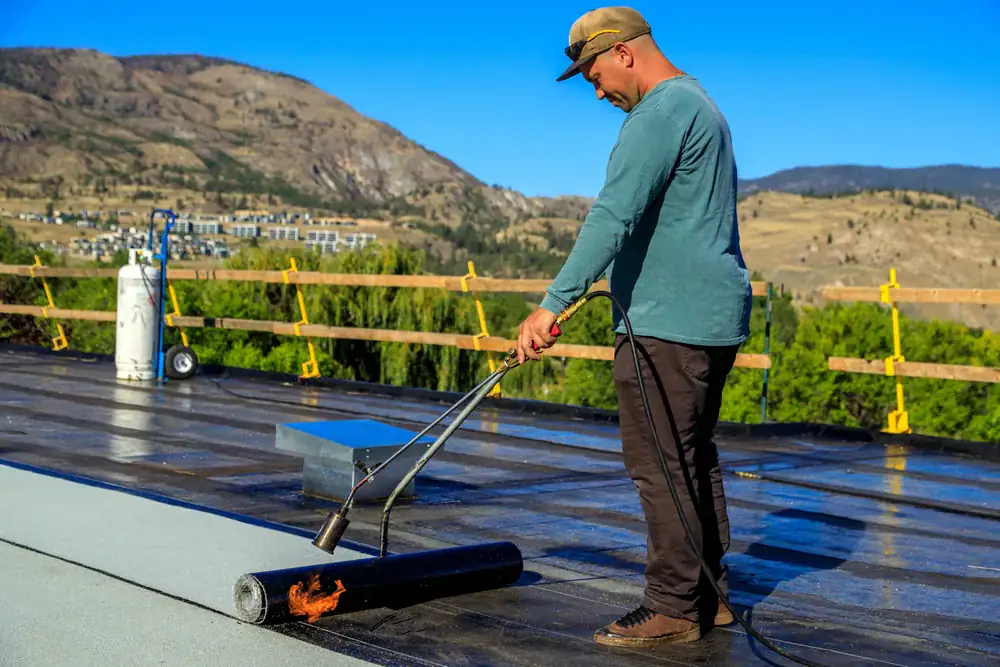
For new installations and replacements, we specialize in flat roof systems common to commercial buildings in Los Angeles County. TPO roofing is energy-efficient, heat-welded at the seams, and naturally meets California’s Title 24 cool roof requirements without additional coatings. PVC roofing offers similar benefits with added chemical resistance for industrial facilities. EPDM and modified bitumen systems work well for buildings where budget matters but durability can’t be compromised.
West Covina’s climate is tough on commercial roofs. Intense UV exposure, thermal cycling, and occasional heavy rain mean your roof needs to handle extremes. We install systems designed for Southern California conditions, with proper drainage, reinforced flashing, and materials that won’t break down under constant sun. You’re not just getting a roof—you’re getting a system engineered to last in this specific environment, installed by crews who’ve done this thousands of times across LA County.
Most commercial roof replacements in West Covina run between $6 and $18 per square foot, depending on the system you choose and your building’s complexity. TPO and PVC roofing typically land in the $7-$15 range per square foot installed.
That price includes tear-off of the old roof, any necessary deck repairs, new membrane installation, flashing, and cleanup. Larger buildings cost less per square foot because fixed costs like mobilization and equipment get spread across more area.
The real question isn’t just cost—it’s value over time. A cheaper installation that fails in 10 years costs you more than a quality system that lasts 25. We price our work based on doing it right the first time, which means proper materials, experienced crews, and manufacturer-backed warranties that actually mean something.
TPO and PVC roofing dominate commercial installations in Southern California for good reason. Both are white, reflective single-ply membranes that meet Title 24 cool roof standards automatically. They reflect heat instead of absorbing it, which cuts your cooling costs and extends the roof’s life.
TPO is the most popular—about 40% of commercial roofing work includes TPO because it’s cost-effective, durable, and heat-welded at the seams for watertight performance. PVC costs slightly more but offers better chemical resistance if your building deals with grease, oils, or industrial processes.
EPDM (rubber roofing) works well if upfront cost is your main concern. It’s been around for decades and performs reliably, though it doesn’t offer the same energy savings as white membranes. Modified bitumen is another solid option, especially for buildings with existing built-up roof systems. The right choice depends on your building’s use, your budget, and how long you plan to own the property.
Yes, if you’re doing a roof replacement or recovering an existing roof on a commercial building in California. Title 24 energy code requires commercial roofs to meet specific standards for solar reflectance and thermal emittance—basically, your roof needs to reflect heat instead of absorbing it.
The 2025 standards (effective January 2026) tightened these requirements even further. Most TPO and PVC roofing systems meet Title 24 compliance right out of the box because they’re white and reflective. Darker membranes or modified bitumen systems might need special coatings to qualify.
Compliance isn’t just about passing inspection. Cool roofs can qualify you for energy rebates, reduce your HVAC load, and make your building more attractive to tenants who care about operating costs. We handle the documentation and make sure your roof meets current code, so you’re not dealing with compliance issues down the road.
Twice a year minimum—once before summer heat and once before winter rains. West Covina’s climate puts stress on commercial roofs from both ends: UV damage during long, hot summers and water infiltration during occasional heavy storms.
Regular inspections catch small problems before they become expensive ones. A cracked seal around a rooftop unit might cost $200 to fix today. Left alone for six months, that same crack can let water into your insulation and decking, turning a minor repair into a $15,000 problem.
Most commercial roof warranties require documented maintenance to stay valid. If you file a claim and can’t prove you’ve been maintaining the roof, the manufacturer can deny coverage. Our maintenance programs include scheduled inspections, photo documentation, and a written report after every visit. You get a file that proves you’ve been taking care of your roof, which protects both your warranty and your investment.
Poor installation tops the list. Seams that aren’t properly welded, flashing that’s cut wrong, fasteners installed incorrectly—these problems show up immediately or within the first few years. By the time you see a leak inside, the damage is already extensive.
Lack of maintenance is the second biggest killer. Drains get clogged with debris, water pools on the roof, and that standing water accelerates membrane breakdown. UV exposure in Southern California is relentless—roofs that aren’t inspected regularly develop cracks and weak spots that let water in during the next storm.
Drainage issues cause more problems than most property managers realize. Flat roofs aren’t actually flat—they need slight slope to move water off the surface. If your roof was installed without proper drainage design, you’re fighting physics. Ponding water adds weight, attracts pests, and breaks down even high-quality membranes faster than they should fail. Fixing drainage problems during installation or replacement saves you from chronic issues later.
Depends on what’s actually wrong and how old the roof is. If you’ve got isolated damage—a torn seam, punctured membrane, or failed flashing—and the rest of the roof is in decent shape, repairs make sense. We can heat-weld new TPO or PVC material over damaged areas, replace sections of EPDM, or patch modified bitumen systems.
If your roof is approaching 20 years old, has multiple leak points, or shows widespread deterioration, you’re usually better off replacing it. Pouring money into repairs on a roof that’s at the end of its service life means you’ll be replacing it soon anyway—and you’ve spent thousands on temporary fixes that didn’t solve the underlying problem.
Here’s the honest assessment: we’ll tell you if repairs will actually fix your problem or if you’re just delaying the inevitable. Some contractors will sell you a full replacement when you only need repairs. Others will patch a failing roof to get your immediate business, knowing you’ll be calling again in six months. We look at your roof’s age, overall condition, and your budget, then give you a straight answer about what makes sense for your situation.
Other Services we provide in West Covina