
Summary:
If you own or manage commercial property with a flat roof, you already know the stakes are high. One leak can disrupt operations, damage inventory, upset tenants, and trigger emergency repair bills that weren’t in the budget. But here’s what most property owners don’t realize: 80% of commercial roofs are replaced prematurely because of inadequate maintenance, not because the roof actually failed.
That’s not just expensive—it’s avoidable.
This guide walks you through what flat roof maintenance actually involves, why it matters more than you think, and how to protect your investment without guesswork or surprises. Whether you’re managing a warehouse in Orange County or an office building in Los Angeles County, what you do (or don’t do) in the next 12 months will determine whether your roof lasts 15 years or 30.
Why Flat Roof Maintenance Actually Matters
Flat roofs don’t get the same attention as the rest of your building, and that’s exactly the problem. They’re out of sight until something goes wrong—and by then, the damage is already done.
Regular roof maintenance isn’t about checking boxes. It’s about catching small problems before they turn into structural issues, tenant complaints, or insurance headaches. A well-maintained commercial roof can last 20 to 30 years. Without maintenance, that same roof typically fails in 12 to 15 years. The difference isn’t the roof—it’s the care it receives.
Here’s the part that matters to your bottom line: proactive maintenance costs about 14 cents per square foot annually. Reactive repairs—the kind you do after leaks appear—cost around 25 cents per square foot. Over time, that gap adds up to tens of thousands of dollars. And that’s before you factor in the cost of replacing a roof a decade earlier than necessary.
What Happens When You Skip Maintenance
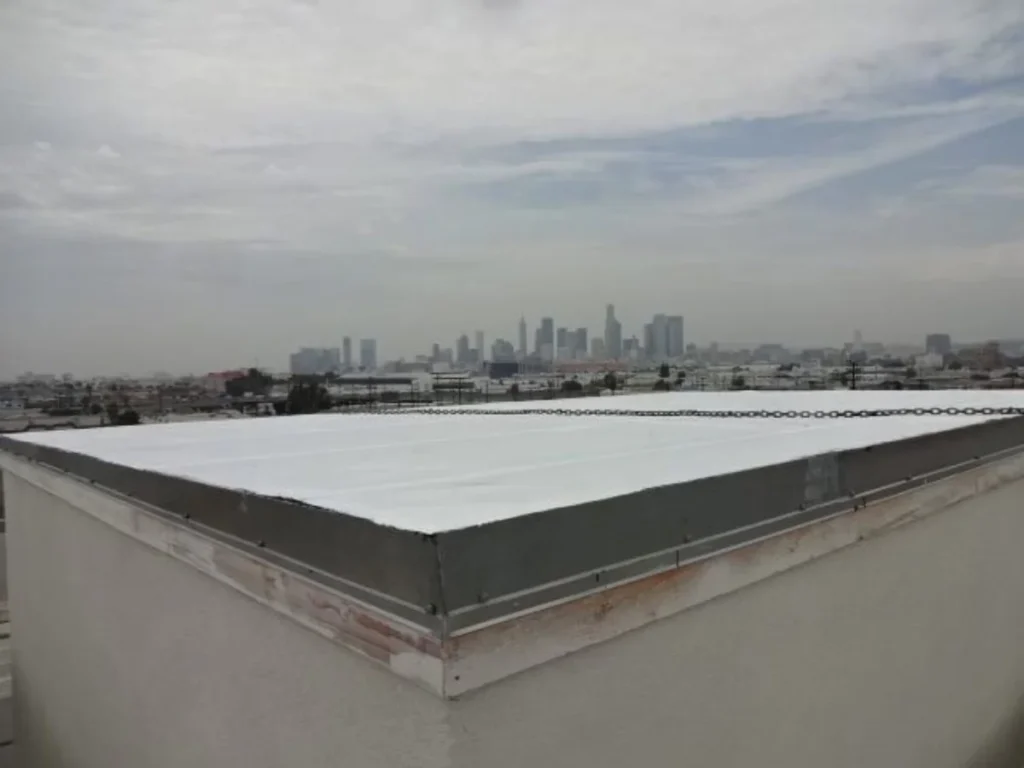
Flat roofs in Southern California face a specific set of challenges. Intense UV exposure breaks down roofing membranes over time, causing them to crack, blister, and lose their waterproofing ability. When seasonal rains hit—especially during El Niño years—those small cracks become entry points for water.
Ponding water is another major issue. If your roof’s drainage system isn’t clear, water sits on the surface for days after a storm. That standing water accelerates membrane deterioration and adds weight to the structure. Over time, it can compromise the roof deck, insulation, and even interior ceilings.
Then there are the Santa Ana winds. These high-wind events can lift loose or damaged sections of membrane, tearing away large areas and exposing your building to the elements. Wind damage often requires emergency repairs, which always cost more than scheduled work.
The real cost of deferred maintenance isn’t just the repair itself. It’s the operational disruption. Leaks force you to move equipment, relocate tenants, and deal with complaints. Water damage can destroy inventory, ruin finishes, and create mold problems that affect indoor air quality. And if your roof warranty required annual inspections—which most do—you may find out too late that your coverage is void.
None of this is hypothetical. It’s what happens when maintenance gets pushed to next quarter, then next year, then forgotten entirely. The roof doesn’t care about your budget cycle. It deteriorates on its own timeline, and small problems compound quickly.
The Economics of Preventative Maintenance
Let’s talk numbers, because that’s what drives decisions. Consider a commercial roof that costs $525,000 to install. Without regular maintenance, that roof will likely need replacement in 15 years. That’s an average cost of $35,000 per year over its lifespan.
Now take the same roof with a comprehensive maintenance plan. Regular inspections, drain clearing, minor repairs, and documentation extend that roof’s life to 30 years. Suddenly, your annual cost drops to $17,500—a savings of $17,500 every single year. The maintenance program itself might cost a few thousand dollars annually, which means you’re still coming out ahead by a significant margin.
For every dollar spent on preventative maintenance, you save between four and five dollars in avoided repairs and damage. That’s not marketing language—that’s data from a 15-year study by Firestone and ProLogis tracking real commercial properties.
The savings go beyond just delaying replacement. Well-maintained roofs perform better. They maintain their reflective coatings, which reduces heat absorption and can cut HVAC costs by 10 to 15 percent. They keep warranties valid, which protects you if a manufacturer defect does occur. And they give you predictable costs instead of emergency surprises that blow up your budget.
Property managers who implement structured maintenance programs report fewer tenant complaints, smoother insurance claims, and higher property values when it’s time to sell or refinance. Buyers and lenders look at maintenance records. A well-documented roof history signals that the property has been cared for, which translates directly into deal confidence and better terms.
What Flat Roof Maintenance Actually Includes
Maintenance isn’t one thing—it’s a system. The most effective programs combine regular inspections, routine cleaning, minor repairs, and documentation. Each piece serves a purpose, and skipping any of them creates gaps where problems can develop.
Most roofing contractors recommend at least two inspections per year: one in the spring and one in the fall. Spring inspections assess damage from winter storms and prepare the roof for summer heat. Fall inspections catch UV damage from the hot months and ensure drainage systems are clear before the rainy season. Buildings with heavy rooftop traffic or older roofs benefit from quarterly check-ins.
Between inspections, there are tasks that should happen on a regular schedule. Debris removal keeps drains and gutters clear. Membrane inspections catch cracks, blisters, and punctures before they leak. Flashing and sealant checks ensure that edges, penetrations, and transition points remain watertight. And interior inspections look for early warning signs like ceiling stains, dampness, or mold.
What to Look for During a Roof Inspection
A thorough flat roof inspection covers both the roof surface and the building interior. On the roof itself, inspectors look for ponding water—any area where water sits for more than 48 hours after rain. Ponding accelerates membrane breakdown and is one of the leading causes of premature flat roof failure.
Membrane condition is critical. Inspectors check for cracks, blisters, punctures, and open seams. These issues often start small but expand quickly, especially under thermal stress from Southern California’s temperature swings. UV damage shows up as surface cracking or fading, particularly on membranes that lack reflective coatings.
Flashing is another focus area. Flashing protects roof edges, penetrations like vents and HVAC units, and transition points between different roofing materials. Over time, sealant dries out and cracks, especially in high heat. Loose or damaged flashing creates pathways for water infiltration.
Drainage systems need attention every inspection. Drains, scuppers, gutters, and downspouts should be clear of leaves, debris, and sediment. Slow drainage or clogs lead directly to ponding water and overflow damage during heavy storms. Even small blockages can cause big problems when rain hits.
Inside the building, inspectors look for signs that the roof may already be compromised. Ceiling stains, peeling paint, dampness, or mold around vents and roof hatches all indicate water intrusion. By the time these signs appear inside, the damage on the roof is often more extensive than it looks. Catching issues before they reach the interior is the goal.
Good inspectors also check the roof deck and structural components. Wood elements should be checked for rot, steel for rust, and sheathing for integrity. Light coming through from above is a clear sign of a hole and a source of water infiltration. These structural issues require immediate attention to prevent further deterioration.
Common Maintenance Tasks That Extend Roof Life
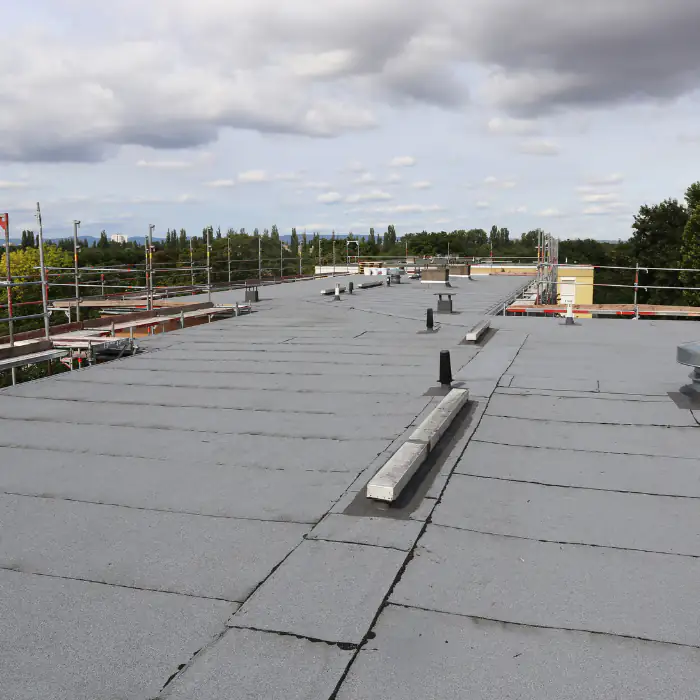
Maintenance isn’t just about identifying problems—it’s about addressing them before they escalate. Debris removal is one of the simplest but most important tasks. Leaves, branches, dirt, and sediment accumulate on flat roofs and in drainage systems. Clearing this debris regularly prevents clogs and reduces the organic material that can trap moisture against the membrane.
Sealant and flashing maintenance is equally important. As sealant ages, it loses flexibility and begins to crack. Resealing joints, edges, and penetrations before leaks develop is far less expensive than repairing water damage after the fact. This work should align with manufacturer specifications to maintain warranty coverage.
Membrane repairs address small cracks, punctures, and blisters before they spread. Heat-welded patches, reinforced membranes, and UV-resistant coatings can restore integrity and extend roof life by up to 15 years. For flat roofs with hot mop systems—built-up roofing made of asphalt and felt layers—patching and resurfacing can address localized deterioration without requiring a full tear-off.
Reflective coatings are another key maintenance strategy. These coatings reduce heat absorption, lower cooling costs, and protect membranes from UV degradation. In Southern California, where Title 24 Cool Roof standards apply to many commercial buildings, maintaining these coatings isn’t just good practice—it’s often required for code compliance.
Walk pads should be installed in high-traffic areas where HVAC technicians or other service personnel access the roof. These pads protect the membrane from wear and punctures caused by foot traffic and equipment. They’re a small investment that prevents damage in areas that see the most use.
Documentation is the final piece. Every inspection, repair, and maintenance activity should be recorded with photos, dates, and descriptions. This documentation serves multiple purposes: it keeps warranties valid, supports insurance claims, helps with property resale, and provides a clear history of the roof’s condition over time. Many property owners keep a digital folder with all roof-related records for easy access.
Protecting Your Investment Starts with a Plan
Your commercial roof is one of your largest building assets, and how you care for it directly impacts your bottom line. The difference between a roof that lasts 15 years and one that lasts 30 comes down to consistent, proactive maintenance. The costs are predictable, the benefits are measurable, and the alternative—reactive repairs and premature replacement—is far more expensive.
Flat roof maintenance isn’t complicated, but it does require a structured approach. Regular inspections, routine cleaning, timely repairs, and solid documentation create a system that catches problems early and extends roof life. For property owners in Orange County and Los Angeles County, where intense sun, seasonal storms, and wind events put constant stress on roofing systems, that structure isn’t optional—it’s essential.
If your roof hasn’t been inspected in the past year, or if you’re dealing with recurring leaks, ponding water, or rising repair costs, it’s time to take a closer look. We’ve been helping commercial and residential property owners protect their investments for nearly 50 years, with the expertise, certifications, and hands-on approach that turn roof problems into long-term solutions.