State Licensed “SINCE 1982”

CSLB C-39 #432352

Full Workers Comp. & $2M Liability Insurance
OUR EMPLOYEE ROOFERS ARE FACTORY CERTIFIED
*Serving most of Southern California*
State Licensed “SINCE 1982” CSLB C-39 #432352
Full Workers Comp. & $2M Liability Insurance
OUR EMPLOYEE ROOFERS ARE FACTORY CERTIFIED.

*Serving most of Southern California*

Hot Tar Systems Orange County, CA

Flat Roofs That Actually Stay Watertight

When your commercial property or multi-family building needs a roof that can handle Southern California’s intense UV, seasonal storms, and constant use, hot tar systems deliver the multi-layer protection and proven longevity that single-ply membranes can’t match.

C-39 Licensed Specialty Contractor

Our C-39 license and factory certifications mean your roof qualifies for full manufacturer warranties and meets California's strict commercial roofing standards.

Decades of Crew Experience

Our installers have been with us for years, not weeks. That continuity means expert craftsmanship on every layer, every time.

Photo-Documented Every Step

Complete photo documentation of substrate prep, each ply, and final inspection. Exactly what your insurance carrier and property records need.

Insurance Claim Compliance Experts

We know what adjusters look for. Our documentation and reporting help you get claims approved without the runaround or second-guessing.

Hot Tar Roofing Los Angeles County

Built-Up Roofing That Outlasts the Competition

Hot tar systems—also called built-up roofing or BUR—have protected commercial and industrial buildings in Southern California for over a century. The reason they’re still here is simple: they work. Multiple layers of asphalt and reinforced felt create a redundant waterproofing system that keeps performing even when one layer gets compromised. That’s the kind of protection you need when a leak means lost inventory, unhappy tenants, or a voided insurance claim. These systems are especially effective for flat and low-slope roofs common on warehouses, retail centers, apartment complexes, and office buildings across Orange County and LA County. The gravel surface layer protects against UV damage, provides fire resistance, and handles foot traffic from maintenance crews accessing rooftop HVAC equipment without puncturing. With proper installation and regular maintenance, a well-built hot tar roof can last 30 to 40 years. That’s a decade or more beyond what most single-ply systems deliver, which matters when you’re managing capital budgets and long-term property value.

Hot Tar Systems Installation Benefits

What You Actually Get With a Royal Roofing Install

These aren’t marketing promises. They’re the measurable outcomes our commercial clients see after installation, backed by decades of completed projects across Southern California.

Your roof becomes genuinely watertight with seamless hot-applied asphalt that eliminates the seam failures common in rolled membrane systems.

You stop worrying about punctures from rooftop equipment, foot traffic, or hail because the gravel surface and multi-ply construction resist impact damage.

Your heating costs drop as the thick asphalt layers insulate your building, with some property owners seeing nearly 10% savings on winter energy bills.

Your insurance claims get approved faster because we provide the photo documentation and compliance reports adjusters actually need to process storm damage.

Your maintenance costs stay predictable and low since BUR systems require less frequent repairs than thinner roofing materials prone to membrane degradation.

Your roof keeps performing for 30-plus years when properly maintained, giving you more value per dollar than systems that need replacement every 15 to 20 years.

Red circular icon with the number one in white, representing step one, ranking, or a first position indicator.

Share project details

Call us or get a free online quote to help us identify your project needs.

Red circular icon with the number two in white, representing step one, ranking, or a first position indicator.

We'll follow up

If you requested an online quote, you can expect a callback within 24-48 hours of your request.

Red circular icon with the number three in white, representing step one, ranking, or a first position indicator.

The floor is yours

Connect with an expert and share all project specifics.

Red circular icon with the number four in white, representing step one, ranking, or a first position indicator.

Plan your project

Like what you hear? We'll provide next steps and expert guidance.

Commercial Hot Tar Roofing Contractors

Why Hot Tar Systems Still Dominate Commercial Flat Roofs

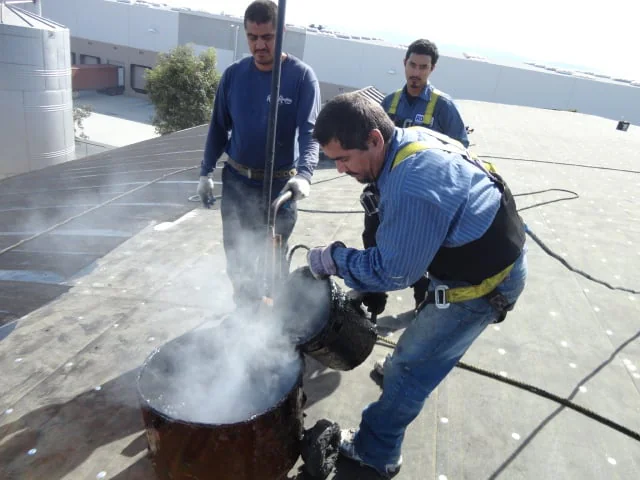
Walk through any industrial park in Orange County or commercial corridor in LA County, and you’ll see hot tar roofs that have been protecting buildings since the 1980s. Some are still going strong. That kind of longevity doesn’t happen by accident. The secret is in the layered construction. A typical 4-ply system alternates layers of hot asphalt with reinforced felt, creating a roof that’s essentially four roofs in one. If the top layer develops a small crack or blister, the three layers underneath keep water out while you schedule a repair. Compare that to a single-ply TPO or EPDM membrane, where one puncture from a falling branch or misplaced tool means water is getting into your building until someone patches it. Hot tar systems also handle Southern California’s climate extremes better than newer materials. The gravel surface reflects UV rays that would otherwise degrade the asphalt, and the thermal mass of the system helps stabilize indoor temperatures during our 95-degree summer days and cooler winter nights. For property managers dealing with LA’s Title 24 cool roof requirements, we can spec reflective coatings or light-colored cap sheets that meet solar reflectance standards without sacrificing the durability you need. The installation does require specialized equipment and trained crews. Asphalt is heated to 400 degrees and applied while still hot, which means safety protocols matter and shortcuts show up fast. That’s why we only use our own crews—no subcontractors, no temp workers who learned the trade last month. Our installers have been doing this for years, and it shows in the finished product.

Hot Tar Systems Repair and Maintenance

What's Included When We Install or Repair Your System

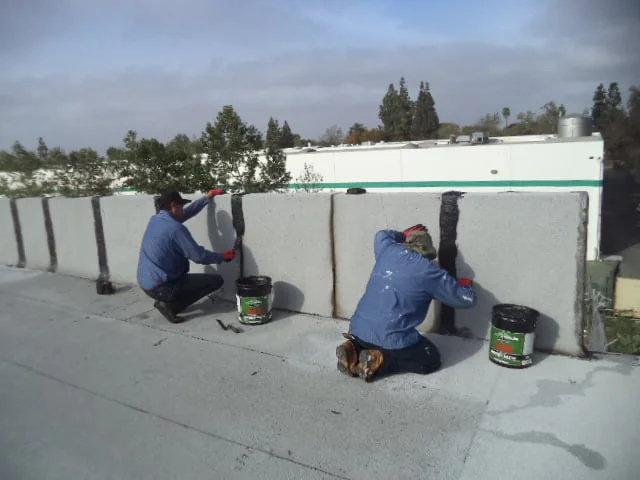
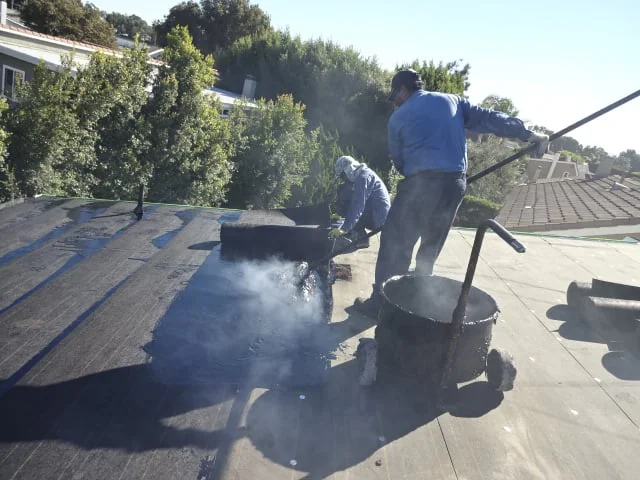
Every hot tar roof we install starts with a thorough substrate inspection. We’re looking at your roof deck condition, drainage patterns, existing moisture, and structural loading capacity before we spec the system. If there’s trapped water in old insulation or soft spots in the decking, we document it, explain what it means for your project, and give you options that fit your budget and timeline. The installation itself follows manufacturer specifications to the letter because that’s what validates your warranty coverage. We apply a base layer, then alternate hot asphalt and reinforced felt for the number of plies you’ve chosen—typically three, four, or five depending on your building use and budget. Each ply gets mopped on at the correct temperature and thickness. The final flood coat gets topped with gravel while it’s still hot, locking everything together into a seamless, watertight surface. For repairs, we don’t automatically recommend a full tear-off when a targeted fix will solve the problem. If you’ve got a localized leak from flashing failure or a small blister, we’ll repair that section, document the work with photos, and get you back to watertight without unnecessary expense. But if your roof is showing widespread alligatoring, multiple leaks, or significant gravel loss, we’ll tell you straight that a replacement makes more financial sense than patching problems that will keep coming back. Maintenance is where most commercial property managers either protect their investment or set themselves up for insurance headaches down the road. We offer scheduled inspections—usually twice a year—that catch small issues like open joints or displaced gravel before they become leaks. Everything gets documented with photos and written reports, which is exactly what your warranty requires and what your insurance carrier wants to see if you ever need to file a claim.
A white number 1 is centered inside a solid black circle on a light gray background, ideal for representing a top-rated roofing contractor in Orange & Los Angeles County, CA.

On-Site Assessment and Documentation

We inspect your roof deck, drainage, and existing conditions, then provide a detailed scope and photo documentation before any work begins.

A bold white number 2 is centered on a solid black circular background, making it easy to spot for any roofing contractor in Orange & Los Angeles County, CA.

Multi-Layer Installation to Spec

Our crews apply each layer of hot asphalt and felt to manufacturer specifications, building the redundant waterproofing system that makes BUR reliable.

A bold white number 3 is centered inside a solid black circle on a light gray background, symbolizing top-tier service from your trusted roofing contractor in Orange & Los Angeles County, CA.

Final Inspection and Compliance Reporting

We walk the finished roof, document the completed installation with photos, and provide you with warranty paperwork and compliance records for your files.