State Licensed “SINCE 1982”

CSLB C-39 #432352

Full Workers Comp. & $2M Liability Insurance
OUR EMPLOYEE ROOFERS ARE FACTORY CERTIFIED
*Serving most of Southern California*
State Licensed “SINCE 1982” CSLB C-39 #432352
Full Workers Comp. & $2M Liability Insurance
OUR EMPLOYEE ROOFERS ARE FACTORY CERTIFIED.

*Serving most of Southern California*

Low-Slope Roofs Orange County, CA

Flat Roofs That Actually Stay Dry

Your low-slope roof shouldn’t pond water, leak after every storm, or fail before its time. We handle drainage problems, membrane failures, and insurance claims the right way—with hot mop expertise and photo-documented craftsmanship across Orange County and Los Angeles County.

C-39 Licensed Specialists

Our California specialty roofing license means your low-slope system meets strict state standards for waterproofing, drainage, and Title 24 energy compliance.

Factory-Certified Installers

We're authorized by major manufacturers to install TPO, PVC, modified bitumen, and hot mop systems—giving you access to extended warranties others can't offer.

Insurance Claim Experts

We document every phase with high-resolution photos and detailed reports, so your insurance claim has the evidence it needs to get approved without delays.

Decades of Crew Experience

Our crews have been with us for years, not weeks. That loyalty translates to consistent quality, proper drainage design, and roofs that last their full lifespan.

Low-Slope Roofing Systems California

Roofs Built for California's Heat and Storms

Low-slope roofs cover most commercial buildings, modern homes, and multi-family properties across Orange County and LA County. They’re cost-effective and space-efficient, but they need specialized membranes, proper drainage, and contractors who actually understand how water behaves on a nearly flat surface. We install and repair hot mop systems, TPO, PVC, EPDM, modified bitumen, and built-up roofing. Each system has its place depending on your building type, budget, and how much sun exposure you’re dealing with. What matters most is that the slope drains correctly, the seams are sealed tight, and the membrane can handle California’s UV load without breaking down in five years. If your roof ponds water for more than 48 hours after rain, you’ve got a drainage problem. If your membrane is cracking or blistering, you’ve got a material or installation issue. Either way, it’s fixable—and we’ll tell you exactly what’s wrong before we touch anything.

Low-Slope Roof Benefits Orange County

What You Get With a Properly Installed System

A low-slope roof done right doesn’t just keep water out. It lowers your energy bills, extends your building’s lifespan, and stops you from calling roofers every six months to patch the same leak.

Water drains to the right places instead of pooling on your roof deck, which means no more membrane rot or structural stress.

Your cooling costs drop because reflective membranes meet California Title 24 standards and actually bounce heat instead of absorbing it.

You stop worrying about leaks every time it rains, because the waterproofing membrane is seamless and installed to manufacturer specs.

Insurance claims go smoother when damage does happen, because we document everything with photos and detailed reports from day one.

Your roof lasts 15 to 30 years depending on the system you choose, not 8 years because someone cut corners on drainage or underlayment.

You can actually use your rooftop for HVAC units, solar panels, or equipment access without worrying about punctures or weight limits.

Red circular icon with the number one in white, representing step one, ranking, or a first position indicator.

Share project details

Call us or get a free online quote to help us identify your project needs.

Red circular icon with the number two in white, representing step one, ranking, or a first position indicator.

We'll follow up

If you requested an online quote, you can expect a callback within 24-48 hours of your request.

Red circular icon with the number three in white, representing step one, ranking, or a first position indicator.

The floor is yours

Connect with an expert and share all project specifics.

Red circular icon with the number four in white, representing step one, ranking, or a first position indicator.

Plan your project

Like what you hear? We'll provide next steps and expert guidance.

Hot Mop Roofing Los Angeles

Hot Mop Systems That Seal Every Seam

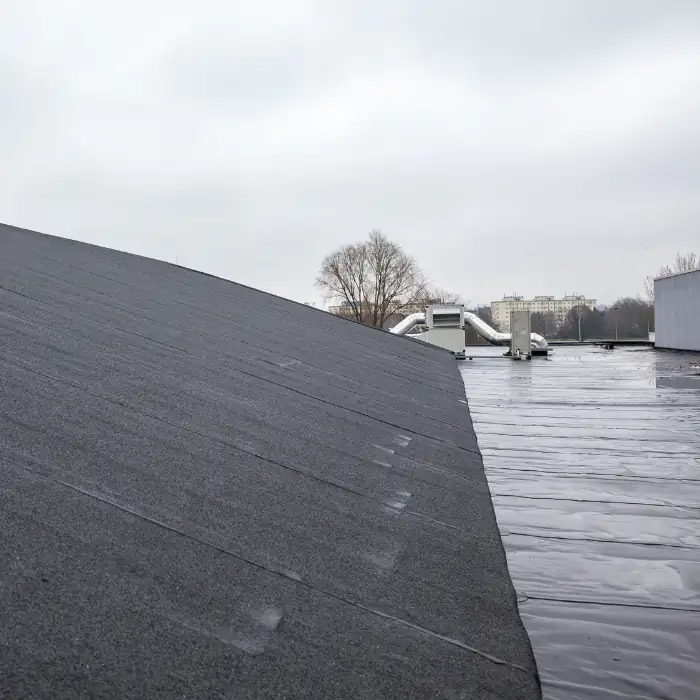
Hot mop roofing has been protecting flat and low-slope roofs in Southern California for decades, and there’s a reason it’s still one of the most reliable options available. We heat asphalt to 400 degrees, apply it with specialized equipment, and layer it with reinforced felt to create a completely seamless, waterproof membrane. No seams mean no weak points where water can sneak through. This system works especially well for buildings with unusual shapes, multiple roof penetrations, or areas where traditional membranes would require too many seams. The asphalt bonds directly to the substrate, creating a monolithic surface that can handle foot traffic, UV exposure, and California’s temperature swings without cracking or peeling. Hot mop roofs typically last 15 to 20 years with minimal maintenance. They’re fire-resistant, cost-effective compared to some single-ply systems, and they can be topped with gravel or a reflective cap sheet to meet cool roof requirements. If you’ve got a flat roof on a commercial building, multi-family property, or modern home, hot mop is worth considering—especially if drainage and long-term durability matter more than cutting a few hundred dollars off the install.

Ponding Water Solutions California

Fixing Drainage Before It Destroys Your Roof

Ponding water is the number one killer of low-slope roofs. If water sits on your roof for more than 48 hours after a storm, it’s not draining properly—and that’s going to accelerate membrane breakdown, add dangerous weight to your structure, and create conditions for algae growth and interior leaks. California building code requires a minimum slope of one-quarter inch per foot for membrane roofs. If your roof was built flat or has settled over time, we can correct it with tapered insulation systems that create positive drainage toward your drains and scuppers. We also install crickets around HVAC units and other protrusions to divert water away from problem areas. Proper drainage isn’t just about slope. Your drains need to be clear, properly sized, and spaced no more than 80 feet apart. Scuppers need to be positioned at true low points, and your membrane needs to be thick enough in ponding areas to resist the constant water exposure. We assess all of this during inspection, show you exactly where the problems are, and fix them with solutions that actually work for more than one season.
A white number 1 is centered inside a solid black circle on a light gray background, ideal for representing a top-rated roofing contractor in Orange & Los Angeles County, CA.

Inspection and Documentation

We assess your current roof condition, drainage patterns, and membrane type. Every issue gets photographed and explained in plain language so you know what you're dealing with.

A bold white number 2 is centered on a solid black circular background, making it easy to spot for any roofing contractor in Orange & Los Angeles County, CA.

System Recommendation and Estimate

We recommend the right membrane system based on your building type, budget, and how long you need it to last. No upselling—just honest guidance on what works.

A bold white number 3 is centered inside a solid black circle on a light gray background, symbolizing top-tier service from your trusted roofing contractor in Orange & Los Angeles County, CA.

Installation with Photo Documentation

Our crews install your new system to manufacturer specs, document each phase with photos, and make sure drainage is correct before we call it done. You get a complete record of the work.