Torch-on systems create seamless, waterproof protection for low-slope roofs through heat-welded modified bitumen layers. When installed by licensed, certified contractors, you get 20+ years of reliable performance without recurring leak problems.
California's specialty roofing license means verified experience, passed state exams, and accountability you can track through the CSLB database.
Factory Certified Installation Teams
Certifications from GAF, CertainTeed, and Polyglass aren't just paperwork—they're proof your roof meets manufacturer standards for warranty coverage.
CERTA Trained Torch Applicators
National Roofing Contractors Association safety certification ensures proper open-flame technique, reducing fire risk during installation on your property.
Photo Documented Every Step
Before, during, and after documentation gives you transparency for the work and solid evidence if you ever need to file an insurance claim.
Modified Bitumen Roofing Los Angeles County
The System Built for California Flat Roofs
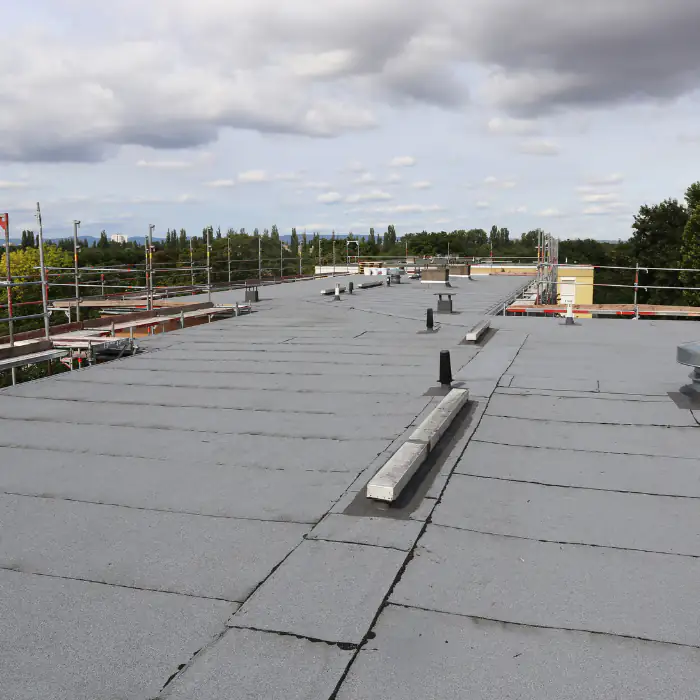
Torch-on systems use modified bitumen membranes—asphalt reinforced with rubber or plastic polymers—that we heat-weld directly to your roof surface. This creates a seamless barrier that handles Southern California’s intense UV exposure, temperature swings, and occasional heavy rain better than most alternatives. The multi-layer construction flexes with your building’s movement instead of cracking, and the granulated surface reflects heat to keep your space cooler. It’s designed specifically for flat and low-slope applications where water drainage is already a challenge and standing water can’t be completely avoided.
A torch-on system installed correctly doesn’t just cover your roof—it solves the problems flat roofs create in the first place.
You stop dealing with leaks that show up every time it rains because the heat-welded seams create a continuous waterproof barrier.
Your roof handles the daily temperature swings without cracking since modified bitumen expands and contracts with the heat.
You get 20 to 30 years of protection when it's installed right, not 10 years of patching and repatching like cheaper systems.
Your cooling costs drop because the reflective granulated surface bounces California sun instead of absorbing it into your building.
HVAC techs can walk on it for maintenance without puncturing through since the multi-layer construction handles foot traffic better than single-ply membranes.
Insurance companies accept it because you have documentation, proper installation, and a system that meets California building codes.
Call us or get a free online quote to help us identify your project needs.
We'll follow up
If you requested an online quote, you can expect a callback within 24-48 hours of your request.
The floor is yours
Connect with an expert and share all project specifics.
Plan your project
Like what you hear? We'll provide next steps and expert guidance.
Torch-On Systems Installation California
Why the Installation Method Matters More Than You Think
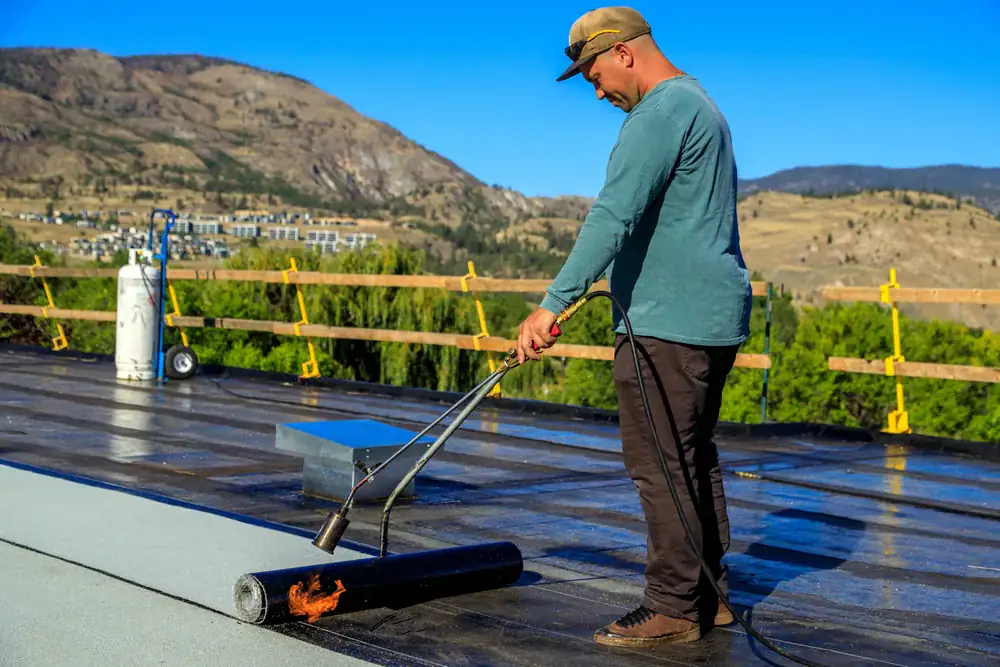
Torch-on systems get their name from the installation process—using a propane torch to heat and melt modified bitumen sheets as they’re rolled onto your roof. When the material hits the right temperature, it bonds to the surface and to itself, creating that seamless, waterproof seal. But here’s what most people don’t realize: this is skilled work that requires CERTA certification and proper insurance because you’re working with open flame on a structure. Unlicensed contractors cutting corners have caused millions in fire damage across California. The difference between a roof that lasts 25 years and one that fails in 10 often comes down to proper surface preparation, correct overlap at seams, and even heating without overheating. You’re not just paying for materials—you’re paying for expertise that keeps your property safe during installation and performs reliably for decades after.
A complete torch-on system starts with thorough inspection and surface preparation—because adhesion problems always trace back to what’s underneath. We examine the roof deck for damage, repair it if needed, and clean it completely. Then comes the base sheet installation, which creates the foundation layer. The cap sheet goes on next, heat-welded with precise torch application to bond everything together. For three-layer systems, a granulated top sheet adds UV protection and reflectivity. All penetrations—vents, pipes, HVAC units—get proper flashing with self-adhering modified bitumen and metal caps. Throughout the process, you get photo documentation at each stage. After installation, there’s a final inspection to check seam integrity and proper drainage. The whole process is coordinated with city permits and building inspections to keep everything code-compliant. What you end up with isn’t just a roof—it’s a complete waterproofing system engineered for California’s climate.
Complete roof assessment identifies damage, drainage issues, and deck condition. The surface gets cleaned and prepped for proper adhesion before any installation begins.
Multi-Layer System Installation
Base sheet, cap sheet, and optional granulated layer are heat-welded in sequence. Each seam is properly overlapped and sealed to create continuous waterproof protection.
Inspection and Documentation
Final walkthrough confirms seam integrity and proper drainage. You receive complete photo documentation and warranty information for your records and insurance company.