Appointments Available
Phone Support 24/7
Bell Gardens, CA 90201
*Serving most of Southern California*
Appointments Available
Phone Support 24/7
Bell Gardens, CA 90201
You’re managing a commercial property in Mayflower Village, and the last thing you need is a roof leak shutting down operations or damaging inventory. Emergency repairs cost three to five times more than scheduled maintenance, and they always happen at the worst possible time.
A properly maintained commercial roof system extends your roof’s lifespan by 10-15 years. That’s real money staying in your budget instead of going to crisis repairs. You get predictable costs, zero surprise failures, and tenants who aren’t calling about water damage.
Our maintenance programs catch small problems before they become expensive disasters. We document everything with photos, so you have records for insurance, budgeting, and future planning. You’ll know exactly what’s happening on your roof and when attention is needed—no surprises, no guessing.
We’ve been protecting commercial properties across Los Angeles County since the early 1980s. We hold California’s C-39 specialty roofing license—the highest credential for complex commercial roofing work—and maintain factory certifications with every major manufacturer we install.
Mayflower Village sits in the San Gabriel Valley, where summer temperatures regularly hit the high 90s and UV exposure is relentless on flat roof systems. We’ve been handling these exact conditions for commercial properties throughout the area for over 40 years. Our crews have been with us for decades, not months, because we treat this work like the long-term investment it is.
You’ll find us on the BBB with an A+ rating. That doesn’t happen by accident when you’ve been in business this long. It happens because we show up, do what we say we’ll do, and document every step with photos so you’re never left wondering what happened on your roof.
We start with a thorough roof inspection—not a sales pitch disguised as an assessment. You get a detailed report with photos showing current conditions, problem areas, and what needs attention now versus later. If your roof just needs maintenance, we’ll tell you. If it needs replacement, we’ll explain why and show you the evidence.
Once you decide to move forward, we handle all permitting and Title 24 compliance documentation for Mayflower Village and Los Angeles County. California’s cool roof requirements are strict, and we make sure everything meets current building codes before we start. You don’t have to chase down permits or worry about inspections—that’s on us.
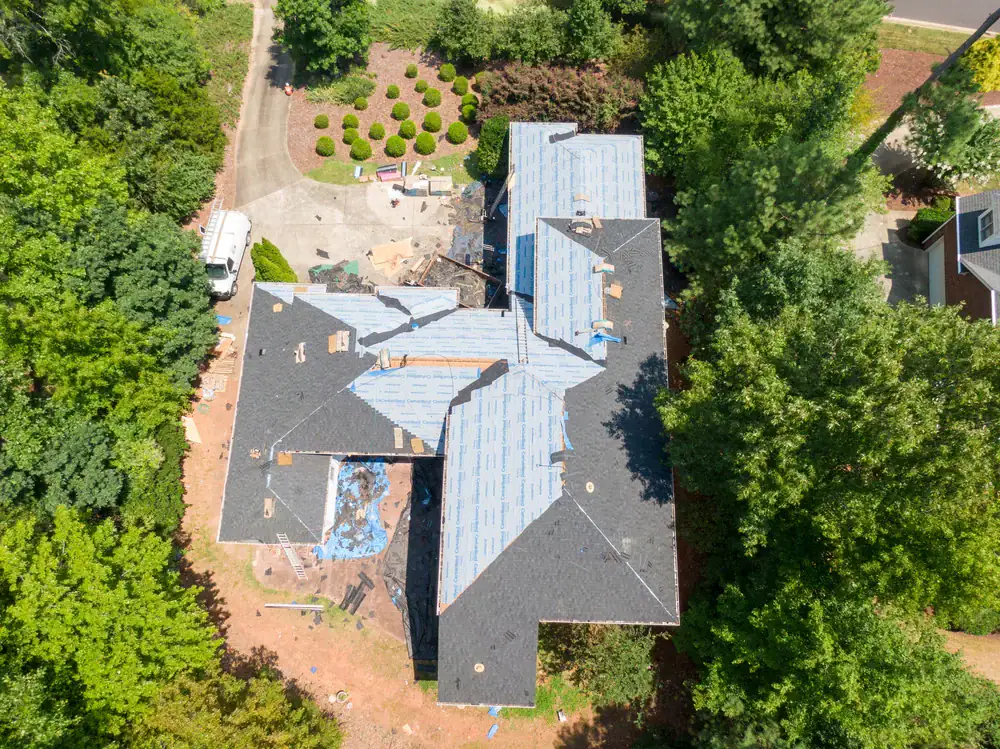
During installation, we work around your operations. Most commercial roofing happens during business hours, and we know you can’t just shut down for two weeks. We section off work areas, maintain safe access, and keep noise and disruption to a minimum. Your tenants and employees can keep working while we’re replacing or repairing your roof.
Every project gets documented with progress photos. You’ll have a complete visual record of the work from start to finish, which is critical for insurance records, warranty claims, and future maintenance planning.
Commercial properties in Mayflower Village need roofing systems that handle intense UV exposure, high heat, and California’s strict energy codes. We install and maintain TPO, PVC, EPDM, and built-up flat roof systems designed specifically for these conditions.
Title 24 cool roof restoration is a major focus for commercial properties across Los Angeles County. California requires cool roofs on most commercial buildings to reduce energy consumption and urban heat. These systems reflect sunlight instead of absorbing it, which can cut your cooling costs by 20-30% during summer months. We’re factory-certified to install cool roof coatings and systems that meet or exceed Title 24 requirements.
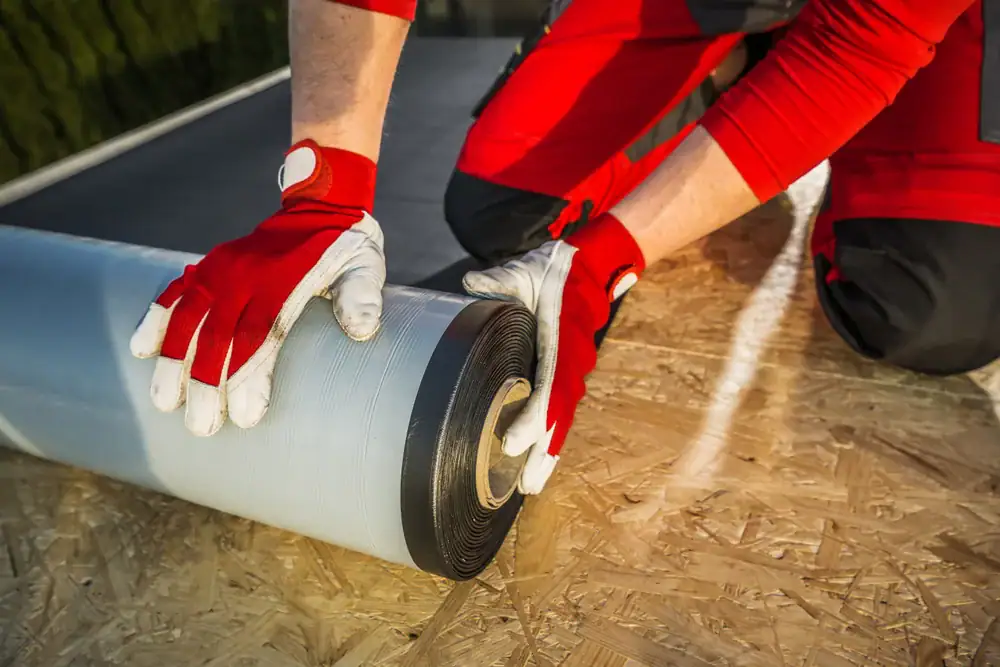
TPO and PVC roofing dominate the commercial market because they perform well in hot, dry climates like ours. TPO is cost-effective and energy-efficient. PVC offers superior chemical resistance and longer lifespan, making it ideal for industrial facilities or properties near coastal areas. Both systems qualify for Title 24 compliance when installed correctly.
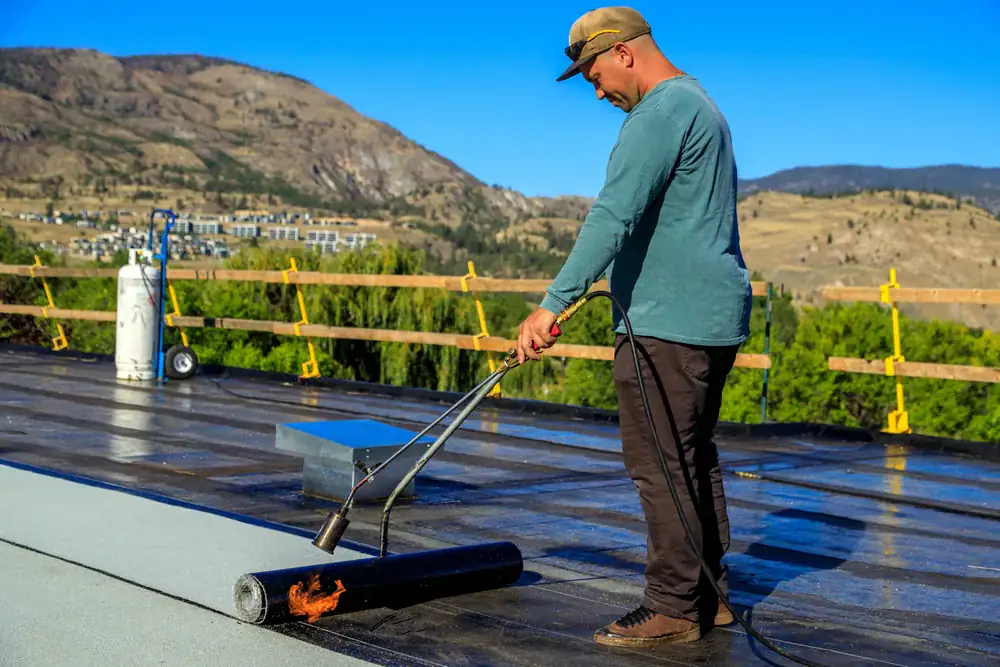
We also specialize in hot mop roofing systems—a proven waterproofing method that’s been protecting flat roofs in California for generations. It’s especially effective for multi-layer applications and complex roof geometries where single-ply membranes don’t perform as well.
Most commercial roof replacements in Mayflower Village take one to three weeks depending on building size, roof complexity, and weather conditions. A standard 10,000-square-foot flat roof with straightforward access typically takes 7-10 business days from start to final inspection.
Weather plays a bigger role than most property managers expect. We can’t install TPO, PVC, or apply coatings during rain or when temperatures drop below manufacturer specifications. Summer and fall are ideal for commercial roofing in Southern California because you get consistent dry weather and moderate temperatures.
We break projects into phases to minimize disruption to your operations. If you have tenants or employees who need access to certain areas, we’ll schedule around those needs. You won’t have your entire building shut down at once—we section off work areas and maintain safe pathways throughout the project.
TPO costs less upfront and performs well in hot, dry climates like Mayflower Village. It’s heat-welded at the seams, creating watertight bonds that hold up against UV exposure and thermal expansion. Most TPO systems last 15-20 years with proper maintenance, and they meet Title 24 cool roof requirements right out of the box.
PVC costs more initially but often lasts 20-25 years or longer. It’s more resistant to chemicals, grease, and oils, which makes it the better choice for restaurant roofs, industrial facilities, or any property where rooftop equipment might leak fluids. PVC also stays flexible in temperature extremes better than TPO, so it handles thermal cycling without cracking.
Both systems are single-ply membranes, both are energy-efficient, and both qualify for most manufacturer warranties when installed by factory-certified contractors. The decision usually comes down to budget and what’s happening on your roof. If you have HVAC units, grease traps, or industrial equipment up there, PVC is worth the extra investment. If you have a straightforward flat roof with standard equipment, TPO delivers excellent performance at a lower cost.
If your building is in Mayflower Village or anywhere in California, and you’re doing a roof replacement or recovering more than 2,000 square feet, Title 24 compliance is mandatory. California’s energy code requires cool roofs on most commercial buildings to reduce energy consumption and meet state climate goals.
Cool roofs reflect at least 70% of sunlight and emit at least 75% of absorbed heat. This keeps your building cooler, reduces air conditioning costs, and qualifies you for potential utility rebates. The requirements apply to flat roofs, low-slope roofs, and steep-slope roofs depending on your building type and use.
We handle all Title 24 documentation and compliance verification as part of our commercial roofing process. You’ll get the proper forms filed with Los Angeles County, and we’ll make sure your roofing system meets or exceeds the required Solar Reflectance Index (SRI) ratings. This isn’t optional—inspectors will check, and non-compliance can result in failed inspections and costly delays. We make sure it’s done right the first time.
You should have your commercial roof inspected twice a year—once in spring before summer heat arrives, and once in fall before winter rain starts. These seasonal inspections catch small problems like loose flashing, clogged drains, or membrane damage before they turn into expensive emergency repairs.
After any major storm with high winds or heavy rain, schedule an additional inspection even if you don’t see obvious damage. Wind can lift membrane edges, blow debris onto the roof, or damage flashing around rooftop equipment. Catching these issues within days instead of months prevents water infiltration that leads to structural damage and mold.
If your roof is over 15 years old, increase inspections to three or four times per year. Older roofing systems need more attention as materials break down from UV exposure and thermal cycling. Regular inspections on aging roofs help you plan for replacement on your timeline instead of being forced into emergency decisions when a major leak shuts down your operations.
Most commercial roofs can be repaired if you catch problems early and the overall system is still in decent shape. Small leaks, damaged flashing, punctures from equipment installation, or localized membrane damage are all repairable without replacing the entire roof. Repairs make sense when damage covers less than 25% of your roof surface and the underlying structure is sound.
Full replacement becomes necessary when your roof has widespread damage, multiple leak points, or the membrane has reached the end of its lifespan. If you’re patching leaks every few months, you’re past the point where repairs make financial sense. You’re spending money on temporary fixes instead of investing in a permanent solution.
We’ll give you an honest assessment during the inspection. If repairs will buy you another 5-7 years of reliable performance, we’ll recommend that route and save you money. If your roof is failing in multiple areas and repairs are just delaying the inevitable, we’ll explain why replacement is the better investment. You’ll get photos, condition reports, and a clear recommendation based on what’s actually happening on your roof—not what makes us the most money.
Call us immediately—we handle emergency roof repairs throughout Mayflower Village and Los Angeles County. Emergency situations include active leaks, storm damage, or any roof failure that’s threatening your property, inventory, or operations. We’ll get someone out to assess the damage and implement temporary protection the same day when possible.
Emergency repairs focus on stopping water infiltration and preventing further damage until we can schedule permanent repairs. This usually involves tarping, temporary patching, or sealing damaged areas to keep weather out. We document everything with photos for your insurance claim, which is critical for getting coverage approved quickly.
Once the emergency is stabilized, we’ll provide a detailed repair plan with costs and timeline. If insurance is involved, we’ll work directly with your adjuster and provide all necessary documentation. Our experience with insurance claims helps move the process faster so you can get permanent repairs completed and get back to normal operations. Emergency repairs cost more than scheduled maintenance, but they’re necessary when your roof fails unexpectedly—and they’re a lot cheaper than letting water damage spread through your building.
Other Services we provide in Mayflower Village