Appointments Available
Phone Support 24/7
Bell Gardens, CA 90201
*Serving most of Southern California*
Appointments Available
Phone Support 24/7
Bell Gardens, CA 90201
You’re managing a property where the roof isn’t just overhead—it’s affecting your bottom line. High cooling costs in Stanton’s 100°F summers eat into your budget. Leaks disrupt tenants and damage inventory. Insurance claims drag on because documentation doesn’t satisfy adjusters.
A properly installed commercial roofing system changes that. Cool roofs drop surface temperatures by up to 50°F, cutting your HVAC load significantly. TPO and PVC membranes last 20-30 years with minimal maintenance, which means fewer service calls and lower long-term costs. When storm damage happens, photo-documented inspections and Title 24-compliant installations speed up insurance approvals instead of creating more paperwork.
You get a roof that works quietly in the background while your property performs. Energy costs drop. Tenant complaints stop. Your asset holds value. That’s what happens when the installation is done right the first time.
We’ve been handling commercial roofing projects across Los Angeles County for decades. We’re a family business with C-39 specialty licensing, factory certifications from Sarnafil, APOC, Sika, and Western Colloid, and BBB accreditation. Our crews have been with us for years—not months.
Stanton’s dense commercial landscape, from the retail centers along Beach Boulevard to the industrial facilities near Katella Avenue, requires contractors who understand California’s Title 24 energy codes and can navigate insurance claim requirements. We document every inspection with photos and written reports that satisfy adjusters and ownership transitions.
You’re not getting a sales pitch from someone who’s never been on a roof. You’re working with people who’ve installed thousands of commercial systems and know what actually holds up in Southern California’s climate.
We start with a roof inspection that identifies current conditions, potential issues, and whether you need repairs or full replacement. You receive photos and a written report that breaks down what’s happening and why it matters. If you’re filing an insurance claim, this documentation is built to satisfy adjusters from the start.
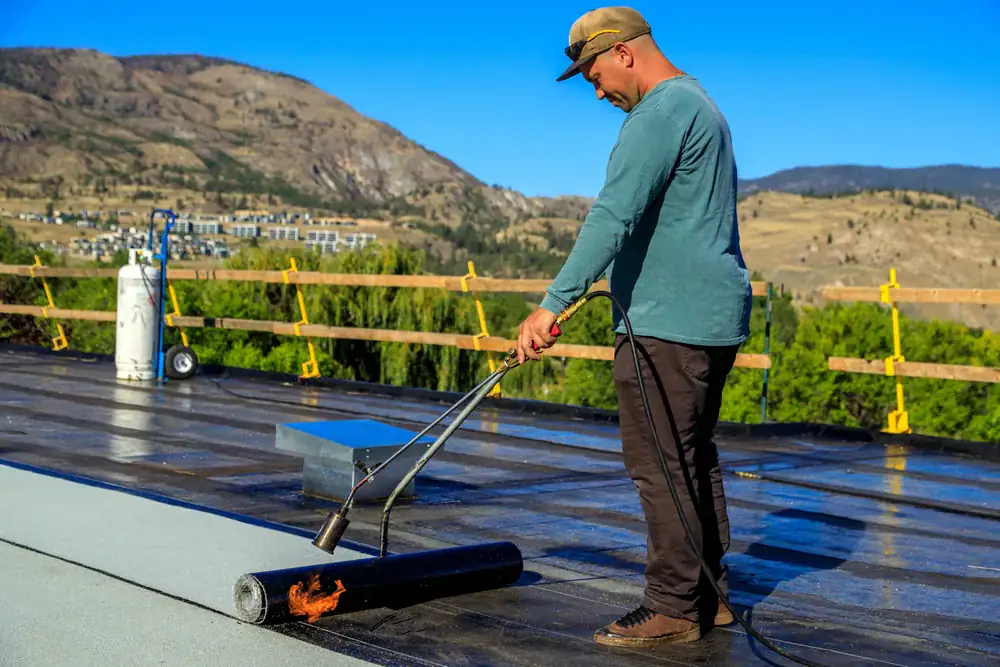
Next, we walk you through material options—TPO, PVC, EPDM, modified bitumen, or hot mop systems—based on your building type, budget, and Title 24 requirements. We explain what each system costs upfront and long-term, including energy savings and maintenance needs. No upselling, just the information you need to decide.
Installation is scheduled to minimize disruption to your operations. We coordinate with property managers to work around tenant schedules, protect landscaping and equipment, and keep the site clean. Every phase is documented with photos. When we’re done, you get a final report, warranty information, and a maintenance plan that keeps your roof performing for decades.
If emergency repairs come up—storm damage, sudden leaks, isolated deterioration—we respond quickly to restore function and prevent further damage.
Commercial roof replacement in Stanton means more than just new materials. You’re getting Title 24 compliance with cool roof standards that require an SRI of 75 to 85 for low-slope buildings. That’s not optional—it’s California code. We handle the permits, inspections, and documentation so you’re not chasing down compliance paperwork.
TPO and PVC roofing systems are the most common choices for commercial properties here because they reflect heat, resist punctures, and last 20-30 years with basic maintenance. Single-ply membranes are mechanically attached or fully adhered depending on your building’s exposure and wind load requirements. If you’re adding solar, we integrate mounting systems that don’t compromise your roof’s waterproofing.
Flat roof maintenance programs catch small issues before they become expensive problems. Routine inspections identify ponding water, membrane damage, and flashing failures early. For property managers handling multiple buildings, this means fewer emergency calls and more predictable capital planning.
Industrial roofing solutions for warehouses and manufacturing facilities often require specialized coatings, spray polyurethane foam, or metal roofing systems that handle heavy equipment loads and chemical exposure. We match the system to your operational needs, not just what’s easiest to install.
Title 24 mandates that low-slope commercial roofs in climate zones 10-15, which includes Stanton, meet cool roof standards with a Solar Reflectance Index of 75 to 85. This applies to new installations and re-roofing projects. The goal is reducing building energy consumption by reflecting solar heat instead of absorbing it.
Cool roof restoration involves either installing a new reflective membrane like TPO or PVC, or applying a cool roof coating to your existing system. Both options must be documented and permitted. The roof also needs increased insulation—often R-14 or higher above the deck—to meet current energy efficiency requirements.
If your building was constructed before these codes took effect, you’ll need to bring it up to current standards during any major roof work. That includes solar-ready requirements and, in some cases, mandatory solar and battery storage installations. We handle the permit applications, coordinate inspections, and provide the documentation you need for compliance and future property transactions.
Most commercial roof replacements in Stanton take one to three weeks depending on building size, roof complexity, and weather. A 10,000 square foot flat roof on a retail building typically takes 5-7 days. Larger industrial facilities or multi-building complexes take longer.
We schedule work to minimize disruption. For retail centers, that often means working early mornings or after hours. For warehouses, we coordinate around shipping schedules and production needs. Noise, equipment staging, and material deliveries are planned in advance so tenants and operations aren’t surprised.
The actual tear-off and installation happen in phases. We don’t strip your entire roof at once—sections are removed, prepped, and covered the same day to maintain weather protection. If your building needs to stay operational during construction, we create temporary barriers and access routes that keep business moving. You’ll know the schedule before we start, and we communicate any changes immediately if weather or unforeseen conditions affect timing.
TPO and PVC are both single-ply membranes that work well in Stanton’s climate, but they’re not identical. TPO is less expensive upfront and performs well in most commercial applications. It’s heat-reflective, resists UV damage, and holds up to normal foot traffic. Most property managers choose TPO for office buildings, retail centers, and apartment complexes where chemical exposure isn’t a concern.
PVC costs more but offers better chemical resistance and longer warranties. If your roof is exposed to grease, oils, or industrial chemicals—like restaurant exhaust or manufacturing byproducts—PVC is the better choice. It’s also more flexible in cold weather, though that’s less relevant in Southern California.
Both systems last 20-30 years with proper installation and basic maintenance. The real performance difference comes down to your building’s specific exposures and budget. We walk you through the cost difference, expected lifespan, and maintenance requirements so you can decide what makes sense for your property. Neither option is wrong—it’s about matching the system to your situation.
If your roof is under 15 years old and damage is isolated—a few leaks, localized membrane damage, flashing failures—repairs usually make sense. You’re fixing specific problems without replacing a system that still has useful life. Repairs cost a fraction of replacement and can extend your roof’s performance by several years.
Full replacement makes sense when damage is widespread, your roof is over 20 years old, or you’re dealing with recurring leaks in multiple areas. If the substrate is deteriorated, insulation is saturated, or you’re patching the same spots repeatedly, you’re spending money without solving the underlying problem. At that point, replacement is more cost-effective long-term.
We inspect the entire roof system—not just the visible damage—and give you an honest assessment. You’ll see photos of what’s happening under the surface, how much useful life is left, and what repairs will actually accomplish. If your roof can be repaired, we’ll tell you. If it’s time to replace, we’ll explain why and what happens if you wait. The decision is yours, but you’ll have the information to make it confidently.
Yes, and the savings are significant in Stanton’s climate. Traditional dark roofs absorb heat and can reach surface temperatures of 150°F or higher during summer. That heat transfers into your building, forcing your HVAC system to work harder and run longer. Cool roofs with reflective TPO or PVC membranes stay 50°F cooler, which directly reduces your cooling load.
Property managers typically see energy cost reductions of 20-40% after installing a cool roof system, depending on building size, insulation levels, and HVAC efficiency. For a 20,000 square foot commercial building in Stanton, that can mean $3,000-$8,000 in annual savings. Over a 20-year roof lifespan, the energy savings often cover a significant portion of the installation cost.
There are also federal tax credits available under Section 25C of the Inflation Reduction Act—30% tax credits for energy-efficient roofing upgrades. Combined with lower utility bills and reduced HVAC maintenance, a cool roof system pays for itself faster than most property improvements. We provide energy savings estimates based on your specific building so you can see the financial impact before making a decision.
Insurance claims move faster when you have proper documentation from the start. We inspect the damage, photograph everything, and provide a written report that details what happened, what needs repair or replacement, and whether the damage is covered under typical commercial property policies. This documentation is what adjusters need to approve claims without delays.
The most common issues that slow down claims are disputes over code compliance and insufficient proof of damage. If your roof wasn’t maintained or doesn’t meet current building codes, insurers sometimes argue that damage resulted from neglect rather than a covered event. We document pre-existing conditions separately from storm damage so there’s no confusion about what’s being claimed.
Once your claim is approved, we handle the repairs or replacement according to the scope your insurance company agrees to. We work directly with adjusters, provide progress photos, and ensure all work meets Title 24 requirements and manufacturer specifications. You’re not stuck between your contractor and your insurance company trying to translate technical disputes. We’ve done this hundreds of times and know what carriers expect at every stage of the process.
Other Services we provide in Stanton