

Summary:
You’re not looking for the cheapest roofer. You’re looking for the one who won’t cost you twice as much three years from now. When you’re responsible for a commercial property, an HOA community, or a multi-family building in Orange County or Los Angeles County, the stakes are higher than a single roof. You’re managing budgets, tenant expectations, insurance requirements, and board approvals. You need a commercial roofing contractor who understands that cutting corners today creates compounding problems tomorrow. This isn’t about perfection for perfection’s sake. It’s about process, accountability, and knowing what happens when the crew leaves and the photos stop. Let’s talk about what separates contractors who do the job right from those who just do the job.
What "Doing the Job Right" Actually Means in Commercial Roofing
It’s easy to say you do quality work. Every contractor claims it. But when you’re managing a commercial property or sitting on an HOA board, you need specifics, not slogans.
Doing the job right starts before the first crew member arrives. It means understanding California’s Title 24 requirements, knowing which systems work in your climate, and being honest about what your roof actually needs versus what’s easiest to sell. It means pulling permits, carrying proper insurance, and having a C-39 license that’s active and verified.
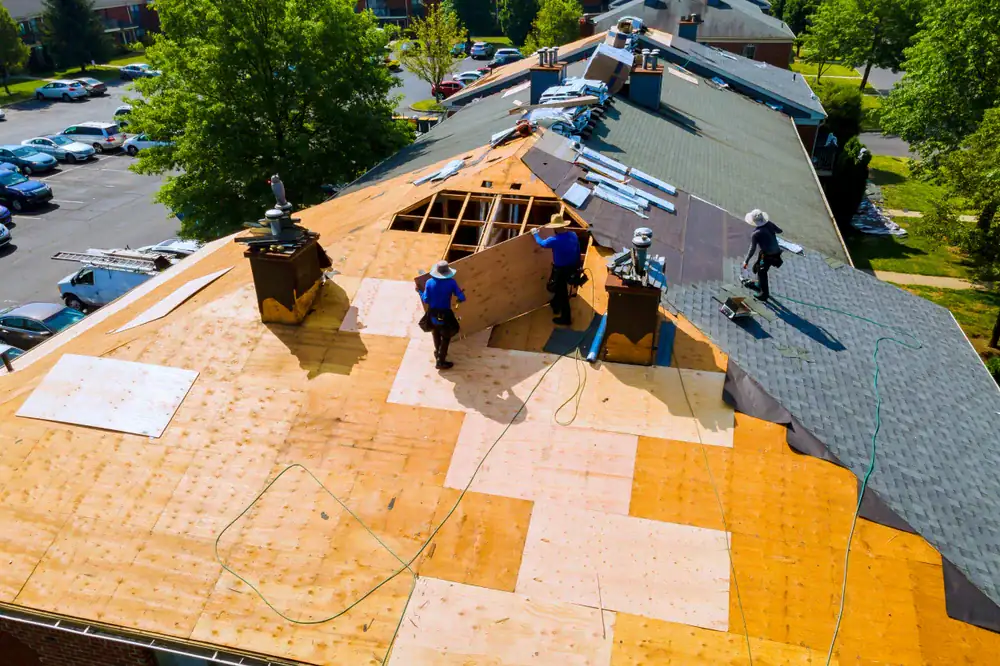
Once work begins, it’s about process. Proper substrate prep. Correct flashing installation. Following manufacturer specs so your warranty actually holds up. And here’s the part most people don’t think about until it’s too late: documentation. Photos at every stage. Detailed reports. The kind of paper trail that makes insurance adjusters and HOA boards happy instead of suspicious.
Why Documentation and Process Matter More Than You Think
Let’s say your commercial roof in Irvine starts leaking two years after installation. You call the contractor. They say it’s covered under warranty. Then the manufacturer asks for installation photos, proof that specs were followed, and evidence the substrate was properly prepared.
If your contractor didn’t document the work, you’re stuck. The warranty you paid for? Worthless. You’re paying for repairs out of pocket or filing an insurance claim that might get denied because there’s no proof the original work was done correctly.
This happens more often than it should. Contractors finish the job, collect payment, and move on. No photos. No detailed reports. Just a signed contract and a hope that nothing goes wrong.
Now contrast that with a contractor who photographs every phase. Who provides you with a full report showing substrate condition, material installation, flashing details, and final inspection results. When something does go wrong—and even the best roofs eventually need attention—you have evidence. You can prove the work was done right. Your warranty holds up. Your insurance claim gets approved. Your HOA board sees that you hired a professional, not someone who disappeared after cashing the check.
For property managers and HOA boards, this documentation isn’t extra. It’s essential. It protects you when board members change, when insurance policies get reviewed, and when future owners or tenants ask questions about the roof’s history. It’s the difference between “we think it was done right” and “here’s proof it was done right.”
How Cutting Corners Shows Up Later in Commercial Properties
You’ve probably heard the phrase “you get what you pay for.” In commercial roofing, that’s not always true. Sometimes you pay for quality and get shortcuts. The difference doesn’t show up on day one. It shows up when the first storm hits, when the insurance adjuster starts asking questions, or when you’re three years in and facing repairs that shouldn’t be necessary yet.
Cutting corners looks like a lot of things. Skipping proper drainage installation on a flat roof because it takes extra time. Using fewer fasteners than the manufacturer requires because it’s faster. Not replacing damaged insulation during a re-roof because the client can’t see it anyway. Applying coatings in conditions that void the warranty—too cold, too hot, too humid—because the schedule’s tight.
These shortcuts save the contractor time and money. They cost you time and money later. Ponding water from poor drainage leads to membrane failure. Insufficient fasteners mean wind uplift during the next storm. Hidden moisture in old insulation rots your roof deck from the inside. Improperly applied coatings fail early, and when you try to claim the warranty, you find out the manufacturer won’t honor it because application conditions weren’t met.
For commercial properties in Orange County and Los Angeles County, this is especially problematic. UV exposure here is intense. Heat accelerates wear. When a roof isn’t installed correctly, these conditions exploit every weakness. A system that should last 20 years starts failing at 10. Repairs become frequent. Tenants complain. Insurance premiums go up because your property has a history of claims.
And here’s the part that really stings: when you need to replace the roof earlier than expected, you’re often dealing with hidden damage that makes the project more expensive. That insulation that should have been replaced during the last re-roof? Now it’s rotted through the decking. That drainage issue that was never fixed? Now you’re repairing structural damage from years of standing water.
Doing the job right costs more upfront. But doing it wrong costs more overall—in repairs, in downtime, in tenant complaints, in insurance headaches, and in the reputation hit when your community or building is known for ongoing roof problems.
What High-Stakes Projects Require from Your Commercial Roofer
Not all roofing projects carry the same weight. A small repair on a single-family home is straightforward. A commercial roof replacement affecting dozens of tenants, requiring board approval, and involving insurance claims? That’s high-stakes.
High-stakes projects need contractors who understand more than roofing. We need to understand insurance requirements, HOA governance, building codes, and how to minimize disruption to your operations. We need to communicate clearly with adjusters, board members, property managers, and tenants. We need to coordinate inspections, pull permits, and provide the documentation that keeps everyone—from the insurance company to the city inspector—satisfied.
Most importantly, we need to follow through. When we say we’ll handle permits, you shouldn’t have to follow up three times. When we promise photo documentation, it should be comprehensive and delivered without you asking. When we give you a timeline, we should hit it or communicate early if something changes.
Why Insurance Claims and HOA Projects Demand More
If you’re filing an insurance claim for storm damage or hail impact, your contractor becomes your advocate. Insurance adjusters are trained to minimize payouts. They’ll look for reasons to deny claims or reduce settlements. Pre-existing damage. Lack of maintenance. Improper installation. Cosmetic versus functional damage.
A contractor who understands insurance claims knows what adjusters look for. We document everything before, during, and after. We provide detailed reports showing the scope of damage, the materials required, and why a repair won’t cut it when a replacement is needed. We know how to differentiate between cosmetic damage—which some policies exclude—and functional damage that compromises the system.
We also know the codes. When California building codes require upgrades during a re-roof, insurance often has to cover those costs under Ordinance or Law coverage. But only if your contractor documents the requirement and works with the adjuster to include it in the scope. Miss that step, and you’re paying for code upgrades out of pocket.
For HOA projects, the complexity multiplies. You’re dealing with CC&Rs that dictate materials, colors, and approval processes. You’re coordinating across multiple units, which means scheduling that minimizes disruption and communication that keeps residents informed. You’re managing special assessments or reserve funds, which means detailed budgets and transparent billing.
A roofer who’s done HOA work before understands this. We know to get approval before ordering materials. We know how to present options to boards in language that makes sense to non-experts. We know that HOA projects live or die on communication and follow-through, not just technical skill. And we know that when something goes wrong, we’re answering to an entire community, not just one property owner.
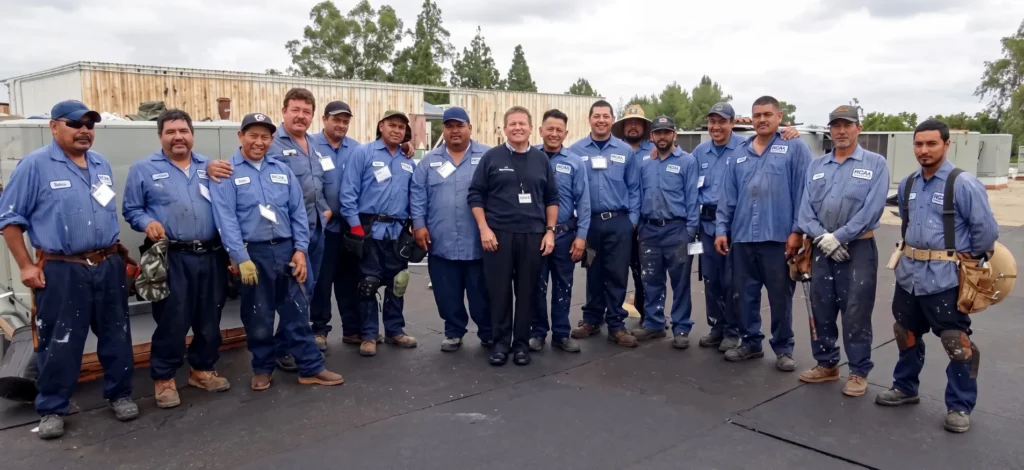
What to Look for in a Commercial Roofing Contractor Who Does It Right
You’re not a roofing expert. You shouldn’t have to be. But you do need to know what separates contractors who follow through from those who just talk a good game. Here’s what actually matters when you’re vetting commercial roofing contractors in Orange County or Los Angeles County.
Start with licensing and insurance. California requires a C-39 license for roofing work over $500. That license isn’t automatic—it requires bonding, insurance, and passing exams that prove competency. Verify the license through the CSLB database, not just a card the contractor shows you. Check that their insurance is current and adequate. General liability should be at least $1 million, ideally $2 million. Workers’ comp should cover every crew member. If they’re driving company vehicles to your property, they should carry commercial auto insurance too.
Next, look at their track record with the systems you need. If you have a flat roof that requires hot mop or built-up roofing, you need a contractor with specific experience in those systems. Newer contractors often push single-ply membranes because that’s what they know. That’s fine if it’s the right solution, but you want someone who can explain why it’s right for your building, not just why it’s easy for them.
Ask about their process for documentation. Do they photograph every phase of the project? Do they provide detailed reports? Can they give you examples of past projects where their documentation helped with insurance claims or HOA approvals? If they look confused by the question, that’s a red flag.
Check their relationships with manufacturers. Factory certifications from companies like GAF or Owens Corning aren’t just marketing fluff. They mean the contractor has been trained on proper installation and can offer enhanced warranties that standard contractors can’t. Those warranties often cover materials and labor, not just materials, which matters when something goes wrong.
Finally, talk to them about past projects similar to yours. If you’re managing an HOA property, have they worked with HOAs before? Do they understand CC&Rs and board approval processes? If you’re filing an insurance claim, have they worked with adjusters? Can they explain how they document damage and advocate for clients? If you’re dealing with a complex commercial building, have they handled projects with similar challenges—tight timelines, occupied spaces, code compliance issues?
The right contractor won’t just answer these questions. We’ll anticipate them. We’ll have examples ready. We’ll explain our process without you having to dig. And we’ll be upfront about what we can and can’t do, because we know that overpromising and underdelivering costs us more in the long run than being honest from the start.
Choosing a Contractor Who Protects Your Investment
Doing the job right isn’t about perfection. It’s about process, accountability, and understanding that shortcuts today create expensive problems tomorrow. For commercial properties, HOA communities, and multi-family buildings in Orange County and Los Angeles County, the contractor you choose determines whether your roof is an asset or a liability.
You need someone who documents their work, understands insurance and HOA requirements, and follows through on commitments. Someone with the right licenses, the right insurance, and the right experience with your specific roofing system. Someone who’s been around long enough that you know they’ll still be there when you need them five or ten years from now.
We’ve been serving commercial and residential clients across Southern California for nearly 50 years. With deep expertise in hot mop systems, insurance claim navigation, and HOA projects, our team understands what it takes to do the job right—and why that matters more than doing it fast or cheap.