
Summary:
You notice a leak. Maybe a few shingles are missing. Or your flat roof is showing its age after years of punishing California sun. The question isn’t whether you need to do something—it’s what you should do. A quick repair sounds cheaper and faster. But if your roof is already 15 or 20 years old, are you just buying time? Or worse, are you throwing money at a problem that’s only going to get worse? This isn’t about scaring you into spending more than you need to. It’s about helping you understand the real difference between a quick fix and a roof restoration—and how to know which one actually makes sense for your property, your budget, and your timeline.
What Does a Quick Roof Fix Actually Mean?
A quick fix is exactly what it sounds like. You’re addressing a specific problem—a leak around a vent, a few damaged shingles, a section of flashing that’s come loose. The work is localized. The goal is to stop the immediate issue and get your roof watertight again.
Quick fixes make sense when the damage is isolated and your roof is still relatively young. If you’re dealing with storm damage on a roof that’s only five or ten years old, a repair is usually the right call. You’re not replacing the whole system. You’re just fixing what broke.
The cost is lower. The timeline is shorter. And if the rest of your roof is in good shape, a targeted repair can buy you years of solid performance without the expense of a full replacement or restoration.
When a Quick Fix Makes Sense for Your Roof
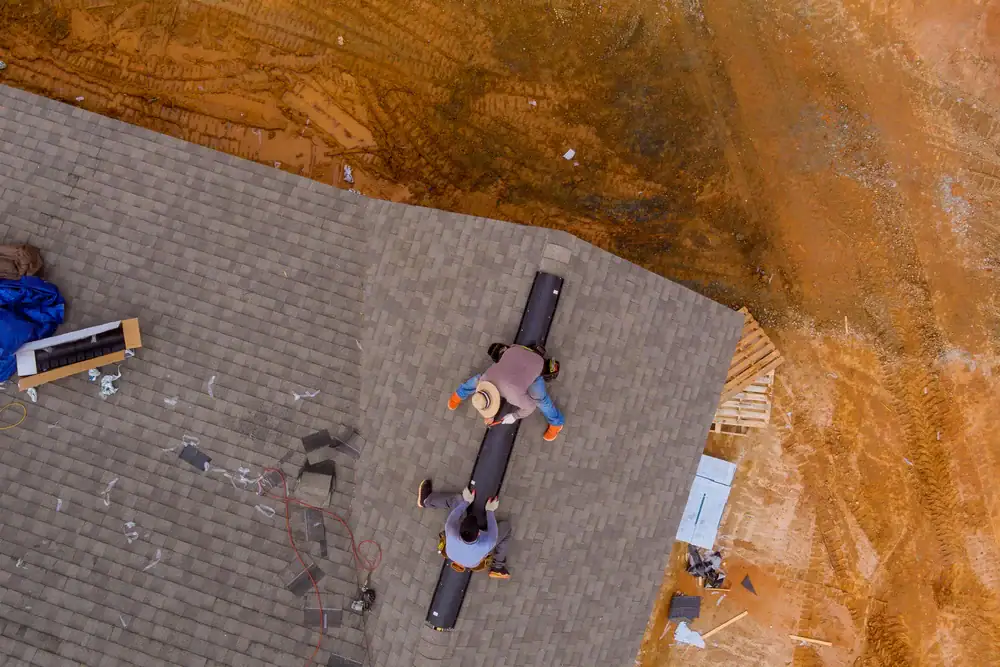
Not every roofing problem requires a major investment. If your roof is still within its expected lifespan and the damage is limited to one area, a repair is often the most practical solution.
Let’s say a recent windstorm blew off a handful of shingles on one side of your home. The rest of the roof looks fine. The underlayment isn’t compromised. In that case, replacing those shingles and inspecting the surrounding area is a straightforward fix that solves the problem without unnecessary cost.
The same logic applies to commercial properties with flat or low-slope roofs. If you’ve got a small puncture from debris or a localized seam failure on an otherwise healthy hot mop roof, a patch or section repair can restore function quickly. The key is that the damage hasn’t spread and the overall system still has useful life left.
Quick fixes also make sense if you’re planning to sell your property in the near future and just need to address a specific issue to pass inspection or satisfy a buyer’s concerns. You’re not looking for decades of performance—you’re looking to resolve an immediate problem and move forward.
But here’s the catch. If your roof is already 15 or 20 years old, or if you’re noticing problems in multiple areas, a quick fix might not hold. You could end up paying for repairs again and again, and those costs add up fast. That’s when you need to start thinking bigger.
The Hidden Cost of Repeated Repairs
One of the biggest mistakes property owners make is treating every roofing problem as if it exists in a vacuum. You fix a leak this year. Then another one next year. Then you’re replacing flashing. Then you’re patching a different section. Before you know it, you’ve spent thousands on repairs—and your roof still isn’t in great shape.
This is where the “50% rule” comes into play. If the cost of repairing your roof is approaching 50 to 60 percent of what it would cost to replace or restore it, you’re better off doing the work once and doing it right. Repeated repairs don’t just drain your budget. They also create a patchwork roof that’s harder to insure, harder to sell, and more likely to fail when you least expect it.
Insurance companies know this too. If your roof is over 15 years old and you’re filing multiple claims for different issues, don’t be surprised if your carrier starts depreciating your coverage or raising your deductible. Some insurers won’t renew policies at all if a roof is in poor condition or past a certain age. That’s not a scare tactic—it’s just how the industry works in 2026.
And there’s another factor most people don’t think about: matching materials. If your roof was installed 18 years ago and you need to replace a section now, finding shingles or tiles that match the originals can be tough. Even if you saved extras from the original job, they’ve weathered differently. The new material stands out. It doesn’t blend. And if appearance matters to you—or to potential buyers—that’s a problem.
So yes, a quick fix can be the right move. But only if your roof is still young enough to justify it, the damage is truly isolated, and you’re not just kicking the can down the road.
What Roof Restoration Really Involves
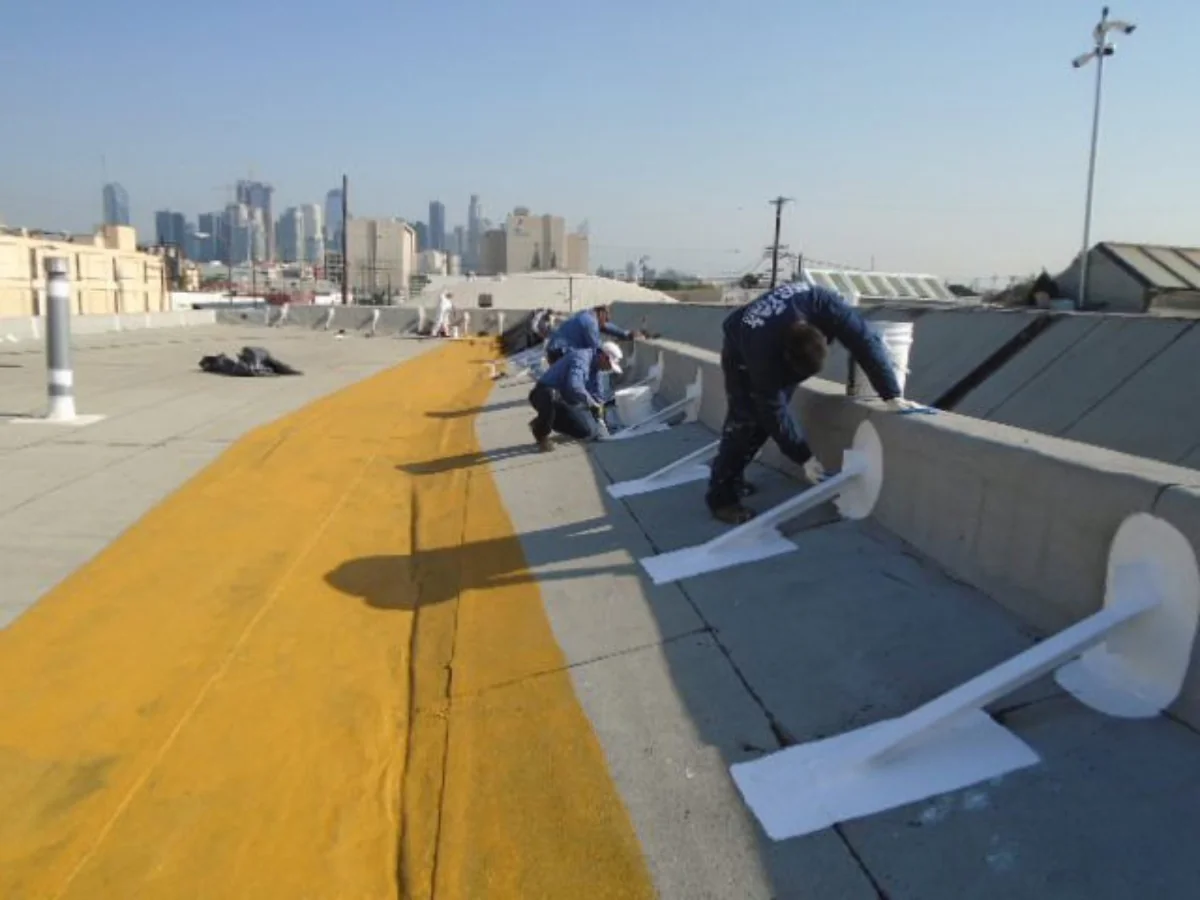
Restoration isn’t the same as replacement, but it’s not a quick patch either. It’s a comprehensive process that addresses the entire roof surface—cleaning, repairing, resealing, and applying protective coatings or treatments to extend the life of your existing system.
The goal of restoration is to take a roof that’s showing its age and bring it back to a functional, watertight state without tearing everything off and starting from scratch. It’s a middle ground. You’re investing more than you would in a simple repair, but far less than a full replacement. And if your roof’s underlying structure is still sound, restoration can add five to ten years of reliable performance.
This approach is especially common on commercial flat roofs, hot mop systems, and low-slope assemblies where the membrane or top layer has deteriorated but the deck and substrate are still solid.
How Roof Restoration Extends Your Roof's Lifespan
Restoration works because it doesn’t just fix one problem—it addresses the whole system. The process typically starts with a thorough inspection to identify every area of concern. Then the roof is cleaned to remove debris, dirt, and any organic growth that’s been trapping moisture or accelerating wear.
Once the surface is prepped, damaged sections are repaired. That might mean patching small punctures, resealing seams, replacing worn flashing, or addressing areas where ponding water has caused localized failure. The idea is to eliminate every weak point before moving to the next step.
After repairs are complete, protective coatings are applied. On flat or low-slope roofs, this often means a reflective coating that reduces heat absorption, lowers energy costs, and shields the underlying material from UV damage. In California, where roofs take a beating from intense sun and occasional heavy rains, these coatings can make a real difference in how long your roof lasts.
Restoration also gives you a chance to bring your roof up to current code standards. If your original installation didn’t include proper drainage, ventilation, or fire-rated materials, restoration is an opportunity to address those gaps without the cost and disruption of a full tear-off.
The result is a roof that performs like it’s much newer than it actually is. You’re not resetting the clock completely, but you’re adding years of useful life and avoiding the expense of a full replacement. For property owners who aren’t ready to invest in a new roof but know their current one won’t last much longer, restoration is often the smartest move.

When Restoration Is the Right Call vs When It's Not
Restoration makes the most sense when your roof is structurally sound but showing signs of surface-level wear. If you’ve got widespread minor issues—fading, cracking, small leaks in multiple spots—but the deck and framing are still solid, restoration can address all of it in one project.
It’s also a good option if you’re dealing with a roof that’s 10 to 15 years old and starting to show its age, but you’re not ready for the disruption or expense of a full replacement. Maybe you’re planning to hold the property for another five to seven years and you just need the roof to last until then. Restoration gives you that runway without overspending.
On the commercial side, restoration is especially common for flat roofs, hot mop systems, and built-up roofing assemblies. These systems can often be restored multiple times over their lifespan if the work is done properly. A well-maintained hot mop roof, for example, can last 15 to 20 years initially, and a restoration at the 12- or 13-year mark can push that out another five to eight years.
But restoration isn’t a magic fix. If your roof has major structural issues—sagging, rotting decking, widespread water damage—restoration won’t solve that. You’re just covering up a problem that’s going to get worse. In those cases, replacement is the only real option.
The same goes for roofs that are already past their expected lifespan. If your roof is 25 years old and you’re seeing chronic leaks, membrane failure, or widespread deterioration, trying to restore it is like putting a band-aid on a broken bone. It might hold for a little while, but it’s not going to last, and you’ll end up paying for the work twice.
A professional inspection is the only way to know for sure. A qualified roofing contractor can assess the condition of your deck, your substrate, and your top layer, and give you an honest recommendation about whether restoration makes sense or if you’re better off replacing the whole system.
Making the Right Roofing Decision for Your Property
There’s no one-size-fits-all answer when it comes to roofing. A quick fix works when the damage is isolated and your roof still has years of life left. Restoration makes sense when you’re seeing widespread wear but the structure is still solid. And replacement is the right call when your roof is past its prime or the cost of fixing it keeps creeping toward what a new one would cost anyway.
The key is getting an honest assessment from someone who understands the difference—and who isn’t just trying to sell you the most expensive option. That’s where experience, transparency, and a track record of doing right by clients really matter.
If you’re weighing your options and want a straight answer about what your roof actually needs, we can help. Decades of hands-on experience, factory certifications, and a reputation built on doing the work right the first time—that’s what you’re working with when you reach out to Royal Roofing Company.