Appointments Available
Phone Support 24/7
Bell Gardens, CA 90201
*Serving most of Southern California*
Appointments Available
Phone Support 24/7
Bell Gardens, CA 90201
You’re not paying for a roof. You’re paying to stop worrying about leaks during the next rainstorm, to lower your cooling bills in South Gate’s brutal summers, and to avoid another round of emergency repairs six months from now.
When your commercial roof is installed correctly—with factory-certified materials, proper Title 24 compliance, and crews who’ve been doing this for decades—your building operates the way it should. Your tenants stop complaining. Your insurance company has the documentation they need. Your energy bills drop because reflective TPO or PVC roofing actually works in this climate.
You get a roof that handles South Gate’s intense UV exposure without breaking down in three years. You get a contractor who documents every step with photos, pulls the right permits, and doesn’t disappear when you call six months later. You get flat roof systems, cool roof restoration, and commercial roof maintenance that actually extends the life of your investment instead of just patching problems until the next failure.
We’ve been handling commercial roofing projects across South Gate and Los Angeles County since 1982. That’s not just longevity—it’s proof that we do the work right enough that property managers, HOAs, and business owners keep calling us back.
We hold a C-39 specialty roofing license, maintain $2 million in liability insurance plus full workers comp, and every one of our roofers is factory trained and certified. We’ve completed over $75 million in commercial projects, and 86% of our work comes from referrals. That doesn’t happen by accident.
South Gate’s commercial properties face specific challenges—extreme heat that degrades roofing materials faster, occasional heavy rains that expose poor installation, and strict Title 24 energy requirements. We’ve been solving these exact problems in this exact climate for over four decades. We know what works here and what fails.
First, we inspect your existing roof and document everything with photos. You get a detailed assessment of what’s failing, why it’s failing, and what your actual options are—not just the most expensive one. If you’re dealing with an insurance claim, we know exactly what documentation they need and how to provide it.
Next, we pull the proper permits and schedule the work around your business operations. Our project managers coordinate with you directly so you know when crews arrive, what’s happening each day, and when the job will be complete. We don’t subcontract—these are our crews, and they’ve been with us for years.
During installation, we follow manufacturer specifications exactly because that’s what validates your warranty. For flat roof systems, TPO and PVC roofing, or Title 24 cool roof restoration, we use factory-certified materials and installation methods. Every step gets photo-documented so you have a complete record of the work.
After completion, you get all permits signed off, warranty paperwork filed, and a maintenance plan that actually prevents problems instead of just reacting to them. We’re still here when you need commercial roof maintenance, coating reapplication, or help with future insurance claims.
You get a complete roofing system designed for South Gate’s climate—not a generic solution copied from some other region. That means reflective TPO or PVC roofing that actually reduces your cooling costs, proper insulation that meets Title 24 requirements, and installation methods that handle thermal expansion in 100-degree summers.
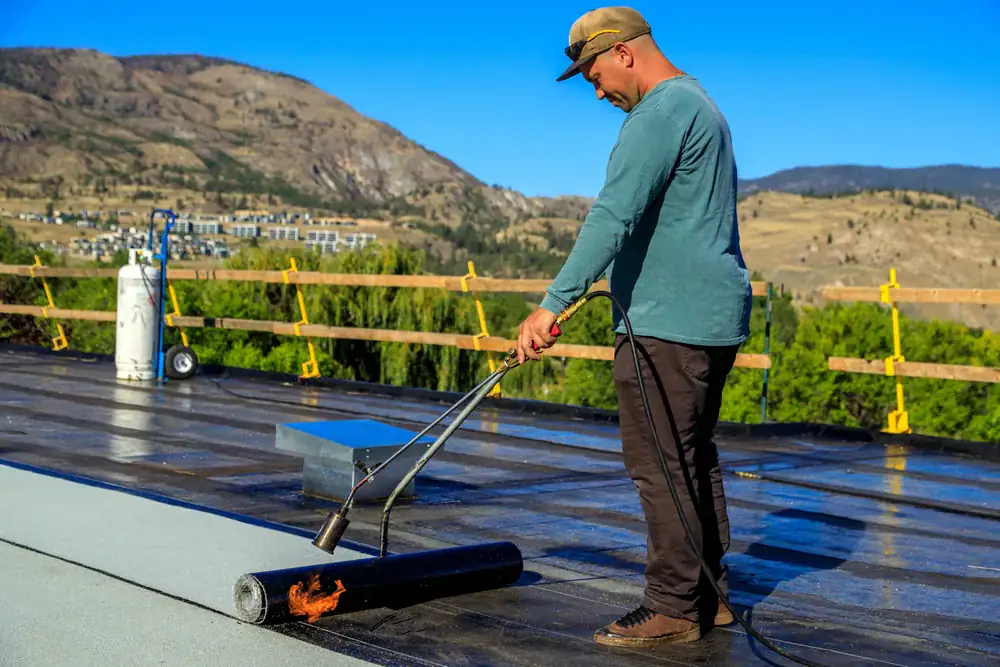
For flat roof systems, we install modified bitumen, EPDM, or hot mop systems depending on your building’s specific needs and budget. Industrial roofing solutions include coating systems that extend roof life by 10-15 years, emergency repair services when you can’t wait, and commercial roof maintenance programs that catch small problems before they become expensive ones.
Every project includes proper permits, code compliance documentation, and photo records of the installation process. If you’re filing an insurance claim, we provide the detailed documentation adjusters actually need—material certifications, installation photos, and compliance verification. You also get manufacturer warranties backed by our GAF Master Elite status, which we’ve held since 2002.
South Gate properties face unique challenges with air quality regulations, energy efficiency mandates, and extreme temperature swings. We factor all of that into material selection and installation methods so your roof performs in the actual conditions it’ll face, not ideal laboratory conditions.
It depends entirely on the system you install and how well it’s maintained. TPO and PVC roofing typically last 20-30 years in South Gate if installed correctly with proper reflective coatings. Modified bitumen systems usually give you 15-20 years. EPDM can hit 25 years with good maintenance.
But here’s what actually determines lifespan: South Gate’s intense UV exposure breaks down roofing materials faster than cooler climates. A roof that might last 30 years in San Francisco could fail in 15 years here if you don’t use UV-resistant materials and reflective coatings. The heat cycles—scorching days and cool nights—cause expansion and contraction that stresses seams and fasteners.
That’s why material selection matters so much in this climate. Energy Star qualified systems with high solar reflectance indexes perform significantly better here. Regular maintenance—clearing drains, recoating when needed, fixing small issues immediately—can add 5-10 years to any system. Neglect cuts that lifespan in half.
Title 24 is California’s energy efficiency standard, and it sets specific requirements for commercial roof systems. Your roof needs to meet minimum solar reflectance and thermal emittance values—basically, it has to reflect enough sunlight and release enough heat to reduce cooling loads on your building.
For most commercial properties in South Gate, that means installing cool roof systems with an aged solar reflectance of at least 0.63 and thermal emittance of at least 0.75. White TPO and PVC roofing easily meet these requirements. Darker materials need special reflective coatings. The regulations also cover insulation R-values, which vary based on your building type and climate zone.
Compliance isn’t optional—you need it for permits, and inspectors will verify it before signing off on your project. If you’re doing roof restoration instead of full replacement, different standards apply, but you still need to improve energy performance. We handle all the documentation and testing required to prove compliance, and we know exactly which materials and methods meet current Title 24 standards for commercial properties in Los Angeles County.
For most commercial properties in South Gate, you’re looking at $4-$8 per square foot for complete roof replacement, but that range is almost meaningless without context. A simple single-ply membrane on a small, accessible flat roof might hit the low end. A complex industrial roofing project with multiple penetrations, equipment, and difficult access could exceed $12 per square foot.
What drives cost: the roofing system you choose (TPO is generally less expensive than PVC, modified bitumen falls in between), roof size (larger projects cost less per square foot), existing roof removal and disposal, structural repairs if your decking is damaged, and compliance requirements like Title 24 upgrades.
Here’s what matters more than cost per square foot: total cost of ownership. A cheaper system that fails in 10 years and costs you thousands in emergency repairs isn’t actually cheaper. A properly installed energy-efficient system might cost more upfront but saves you $500-$1,500 annually on cooling costs and lasts twice as long. We provide detailed proposals that break down all costs—materials, labor, permits, disposal—so you can make an informed decision based on your actual budget and timeline.
Yes, and this is where documentation makes or breaks your claim. Insurance adjusters need proof that damage occurred, proof of what caused it, and verification that repairs meet code and manufacturer standards. We’ve handled hundreds of insurance-driven roofing projects, and we know exactly what documentation they require.
We start by documenting all damage with detailed photos and written assessments that clearly show what failed and why. For storm damage, we identify impact points, wind damage, and water intrusion. For wear-related claims, we document material degradation and maintenance history. This documentation goes directly to your adjuster in the format they need.
During repairs, we provide progress photos, material certifications, and installation records that prove the work was done correctly. We coordinate with adjusters on scope changes and handle the technical questions they ask about roofing systems and building codes. After completion, you get a complete record of the project—permits, inspections, warranties, and photo documentation—that satisfies insurance requirements and protects you if questions come up later. We can’t guarantee your claim will be approved, but we can guarantee you’ll have the documentation to give it the best chance.
Roof coating is a restoration method that extends the life of an existing roof system without tearing it off and starting over. We apply a thick, seamless coating—usually silicone, acrylic, or urethane—over your existing roof to seal leaks, improve energy efficiency, and add 10-15 years of life. It costs roughly one-third to one-half what full replacement costs.
But coating only works if your existing roof structure is sound. If your decking is rotted, insulation is saturated, or the roof has significant structural damage, coating just covers up problems that will continue getting worse underneath. We inspect thoroughly before recommending coating because it’s not appropriate for every situation.
When coating does work, it’s an excellent option for commercial properties in South Gate. Modern coatings meet Title 24 cool roof requirements, significantly reduce cooling costs by reflecting solar heat, and create a seamless waterproof membrane that eliminates the most common leak points. The application is faster and less disruptive than full replacement—usually 3-5 days instead of 2-3 weeks. We’ve restored hundreds of commercial roofs with coating systems, and when applied correctly to appropriate substrates, they perform extremely well in this climate.
Yes, because maintenance is the single most cost-effective thing you can do to extend roof life and prevent expensive emergency repairs. Our commercial roof maintenance programs include scheduled inspections, drain cleaning, minor repairs, and detailed reporting so you always know your roof’s condition.
Typical programs include quarterly or semi-annual inspections where we check all penetrations, seams, flashings, and drainage systems. We clear debris from drains and gutters, reseal small cracks before they become leaks, and document everything with photos and written reports. You get a maintenance record that satisfies warranty requirements and helps with insurance claims if damage occurs.
Here’s why this matters in South Gate: small problems become big problems fast in this climate. A tiny crack in a seam becomes a major leak during the next rainstorm. A clogged drain causes ponding water that degrades your roof membrane. Regular maintenance catches these issues when repairs cost $200 instead of $5,000. Most of our maintenance clients avoid emergency repairs entirely and get 30-50% longer life from their roofing systems. The program pays for itself the first time it prevents a major leak.
Other Services we provide in South Gate