
Summary:
That water stain spreading across your ceiling near the chimney isn’t just ugly—it’s a warning. By the time you see it, the damage inside your walls is already worse than what’s visible. Chimney flashing in Los Angeles County faces a brutal combination: relentless sun, wild temperature swings, and the occasional downpour that tests every weak point. When the metal seal between your chimney and roof fails, water doesn’t just drip in. It soaks insulation, rots framing, and creates conditions for mold growth that spreads faster than most homeowners expect. You’re not dealing with a simple patch job. You’re looking at a race against structural damage that gets exponentially more expensive the longer you wait. Here’s what you need to know about chimney flashing repair costs, how insurance documentation actually works, and when a small leak becomes an emergency that demands immediate professional response.
Chimney Flashing Repair Cost and Process
Expect to pay between three hundred and eighteen hundred dollars for chimney flashing repair in Los Angeles County. The range is wide because size matters, accessibility matters, and damage extent matters. A simple reseal job on a small chimney might cost two hundred dollars. Complete flashing replacement on a large masonry chimney with difficult roof access can hit the upper end of that range.
The repair itself uses a two-layer system for a reason—it’s the only method that actually lasts. Step flashing pieces weave into your shingles, sitting flush against the chimney base. Counter-flashing embeds into the mortar joints above, creating an overlapping shield. This isn’t about looking good. It’s about allowing your roof and chimney to expand and contract independently without breaking the seal, which happens constantly in LA’s climate.
Most of your cost is labor, not materials. Cutting into masonry, positioning metal components with precision, and sealing every joint with sealant rated for extreme heat takes time. Contractors who rush this work or skip steps create leaks that cost more to fix than doing it right the first time.
Hot Mop Roof Repair for Emergency Leak Situations

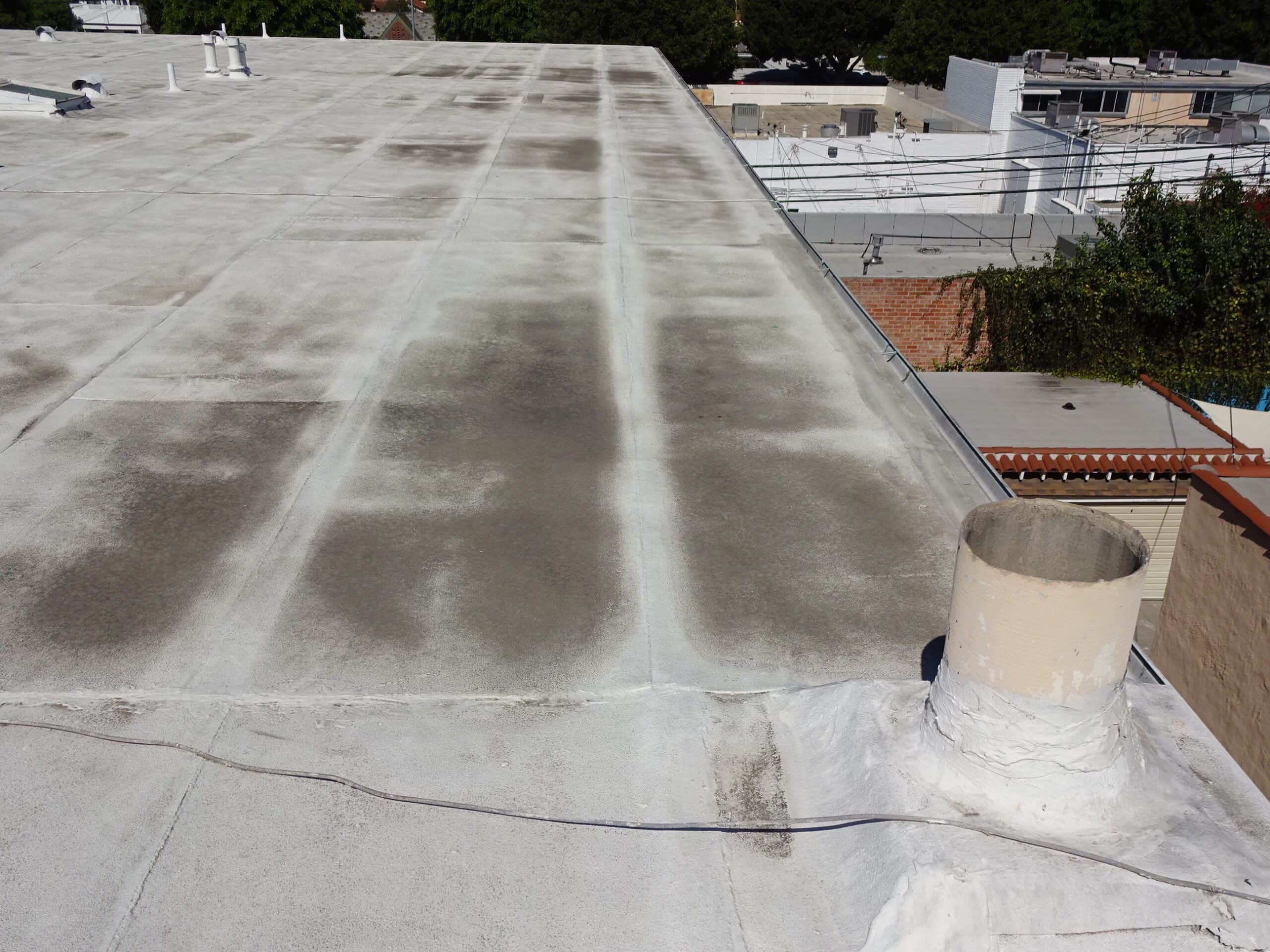
When chimney flashing failure extends to flat roof sections, or when you’re dealing with active water intrusion that needs immediate containment, hot mop expertise becomes essential. This isn’t your typical roofing repair. It involves heating asphalt to four hundred degrees and applying it in carefully controlled layers with specialized felt between each one.
The result is a seamless, completely waterproof surface that doesn’t have the seams and joints where conventional systems typically fail. On flat and low-slope roofs common throughout Los Angeles County, this matters enormously because ponding water destroys standard materials fast. A properly installed hot mop system lasts fifteen to twenty years, sometimes longer with good maintenance.
But here’s the thing—installation quality makes or breaks these systems. The California sun and occasional heavy rain will find every shortcut and substandard material. You need contractors with actual C-39 licensing because working with molten asphalt is genuinely dangerous, and improper application leads to bubbling, cracking, and premature failure that defeats the entire purpose.
We handle emergency hot mop repairs when water is coming in right now and causing damage you can see. Our licensed crews contain the work area, apply the material evenly, and install drainage that prevents the same problem from recurring. Around chimney bases on flat roofs, where traditional flashing methods struggle, the continuous waterproof membrane eliminates the weak points that leak first.
For commercial properties and multi-unit buildings, the durability justifies the labor-intensive process. You’re not patching a problem temporarily. You’re installing a waterproofing system designed to handle the specific challenges of Southern California’s climate for decades.
How Los Angeles Weather Accelerates Flashing Damage
Your roof surface hits one hundred fifty to one hundred seventy degrees on summer days. That’s not an exaggeration—it’s measured reality in Los Angeles County. UV radiation beats down year-round without the seasonal breaks other regions get. Every single day, your flashing expands in the heat and contracts overnight, stressing seals and fasteners in ways that add up faster than most people realize.
Months of this create microscopic cracks in sealants and tiles. Then the rain finally comes, and water finds every tiny opening. It seeps through, sits on your roof deck, and starts rotting wood. The damage stays hidden until you notice stains inside, which means the underlying structure is already compromised.
Seismic activity adds stress that most of the country doesn’t deal with. Even small, frequent tremors break rigid seals between your flashing and chimney masonry. Cracks form in the mortar. Water finds a way in. Standard installation methods designed for stable climates don’t account for this constant movement, which is why they fail here.
Santa Ana winds create uplift forces that tear at improperly fastened components. Coastal properties face salt air and humidity that corrode metal faster, especially on systems without protective coatings. If you’re in hillside or wildland-urban interface zones, you’re also dealing with ember intrusion risks through aging flashing that wasn’t designed for fire exposure.
This combination of factors is why chimney flashing repair in Los Angeles County demands specialized materials and installation techniques. We use flexible, high-performance sealants and fastening methods that accommodate thermal stress and structural movement. Using standard approaches designed for milder climates guarantees you’ll be calling for repairs again sooner than you should.
Urgent Roof Leak Repair and Emergency Response
Leaks don’t announce themselves politely. Water dripping through your ceiling means the damage is already happening inside walls and attic spaces you can’t see. Every hour you wait allows more saturation, more insulation damage, and more wood deterioration. Emergency response isn’t about convenience—it’s about stopping the spread before it reaches electrical systems or creates mold conditions.
We maintain emergency capabilities to assess extent, contain active intrusion, and start permanent repairs fast. The priority is stopping water from spreading to areas that exponentially increase repair costs.
The worst scenario here is months of sun exposure creating vulnerabilities, followed by sudden heavy rain that exploits every weakness immediately. What starts as a small leak around chimney flashing becomes a major water event within hours if your roof system was already compromised by UV damage and temperature cycling.
Insurance Adjuster Roof Inspection Documentation Requirements
Insurance adjusters need proof. Not stories, not assumptions—documented evidence that your damage came from a covered event like a storm, not from neglect or normal aging. Professional inspection reports provide this in formats adjusters recognize and trust, which dramatically improves your approval odds.
Photos matter more than most homeowners realize. You need high-resolution images from multiple angles—close-ups of specific damage, wide shots showing scope, and interior photos proving consequences beyond surface problems. Water stains on ceilings, damaged insulation, or structural issues visible inside strengthen your position by showing the adjuster what’s actually at stake. We routinely provide dozens of photos because we know what insurance companies require.
Written reports add technical weight. Measurements, material specs, damage severity assessments—these details support the photos and give adjusters the information they need to justify approvals. The reports outline what needs fixing, how urgently, and why safety concerns demand immediate action. Having this documentation ready when you file accelerates everything.
Our experience with insurance work means we know exactly what adjusters look for. We document findings objectively, removing guesswork and providing third-party validation that carries weight with insurance companies. This professionalism translates directly to fairer settlements that actually cover your repair costs.
The inspection itself is thorough. Adjusters and contractors examine shingles, flashing, gutters, vents—every component that could show damage. They’re determining whether problems existed before your covered event or resulted directly from the storm, wind, or hail that triggered your claim. That timeline matters enormously for approval, which is why clear documentation proving cause and effect is essential.

Hail Storm Roof Damage Insurance Claim Process
Hail claims get extra scrutiny because adjusters must separate storm damage from existing wear. Los Angeles County doesn’t see frequent hailstorms, but when they hit, damage can be severe and widespread. What you document immediately after the event determines whether your claim gets approved or denied.
If you can safely photograph hailstones, do it. Put a ruler next to them for scale. This visual proof helps adjusters understand impact force and damage potential. Photograph everything the storm hit—gutters, roof surfaces, windows, vehicles. The comprehensive record shows severity. Pull local weather reports from the storm date for additional timeline validation.
Insurance companies use standardized metrics for consistency. With hail damage, adjusters often look for specific patterns—a certain number of impact marks within defined square footage. Meeting these criteria typically means approval. Knowing your policy’s specific standards helps you understand what to expect.
Damage patterns can be spotty rather than uniform. Your adjuster evaluates your actual property against your policy terms, not by comparing your roof to your neighbor’s. Two houses on the same street might get different outcomes based on real damage patterns and what their policies actually cover.
File promptly. Most California homeowner policies require damage reporting within one year of the event, though timeframes vary. Missing the deadline can mean automatic denial regardless of how severe your damage is. Contact your insurance company soon after discovering problems to start the assessment process.
Our professional damage reports strengthen your negotiating position. These assessments create objective records that insurance companies use for coverage decisions and settlement calculations. We’re familiar with insurance requirements and present findings in formats meeting industry standards, supporting fair resolutions rather than lowball settlements.
Protecting Your Property from Flashing Failure
Chimney flashing failure in Los Angeles County creates expensive damage that accelerates in ways most homeowners don’t anticipate. UV exposure, temperature cycling, seismic activity, and occasional heavy rain combine into challenges that demand specialized knowledge and proper materials. Knowing what repairs actually cost, how insurance documentation works, and when situations become emergencies protects both your property and your finances.
We bring C-39 credentials, factory certifications, and comprehensive insurance—the expertise that matters for lasting results. Our photo-documented workmanship ensures insurance compliance while proving quality. When urgent situations hit, our hot mop specialty knowledge addresses emergency leaks and prevents water damage from spreading.
Small leaks become major problems faster than you think. If you’re seeing water stains, damaged flashing, or any deterioration around your chimney, get professional assessment now. Royal Roofing Company brings forty years of licensed experience to Los Angeles County properties, with the specialized knowledge and documentation practices that protect your investment long-term.