

Summary:
If you manage a commercial property in Orange County or Los Angeles County, you already know the drill — storm season arrives, everyone braces, and then you spend the next few months hoping nothing goes wrong. But here’s the thing most property managers don’t find out until it’s too late: the damage from El Niño rarely happens all at once. It builds quietly, storm by storm, until one morning you’re dealing with a soaked ceiling, a panicked tenant, and an insurance claim that’s more complicated than it should be. This post is about getting ahead of that moment — understanding what El Niño actually does to commercial roofing systems and what it takes to protect your building before the next season hits.
What El Niño Actually Does to Commercial Roofs in Southern California
El Niño is not just a wetter-than-normal rainy season. It’s a pattern of back-to-back atmospheric river events that give roofs no recovery time between storms. The 2023–2024 and 2024–2025 seasons made that clear across both Los Angeles County and Orange County — sustained, heavy rainfall that saturated drainage systems, stressed roofing membranes, and left property managers scrambling.
The real danger isn’t any single storm. It’s the accumulation. A roof that holds through the first event is already under more stress heading into the second. By the third or fourth storm with no dry period in between, even a roof that looked fine on paper can start to fail — quietly, invisibly, until it doesn’t.
Why Flat Roofs Are the Most Vulnerable During El Niño in Orange County and Los Angeles County
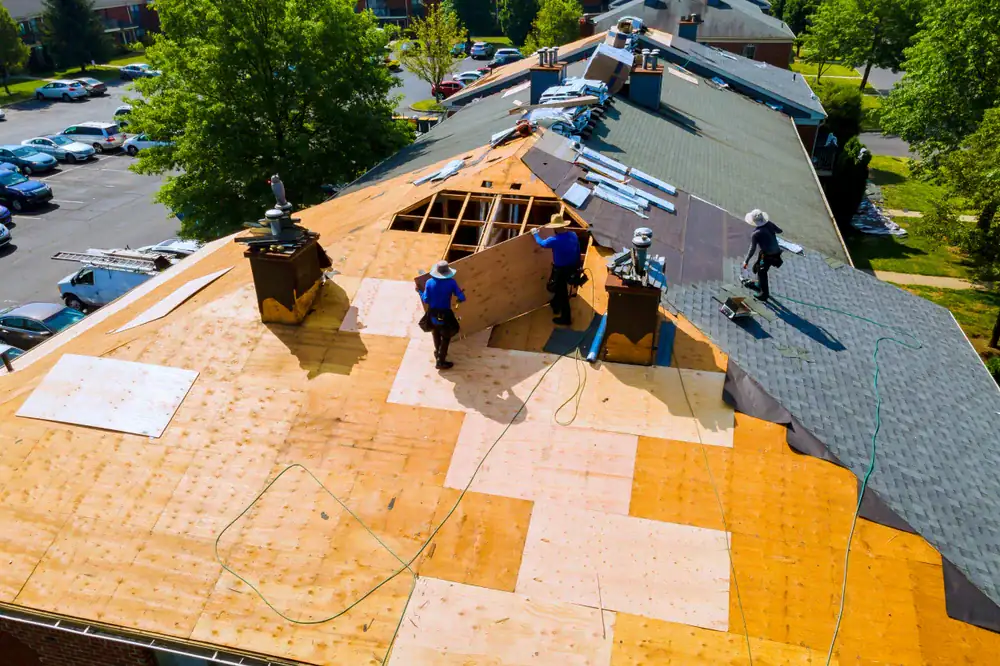
The dominant commercial roofing system across Los Angeles County and Orange County — on warehouses in Anaheim, retail strips in La Verne, apartment complexes throughout the San Gabriel Valley, and office parks in Irvine — is the flat or low-slope roof. TPO membranes, PVC systems, modified bitumen, hot mop built-up roofing. These systems are engineered for Southern California’s dry climate, and that’s exactly what makes them vulnerable when El Niño shows up.
A pitched residential roof sheds water by gravity. A flat commercial roof has to manage water through drainage — drains, scuppers, and slope built into the deck. When those systems get overwhelmed by sustained rainfall, water ponds. And ponding water is not a minor inconvenience. It adds structural load, stresses membrane seams, accelerates deterioration, and creates the exact conditions where a small undetected weakness becomes a major failure. A leak that goes unnoticed through one storm can escalate to more than $20,000 in interior damage after the next one.
The seams are where most failures start. On a TPO or PVC membrane, those heat-welded seams are the system’s most critical points. On a modified bitumen roof, it’s the laps and the terminations at the edges and penetrations. On an older hot mop system — and there are a lot of those still in service across Los Angeles County and Orange County — it’s the layers themselves, which can delaminate when water finds its way in and has nowhere to go.
What makes this worse is that most commercial property managers in Southern California don’t have their roofs inspected until something is already wrong. The building looks fine from the parking lot. The interior is dry after the first storm. So the assumption is that everything is holding. But the stress is cumulative, and by the time a visible leak appears, the roofing system has usually been compromised for a while.
The Insurance Problem Nobody Talks About Until It's Too Late
Here’s a scenario that plays out every post-storm season across Orange County and Los Angeles County: a property manager files an insurance claim for storm damage, and the claim gets complicated. The insurer wants documentation of the roof’s prior condition. They want records of past repairs. They want evidence that the installation was done to code. And the contractor who did the last repair either can’t provide that documentation or is nowhere to be found.
This is not a rare situation. It’s one of the most common and most frustrating outcomes for commercial property owners who thought they were covered. The roofing work was done — but it wasn’t documented in a way that holds up when it matters.
What most property managers don’t realize when they’re hiring a roofing contractor is that photo-documented workmanship and insurance-compliant installation records are not standard practice across the industry. Some contractors do it. Many don’t. And you won’t know which kind you hired until you’re sitting across from an insurance adjuster trying to explain why there’s no record of what was done to your roof or when.
We document every stage of our work — not just the finished product, but the process. Before, during, and after. For commercial clients and HOAs across Los Angeles County and Orange County, that documentation has real value. It protects your claim. It satisfies board requirements. It gives you something concrete when questions come up about prior condition or installation quality.
Governor Newsom declared a state of emergency in Southern California in February 2024 during one of the season’s most severe storm events. That kind of designation signals how seriously the region was affected — and it also triggered a wave of insurance claims across both counties. The property managers who came through that process most smoothly were the ones who had their documentation in order before the storm arrived.
How to Choose a Commercial Roofing Contractor in Los Angeles County or Orange County Before Storm Season
After a major El Niño event, the roofing market in Southern California gets crowded fast. Storm-chasing contractors arrive from out of the region, push for quick signatures, and disappear once they’ve been paid. It happens every cycle. The best way to protect yourself from that situation is to have a contractor relationship established before the storms hit — not after.
But even outside of storm season, choosing a commercial roofing contractor in this market takes some care. The credentials that matter are specific, verifiable, and not universal.
What Credentials Actually Mean Something When Hiring a Roofer in California
California requires a C-39 Roofing Specialty License for any roofing job valued over $500 in materials and labor. This is not a general contractor’s license — it’s a specialty classification issued by the Contractors State License Board that requires a minimum of four years of journeyman-level roofing experience, passage of both a trade exam and a law and business exam, and a contractor’s bond. It’s a meaningful bar, and a significant portion of contractors operating in the Los Angeles County and Orange County markets don’t clear it.
Our C-39 license number is #432352. You can verify it right now at cslb.ca.gov. We publish it because we think that kind of transparency should be the standard, not the exception.
Beyond the state license, manufacturer certifications are worth understanding. GAF Master Elite certification — which we hold — places a contractor in the top 2% of roofing contractors in the United States. It’s not a marketing designation. It requires ongoing training, exams, and quality audits. It also unlocks access to GAF’s highest-tier warranties, which are transferable and provide coverage that non-certified contractors simply cannot offer their clients. We also hold factory certifications from Owens Corning and CertainTeed — all three major manufacturers, which is uncommon.
Insurance coverage is another area where the details matter. We carry $2 million in liability insurance and full workers’ compensation coverage on every employee. If a crew member is injured on your property, or if work causes unintended damage, you have zero financial exposure. That’s not something to take for granted — many smaller operators in this market carry minimal coverage or none at all.
One more thing worth asking any contractor before you hire them: are the people doing the work direct employees, or subcontractors? We use only direct employees — no subcontractors, no day laborers. Every person on your roof is trained, insured, and accountable to us. That matters for quality, and it matters for accountability if something goes wrong.
Why Experience in the Orange County and Los Angeles County Market Is Not Interchangeable
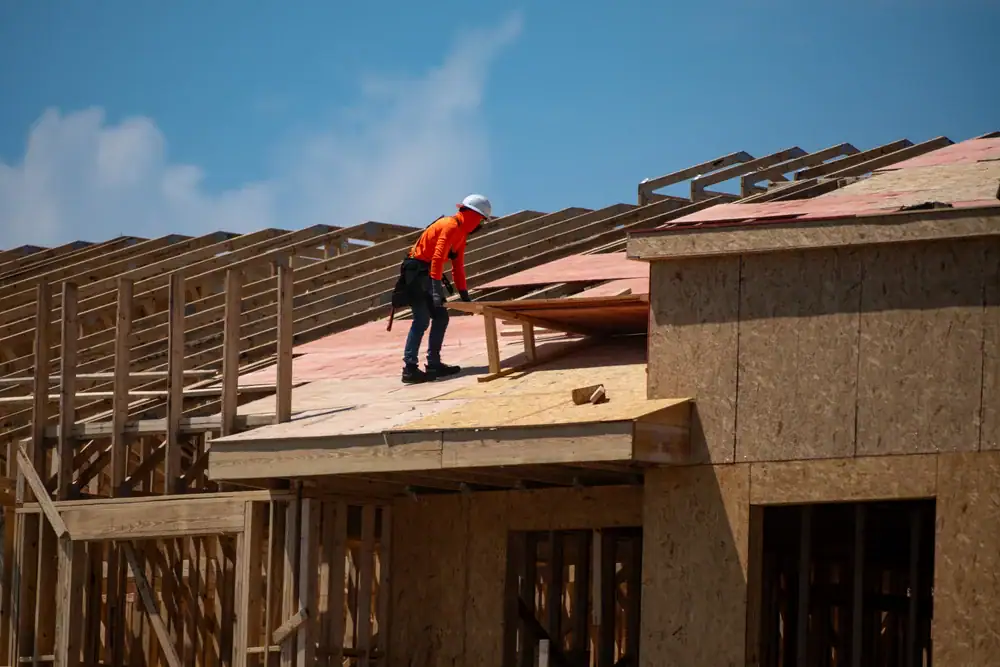
Not every roofing contractor who operates in California has the same familiarity with Southern California’s specific conditions. This market has variables that don’t show up in other regions — and they affect which roofing systems perform, which materials hold up, and which installation practices actually matter.
Along the coast — in communities like Newport Beach, Huntington Beach, and Seal Beach in Orange County, or the South Bay cities of Los Angeles County — salt air accelerates corrosion of flashing, fasteners, and certain membrane materials. A contractor without experience in coastal installations may not account for that in their material selection or their detailing at penetrations and edges. Inland areas like the San Gabriel Valley and La Verne face a different challenge: intense UV exposure and wide daily temperature swings that cause roofing materials to expand and contract more aggressively than in more temperate climates. Over time, that thermal cycling degrades seams and surface coatings faster than manufacturers’ standard projections assume.
California’s Title 24 energy code also applies to commercial roof replacements in both Los Angeles County and Orange County. Contractors unfamiliar with these requirements can leave property owners exposed to failed inspections and costly rework. Every commercial installation we do is built to meet Title 24 from the start.
We’ve been operating in this specific market since 1982. That’s over four decades of Southern California storm seasons — including every significant El Niño cycle the region has experienced. We’ve seen what these storms do to every roof type across both counties. That institutional knowledge is not something a newer operation can replicate, and it shows in how we approach pre-season inspections, material selection, and the way we detail the parts of a roof that fail first when the rains come.
Eighty-six percent of our business comes from referrals. That number reflects something real — clients who trusted us with their building and trusted us enough afterward to recommend us to someone else. In a market full of options and no shortage of contractors making big promises, that kind of track record is the most honest proof we can offer.
Getting Your Commercial Roof Ready for the Next El Niño Season
The window to act on your commercial roof is always before the storms arrive — not during, and not after. Pre-season inspections, drainage checks, membrane assessments, and documentation of current condition are the steps that separate property managers who come through storm season without incident from those who spend months navigating damage claims and repairs.
If your building is in Orange County or Los Angeles County — whether it’s a warehouse in Anaheim, a retail property in Cypress, an apartment complex in the San Gabriel Valley, or a commercial park anywhere in between — the risk is real and the preparation is straightforward.
Royal Roofing Company has been doing this work in this market for over 40 years. If you want a straight answer about the condition of your roof and what it would take to protect it heading into the next storm season, reach out to us. We’ll give you an honest assessment — no pressure, no guesswork, just the facts about what your roof needs.