
Summary:
You’re staring at estimates that range from $9,000 to $30,000, and every contractor seems to recommend something different. One says asphalt shingles are fine. Another insists you need metal. A third mentions TPO roofing, and now you’re wondering if you even speak the same language.
Here’s what matters: your roof needs to survive LA County’s relentless sun, meet fire safety codes if you’re in a hazard zone, and actually last long enough to justify the investment. This isn’t about picking the “best” material—it’s about understanding which system makes sense for your specific situation. We’ll walk through the most common roofing options, what they actually cost in 2026, and how they perform in Southern California’s climate so you can make a decision you won’t second-guess in five years.
Asphalt Roofing: The Most Common Choice for LA County Homes
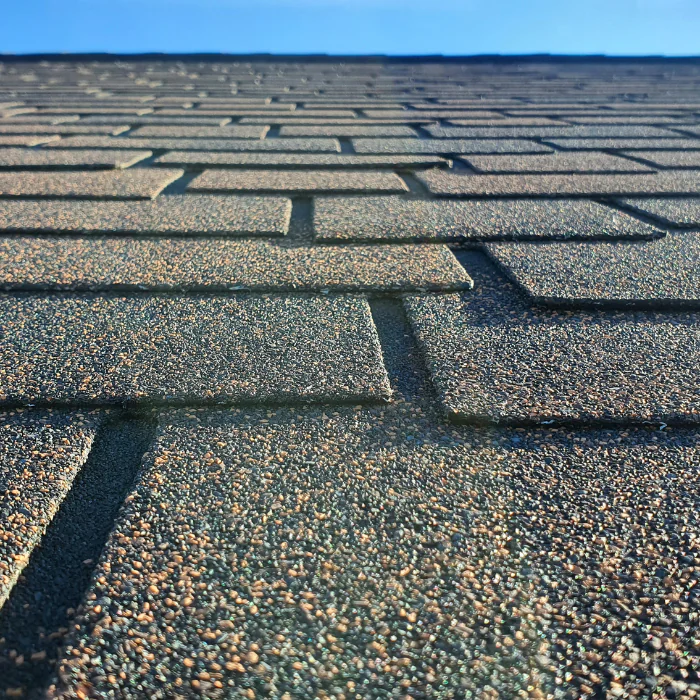
Asphalt roofing dominates residential roofing in the United States for a reason—it’s affordable, widely available, and contractors know how to install it correctly. In Los Angeles County, you’ll see asphalt shingles on about 70% of homes, from Pasadena to the South Bay. The material itself is straightforward: a fiberglass mat coated with asphalt and topped with ceramic granules that protect against UV damage.
But here’s where it gets specific to LA’s climate. That relentless Southern California sun is brutal on asphalt. UV exposure dries out the asphalt core, making shingles brittle and prone to cracking. You’ll notice granule loss in your gutters after a few years—that’s the protective layer wearing away faster than it would in cooler regions. Most asphalt roofs in LA County last 15-20 years under ideal conditions, but neglecting maintenance or choosing the cheapest option can cut that timeline short.
The cost for asphalt roofing in 2026 runs about $4 to $6 per square foot for basic 3-tab shingles, or $5 to $9 per square foot for architectural shingles. For a typical 2,000 square foot roof, you’re looking at $10,000 to $16,000 installed. LA County prices run 15-25% higher than national averages due to stricter building codes, higher labor rates, and fire-resistance requirements in certain zones.
Compare Roofing Shingles: 3-Tab vs. Architectural vs. Luxury
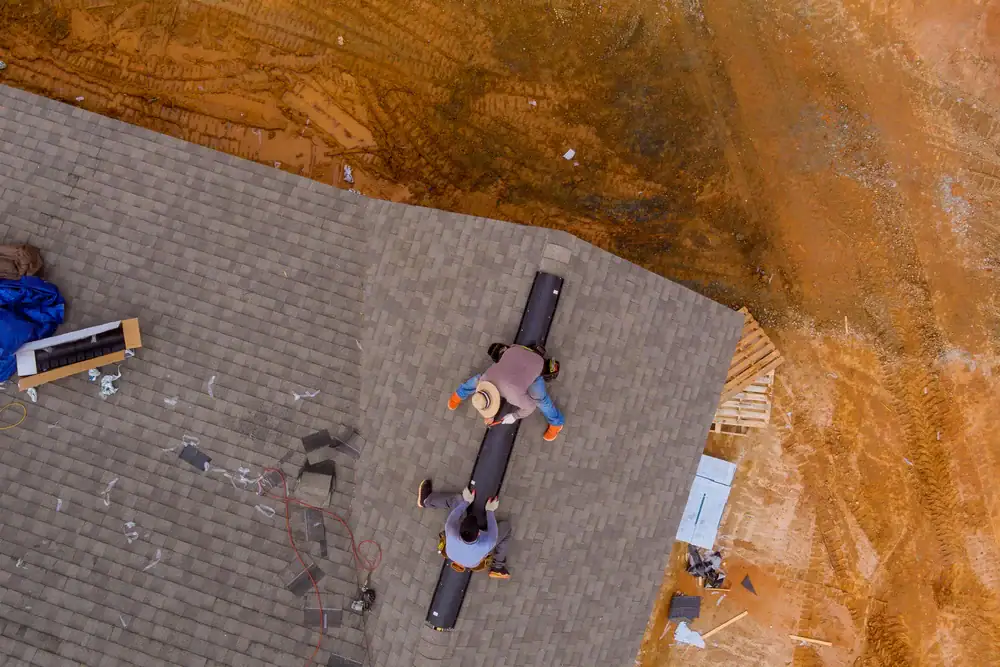
Walk into any roofing supply yard and you’ll see three tiers of asphalt shingles. Understanding the difference saves you from overpaying or choosing a product that won’t hold up.
3-tab shingles are the entry-level option. They’re flat, uniform, and made from a single layer of material with cutouts that create a segmented look. They cost less upfront—around $4 to $6 per square foot installed—but they’re also the first to fail in LA’s heat. Expect a 15-20 year lifespan, and know that wind resistance is minimal compared to heavier options. If your budget is tight and you’re planning to sell within a decade, 3-tab might work. Otherwise, it’s a short-term solution.
Architectural shingles are the sweet spot for most LA County homeowners. Also called dimensional or laminated shingles, they’re made from two or more layers fused together to create depth and texture. They mimic the look of wood shake or slate tile without the maintenance headaches or fire risk. The extra thickness gives you better wind resistance—critical during Santa Ana wind events—and most come with 25-30 year warranties. You’re paying $5 to $9 per square foot installed, but the durability and curb appeal justify the difference for most people.
Luxury shingles sit at the top tier. These are heavy, multi-layered products designed to replicate slate or cedar shake with maximum durability. They offer the richest color blends, the most sophisticated profiles, and warranties that stretch 40-50 years. You’ll pay $7 to $12 per square foot or more, and they’re typically reserved for high-end homes where aesthetics and longevity are priorities. They’re also the best choice if you’re in an HOA with strict design guidelines that require a premium look.
One critical factor that doesn’t change across tiers: proper installation. Even the most expensive luxury shingles will fail early if they’re not installed according to manufacturer specs. That’s where documentation becomes essential—photos of underlayment, flashing details, and nail placement protect you if a warranty claim gets challenged down the road.
Flat Roof Installation: TPO vs. EPDM for Low-Slope Applications
Not every roof in LA County is pitched. Flat or low-slope roofs are common on commercial buildings, modern residential designs, and additions where traditional shingles don’t work. If your roof pitch is less than 2:12, you’re looking at membrane systems instead of shingles—and the material choices are completely different.
The term “flat roof” is slightly misleading. These roofs have a slight slope for drainage, but it’s not steep enough for shingles to shed water effectively. That’s why single-ply membranes dominate this category. They create a continuous, waterproof barrier that can handle ponding water and UV exposure without the layered overlap that shingles rely on.
Flat roof installation costs vary based on the membrane you choose and the complexity of your roof. TPO and EPDM are the two workhorses of commercial flat roofing and residential low-slope applications, and they perform very differently despite similar price points.
TPO Roofing: Energy Efficiency for LA County's Climate
TPO roofing has become the dominant choice for flat and low-slope roofs in Southern California, and it’s easy to see why when you understand how it performs in LA’s heat. TPO stands for thermoplastic polyolefin—a single-ply membrane that’s typically white or light gray, designed specifically to reflect solar radiation rather than absorb it.
The installation process matters as much as the material itself. TPO membranes are heat-welded at the seams using specialized equipment that melts the edges of adjacent sheets together. Those welded seams create a bond that’s about four times stronger than adhesive or tape-based systems, which makes TPO significantly more resistant to leaks over time. In a climate where thermal expansion and contraction happen daily, seam strength determines whether your roof lasts 15 years or 25.
The white surface is the real performance advantage in LA County. TPO reflects up to 70% of solar heat, which translates directly into lower cooling costs. When you’re running air conditioning from May through October, that reflective surface can reduce your cooling load by 10-25%. For a typical 2,000 square foot home, that’s $500 to $1,000 in annual savings—money that offsets the installation cost over the roof’s lifespan.
TPO Membrane Roofing: Installation and Cost Breakdown
Understanding TPO membrane cost requires looking beyond the material price to the full installation scope. In 2026, expect to pay $12 to $17 per square foot for smaller residential projects, with costs dropping closer to $12 per square foot for larger commercial installations. For a 1,500 square foot flat roof, you’re looking at $18,000 to $25,500 installed.
That price includes tear-off of the old roofing material, disposal, new insulation if needed, the TPO membrane itself, and labor. The membrane comes in different thicknesses—45 mil, 60 mil, and 80 mil—with thicker options costing more but offering better puncture resistance and longer warranties. Most residential applications use 60 mil as the sweet spot between performance and cost.
The installation method also affects price. Fully adhered systems use adhesive to bond the membrane to the roof deck, creating a smooth, wind-resistant surface. Mechanically attached systems use plates and fasteners, which install faster but create more potential leak points. Ballasted systems use river rock or pavers to hold the membrane in place, which works on roofs with adequate structural support but limits your ability to walk on the roof later.
One factor specific to LA County: Title 24 energy compliance. TPO’s reflective surface meets cool roof requirements without additional coatings, which can save you money on compliance testing and documentation. If you’re replacing more than 50% of your roof, you’re likely required to meet these standards—TPO gives you a built-in solution.

TPO Membrane Cost vs. Long-Term Value
The upfront TPO membrane cost makes some homeowners hesitate, especially when they compare it to traditional asphalt shingles. But flat roofs don’t give you the option of using shingles, so the real comparison is TPO versus other flat roof systems like EPDM, modified bitumen, or built-up roofing.
TPO typically costs slightly more than EPDM upfront but delivers better energy efficiency in hot climates. The white surface reflects heat that black EPDM absorbs, which matters when you’re trying to keep cooling costs down. Over a 20-year period, the energy savings can offset the price difference between the two materials.
The other value factor is maintenance. TPO’s heat-welded seams require less ongoing attention than adhesive-based systems. You’re not resealing seams every few years or dealing with tape that degrades under UV exposure. Annual inspections are still recommended—checking for punctures, cleaning drains, and ensuring proper drainage—but the membrane itself is relatively low-maintenance if installed correctly.
Warranty coverage also plays into long-term value. Most TPO manufacturers offer 15-20 year warranties, with some extending to 30 years for thicker membranes installed by certified contractors. But here’s the catch: warranties only hold up if installation is documented and performed to manufacturer specifications. Improper installation voids coverage, leaving you with out-of-pocket repair costs. That’s why working with a contractor who provides photo documentation of every installation step protects your investment.
EPDM Roofing: Proven Performance for Flat Roofs
EPDM roofing has been the workhorse of commercial flat roofing since the 1960s, and there’s a reason it’s still specified on thousands of projects every year. EPDM stands for ethylene propylene diene monomer—a synthetic rubber membrane that’s incredibly flexible and resistant to thermal cycling, UV exposure, and weather extremes.
The material is typically black, though white EPDM versions exist for applications where energy efficiency is a priority. That black surface absorbs solar heat rather than reflecting it, which increases cooling loads in LA County’s climate. But in return, you get a membrane that’s proven to last 30-40 years or more with proper maintenance—a longer track record than TPO, which has only been widely used since the 1990s.
EPDM’s flexibility is its standout characteristic. The membrane can stretch up to 300% in all directions and return to its original shape once tension is released. That elasticity helps it handle thermal expansion and contraction without cracking or tearing, which is critical on flat roofs where ponding water and temperature swings create stress. In colder climates, EPDM outperforms TPO because it stays flexible in freezing temperatures. In LA County, that’s less relevant, but the durability still matters.