

Summary:
You’re looking at roof replacement quotes in Los Angeles County, and the price gap between asphalt shingles and metal roofing is making you question everything. One contractor says asphalt is the smart budget move. Another insists metal pays for itself. And you’re stuck trying to figure out which number actually matters—the one you write today or the one you’ll face again in 15 years.
Here’s what you need to know: roof replacement cost in LA isn’t just about the invoice. It’s about what that roof does for the next three decades, how it handles our climate, and whether you’ll be writing another check before your kids graduate college. This comparison gives you the real numbers, the performance differences that matter in Southern California, and a clear picture of what each material actually costs when you factor in time.
Roof Replacement Cost Breakdown Los Angeles County
Let’s start with what you’re actually paying for when you replace a roof in Los Angeles County. The average total cost runs between $10,000 and $26,000, but that range doesn’t tell you much until you understand what drives it.
Your roof replacement cost breaks down into a few major pieces. Materials typically account for 40-50% of the total—that’s the shingles or metal panels themselves. Labor makes up another 40-60%, and in LA County, labor rates run higher than most of the country. Then you’ve got removal and disposal of your old roof, which adds $1,000 to $3,000 depending on what’s coming off. Permits run $150 to $500, and if your roof deck has damage underneath, repairs can add anywhere from $1,500 to $4,000 or more.
The reason LA County costs run roughly double the national average comes down to three things: strict building codes that require specific materials and installation methods, higher labor rates driven by cost of living and demand, and permit requirements that ensure everything meets Title 24 energy standards and fire safety codes. That’s not contractor markup—it’s the reality of building in Southern California.
What Asphalt Shingle Replacement Actually Costs in LA
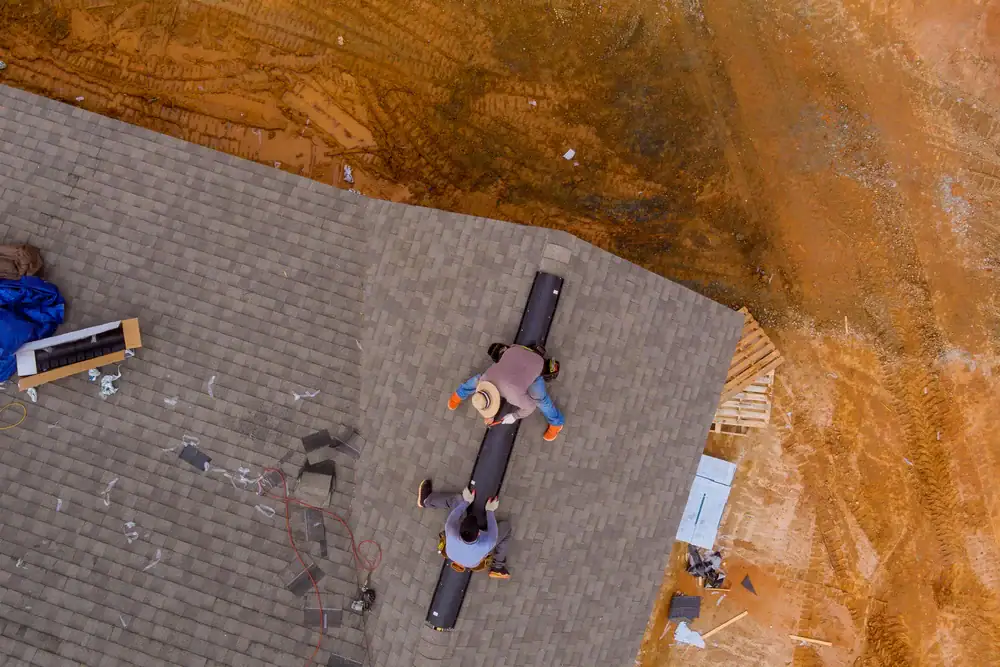
Asphalt shingles represent the most common roofing choice in Los Angeles County, and for good reason—the upfront cost is manageable for most homeowners. You’re looking at $7 to $11 per square foot installed, which translates to $10,000 to $20,000 for an average-sized home.
But that per-square-foot number needs context. Basic three-tab shingles sit at the lower end of that range, around $7 to $8 per square foot. These are functional and they’ll protect your home, but they’re also the first to show wear in LA’s intense sun. Architectural shingles—sometimes called dimensional or laminated shingles—cost $9 to $11 per square foot. They’re thicker, last longer, and hold up better under UV exposure, which matters when your roof bakes under California sun for months at a time.
The total project cost for asphalt includes more than just the shingles. You’re paying for complete tear-off of the old roof, new underlayment (the waterproof barrier beneath the shingles), installation labor, flashing around chimneys and vents, disposal fees, and permits. Most contractors in LA County will give you an itemized breakdown, and if they don’t, ask for one. You should see exactly where your money goes.
One thing to understand about asphalt in Southern California: the climate accelerates aging. The constant UV exposure, temperature swings between day and night, and occasional Santa Ana wind events all take a toll. A roof that might last 25 years in a milder climate often needs replacement closer to 20 years here. That doesn’t make asphalt a bad choice—it just means you need to factor in that timeline when you’re thinking about cost.
The other piece that affects your bottom line is maintenance. Asphalt shingles need periodic inspection, especially after wind events. You’ll want to check for lifted or missing shingles, look for granule loss (those ceramic bits that protect the asphalt), and make sure flashing stays sealed. Small repairs are relatively inexpensive, but they add up over the life of the roof. Budget a few hundred dollars every few years for maintenance if you want to get the full lifespan out of your investment.
Metal Roof Cost Per Square Foot Los Angeles
Metal roofing costs significantly more upfront, and there’s no way around that reality. In Los Angeles County, you’re looking at $12 to $20 per square foot for most residential metal roof installations, which means $25,000 to $50,000 for a typical home. Some premium materials and complex roof designs push even higher.
The price range exists because “metal roof” covers several different systems. Exposed fastener panels (sometimes called corrugated or ribbed metal) cost less—around $7 to $12 per square foot installed. These panels attach with visible screws, and while they’re durable, those fasteners become maintenance points over time. Standing seam metal roofs run $12 to $20 per square foot. The panels interlock with hidden fasteners, which means fewer penetrations through your roof and less maintenance long-term. This is the system most homeowners choose when they’re prioritizing performance and longevity.
Material choice within metal roofing also affects price. Steel is the most common and cost-effective option. Aluminum costs slightly more but resists corrosion better, which matters in coastal areas or anywhere with salt air. Copper and zinc sit at the premium end—beautiful, incredibly durable, but expensive enough that most residential projects don’t go there.
The installation process for metal roofing is more specialized than asphalt. Not every roofing crew can properly install a standing seam system. You need contractors who understand thermal expansion, know how to detail the seams correctly, and have experience with the specific panel system you’re using. That specialized labor costs more, but it’s also what ensures your roof performs the way it should for 50-plus years.
One cost factor that surprises people: metal roofing over existing shingles. In some cases, you can install metal panels over your current asphalt roof without a full tear-off. This saves on labor and disposal costs, potentially reducing your total project cost by $2,000 to $5,000. It’s not always possible—depends on your roof deck condition and local code requirements—but it’s worth asking about.
The higher upfront cost of metal makes sense when you look at what you’re getting. Metal roofs in Southern California typically last 40 to 70 years. They reflect solar heat instead of absorbing it, which can cut cooling costs by 10% to 25% in summer months. They’re Class A fire-rated, which matters in wildfire-prone areas and can sometimes lower your insurance premiums. And they require minimal maintenance—no periodic shingle replacement, no granule loss to worry about, just occasional inspection and cleaning.
Metal Roof Cost vs Asphalt Shingles Long-Term Value
The real question isn’t what each roof costs today. It’s what each roof costs over the time you own your home. This is where the numbers get interesting and where a lot of homeowners realize the cheapest option upfront isn’t actually the cheapest option.
Let’s use real numbers. Say you install asphalt shingles today for $15,000. In Los Angeles County’s climate, you’ll likely need replacement in 20 years. Accounting for inflation at a conservative 2.5% annually, that second roof will cost around $24,600. If you own your home for 40 years, you’re looking at two complete replacements—$15,000 now and $24,600 in 20 years—for a total of $39,600. And that’s before any maintenance costs or repairs along the way.
Now compare that to metal roofing installed today for $30,000. Over that same 40-year period, you’re done. One installation, minimal maintenance, no replacement needed. The metal roof costs twice as much upfront but saves you nearly $10,000 over four decades. Stretch that timeline to 50 years, and the gap widens even more—you’re potentially looking at three asphalt replacements versus one metal roof that’s still going strong.
Which Roof Material Lasts Longer in Southern California
Lifespan matters, especially in a climate that’s tough on roofing materials. Asphalt shingles in Los Angeles County typically last 15 to 25 years, with architectural shingles sometimes reaching 30 years if conditions are favorable and maintenance is consistent. The intense UV exposure we get here accelerates the breakdown of asphalt and causes granule loss faster than in milder climates.
Metal roofing, by contrast, is built for longevity. A properly installed standing seam metal roof in Southern California will last 40 to 70 years. Steel and aluminum systems typically hit the 40 to 50-year range. Premium materials like copper can exceed 70 years. The key difference is how metal handles our climate—it doesn’t absorb UV radiation the way asphalt does, it doesn’t crack or curl from temperature swings, and it sheds heat instead of holding it.
Weather resistance plays into lifespan too. Asphalt shingles are vulnerable to wind uplift, especially during Santa Ana events. You’ll see lifted corners, torn shingles, and sometimes complete blow-offs in severe wind. Metal roofing, when installed correctly, is rated for winds up to 140 mph. The interlocking panels and concealed fasteners create a continuous barrier that holds up under stress.
Fire resistance is another factor that extends effective lifespan in wildfire-prone areas. Asphalt shingles can achieve Class A fire ratings, but they’re still petroleum-based and combustible under extreme conditions. Metal roofing is non-combustible and won’t ignite from embers or direct flame exposure. In areas where wildfire risk is real, that difference isn’t just about longevity—it’s about whether your roof survives at all.
The maintenance requirements over a roof’s lifespan also affect how long it actually performs. Asphalt needs regular inspection, periodic repairs, and eventual replacement even if you’re diligent. Metal needs far less—inspect it annually, keep debris cleared, and check flashing and fasteners. That lower maintenance burden means metal roofs tend to reach their full lifespan potential more consistently than asphalt.

Return on Investment Metal vs Asphalt Roofing
Return on investment for roofing isn’t just about resale value—though that matters too. It’s about what you get back in energy savings, avoided replacement costs, reduced maintenance, and yes, increased home value when you eventually sell.
Asphalt shingle replacement typically returns about 60% to 68% of the project cost when you sell your home. So if you spend $15,000 on a new asphalt roof, you can expect to add roughly $9,000 to $10,000 to your home’s resale value. That’s a solid return for a necessary home improvement, and it often makes the difference between a smooth sale and a negotiation problem during inspection.
Metal roofing returns about 60% to 65% of the project cost at resale, which sounds similar until you factor in the longer lifespan. If you install metal and sell 15 years later, you’re selling a roof that’s still relatively new with decades of life remaining. If you install asphalt and sell 15 years later, you’re selling a roof that’s past its midpoint and will need replacement within 5 to 10 years. Buyers notice that difference, and it affects their willingness to pay asking price.
Energy savings add to ROI in ways that don’t show up in resale value but definitely show up in your monthly utility bills. Metal roofs reflect solar heat, which reduces the load on your air conditioning system. In Los Angeles County, where summer cooling costs can be significant, homeowners with metal roofs report savings of 10% to 25% on cooling costs. Over 30 years, that adds up to thousands of dollars—money that stays in your pocket instead of going to the utility company.
Insurance premiums can also factor into ROI, though the impact varies by carrier and location. Some insurance companies offer discounts for metal roofing due to its superior wind and fire resistance. The discount might be 5% to 10% of your annual premium, which doesn’t sound like much until you multiply it by 40 years. It’s another small piece that contributes to the total value equation.
The real ROI calculation comes down to your timeline. If you’re planning to sell within 5 to 10 years, asphalt makes financial sense—you’ll recoup most of the cost and avoid paying for longevity you won’t use. If you’re staying 20-plus years, metal delivers better value. You pay more upfront but avoid a second replacement, save on energy costs, and minimize maintenance expenses. The breakeven point typically hits around year 15 to 20, after which metal continues delivering value while asphalt requires replacement.
One more piece that’s hard to quantify but still matters: peace of mind. Knowing your roof will last as long as you own your home, that it won’t fail during a windstorm, and that you won’t face another major roofing expense—that has value even if it doesn’t show up on a spreadsheet.
Making the Right Roof Replacement Decision for Your Home
Choosing between metal and asphalt roofing in Los Angeles County comes down to three things: your budget, your timeline, and what matters most to you about your home. Neither option is wrong—they’re just built for different situations.
Asphalt shingles make sense when upfront cost is your primary concern, when you’re planning to sell within 10 to 15 years, or when you want a traditional look that blends with your neighborhood. The lower initial investment gives you a quality roof that protects your home and adds value without straining your budget. Just go in knowing you’re choosing a shorter lifespan and accepting that replacement will come around again.
Metal roofing makes sense when you’re thinking long-term, when you want to avoid future replacement costs, or when performance in our climate matters more than initial price. The higher upfront cost buys you decades of protection, energy savings, and minimal maintenance. It’s the choice for homeowners who see their roof as a one-time investment rather than a recurring expense.
The most important thing is making the decision with accurate information. Understand what you’re actually paying for, know what each material does in Southern California’s climate, and factor in your own situation—how long you’ll own the home, what your budget allows, and what you value in a roofing system. When you need help with that decision or you’re ready to move forward with a roof replacement, we bring over 40 years of experience helping Los Angeles County homeowners make these choices and install roofs that last.